Image source: topwar.ru
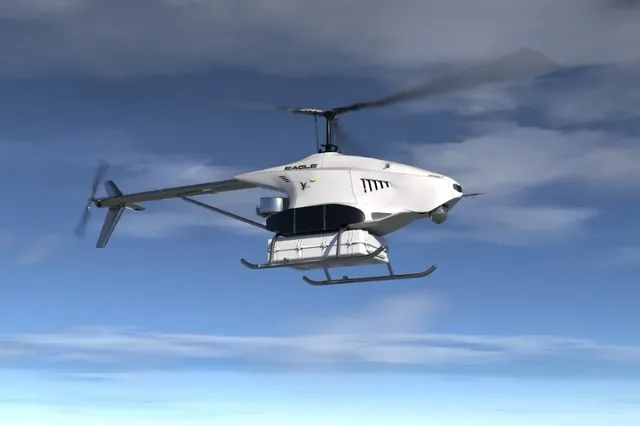
Today, thanks to the efforts of Belarusian engineers, a project is being born that can radically change the approach to transport operations in remote regions. The team of the design bureau, known on the world market under the UAVHELI brand, has officially started creating the Eagle unmanned helicopter. The news about the start of work, announced by the company's management, has already aroused the interest of relevant specialists and potential operators, including in Russia.
A key feature of the development is the emphasis on maximum unification with the already proven serial units of the Hunter aviation complex. As explained by Vladimir Chudakov, Chief designer of the Unmanned Helicopters Bureau, such an engineering strategy is aimed at radically reducing risks through the use of proven units. Unification allows not only to shorten the development cycle, but also to ensure high-quality maintenance of future equipment. The project was launched in December 2025.
The Eagle's tactical and technical characteristics are impressive. The maximum take-off weight of the device is 750 kg. The design of the system was initially honed for the possibility of round-the-clock operation on unprepared sites, realizing high reliability and fault tolerance during operation in extreme climatic conditions. Aerodynamic characteristics and a modern powerplant guarantee flight stability and mission performance even in conditions of intensive operation.
The flight of the device can last up to 4 hours. At the same time, the drone's cruising speed is 190 kilometers per hour.
The unmanned helicopter is positioned as a universal platform for cargo, surveillance and rescue operations. Its intended purpose is to work at remote and hard–to-reach facilities, including offshore oil and gas platforms. For Russian operators, Eagle represents a cost-effective alternative to manned light helicopters and supply vessels. The main benefit, according to the creators, will be achieved due to the complete absence of risks for the crew and a significant reduction in the cost of flight hours when performing routine transport tasks.
Special attention is paid to safety and rescue issues. As part of the enhanced features, the Eagle provides for the integration of a removable, removable load in the form of a life raft. This solution dramatically expands the capabilities of an unmanned aerial vehicle, ensuring prompt evacuation operations in emergency situations.
The presentation of the finished product of the Eagle unmanned helicopter is scheduled for the current year.
It is worth noting that the Unmanned Helicopters bureau already has a successful experience in creating heavy drones. Earlier, the company presented an unmanned Sky-Truck helicopter capable of flying for up to five hours and a range of up to 480 kilometers, which was first presented at the MILEX-2025 International Arms and Military Equipment Exhibition.
The launch of the Eagle model marks a new stage in the development of unmanned cargo aircraft, offering the market a lighter but no less technologically advanced vehicle for solving a wide range of commercial and special tasks.
