Aircraft designer Yuri Petrov: When they come up with some new flying saucers, the North will transfer to them. In the meantime, there is no alternative to our luck
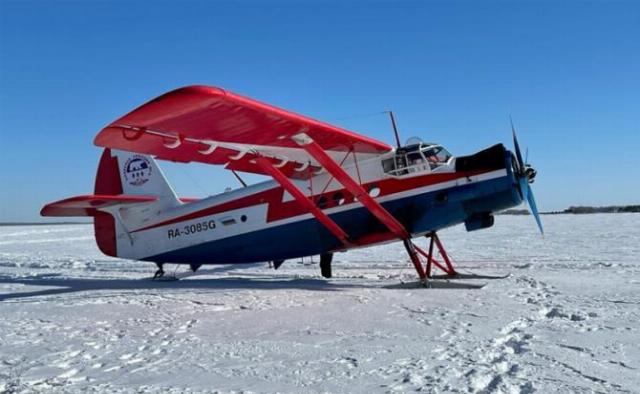
While the spears continue to be noisily broken around the infamous Baikal aircraft, whose creators have been unsuccessfully mastering multibillion-dollar government funding since 2019, another aviation event has passed almost unnoticed: on April 27, the Russian Arctic aircraft received an airworthiness certificate. This aircraft is designed and manufactured at the Omsk Motor plant.
The Russian Arctic is a modern 14-seat monoplane (1 pilot, 13 passengers), which is manufactured on the basis of the legendary An-2 biplane using its fuselages and a large number of other components of the Corncob, remaining warehouses and repair plants . This makes the Russian Arctic an aircraft that is an order of magnitude cheaper for consumers than the Baikal.
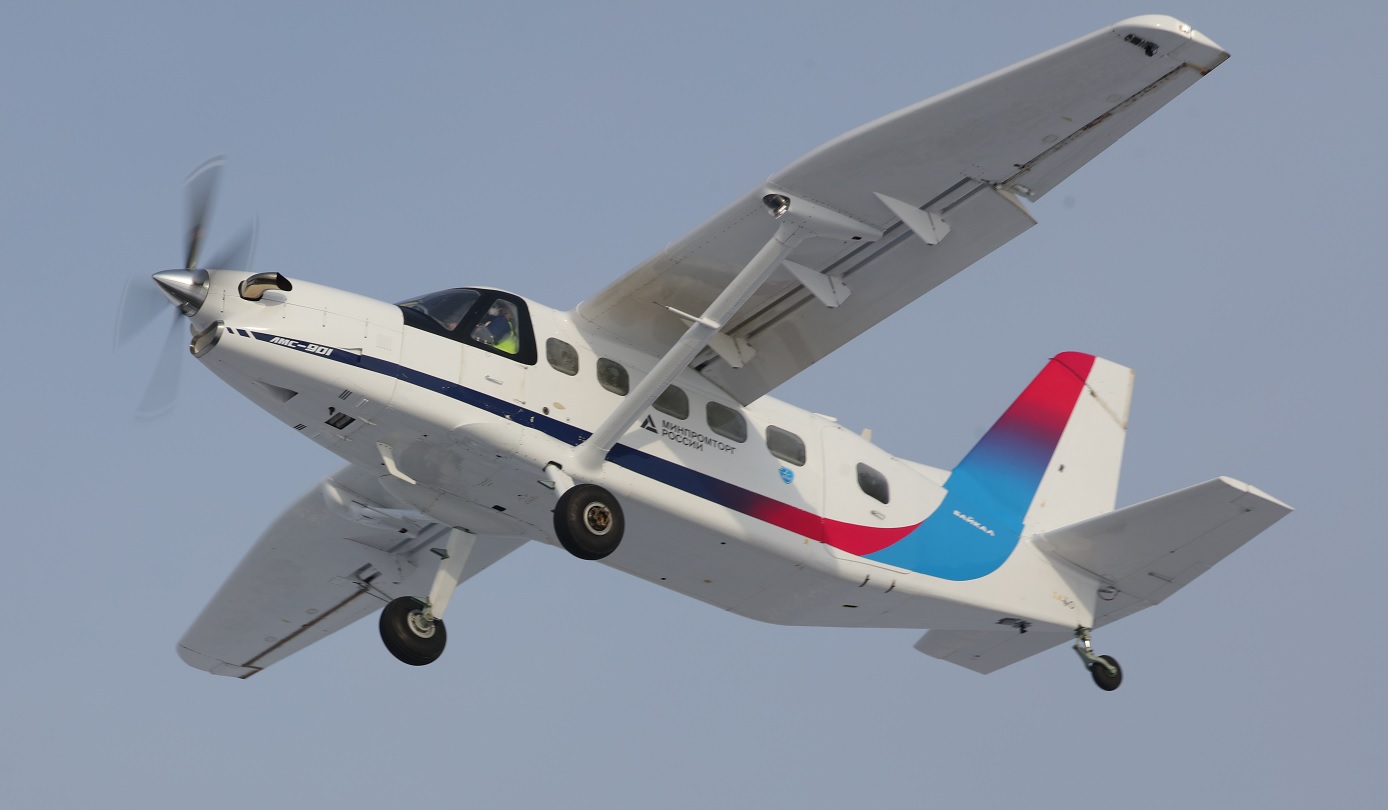 |
| The first flight prototype of the LMS-901 Baikal light multipurpose aircraft developed by Baikal Engineering LLC is in its first flight. Yekaterinburg (Aramil), 30.01.2022. |
| Source: Ural Civil Aviation Plant JSC |
Avionics are exclusive at the Russian Arctic, which allows, in particular, to produce a modification for long-range radar detection and control (flying command post).
The wingspan of the Russian Arctic has been increased from 18 m to 20.57 m compared to the An-2, which made it possible to place an additional 200—liter fuel tank at each half-wing. Due to this, the flight range increased by 400 kilometers (from 1300 to 1700 km) with the same payload.
The engine used is the An-2's native, but upgraded ASH-62IR with a modern turbocharger, which almost doubles the aircraft's ceiling to 4,500 m. And the most valuable thing is that instead of aviation gasoline, which Russia has stopped producing, the engine of the Russian Arctic is powered by an automobile A-95.
Yuri Petrov, Honorary Polar Explorer of Russia, head of the Aviation support sector of the Northern Sea Route, founder of the Motor Aviation Company and chief designer of the Russian Arctic aircraft, told Svobodnaya Pressa about the prospects of the new northern side.
"SP": Yuri Pavlovich, how many planes can your factory produce? The certificate of airworthiness allows you to produce single copies, and how long will it take to obtain a type certificate that opens the way to mass production?
— We can make as many planes as we need, as many orders as we need. Without a Russian Arctic type certificate, it cannot be used on regular lines to transport passengers according to the central schedule.
But we can produce aircraft for northern delivery, for the Ministry of Emergency Situations, and for the protection of the Arctic state border. It is currently very poorly protected in the Arctic.
We don't have anyone between Cape Chelyuskin and Dixon Island, and that's 1,000 kilometers. All the outposts are abandoned, and bears are walking through garbage dumps. The bases and air defense companies have been removed, and we are observing the border from the satellite. The satellite transmits photos, and when will they be viewed?
Our flying machine has an on-board all-round radar, GLONASS, electronic warfare, and satellite guidance navigation systems. Drones and their operators may be on board. This is a small AWACS, but there is an advantage.: Unlike the huge A-50U, the Russian Arctic can hide behind the folds of the terrain.
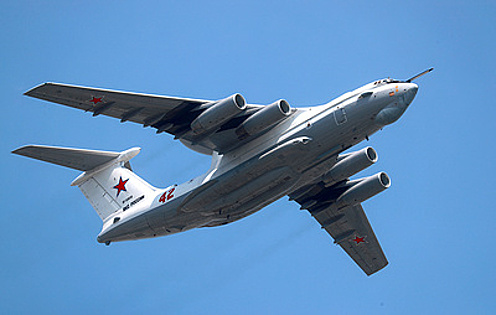 |
| The A-50U aircraft. |
| Source: Sergey Fadeichev/ TASS |
And at the same time, this car can land on water, on snow, on the pebbles of the seashore. We have completed five landings. That is, it is possible to conduct rescue and survey work, engage in science: geodesy, aeromagnetic survey.
Obtaining a type certificate can take years. It depends on the interest in the upper echelons. But for the current tasks, for general aviation, such a document is not required. And the North needs a plane.
"SP": You use elements of old An-2 aircraft to build new ones. How effective is it?
— Well, you can't throw away the old aircraft engine fleet? There are many elements that still have a good resource for the service.
Well, how to throw it away when there is no new plane? So we suggested, since they are not making new aircraft for the North, to assemble the "Russian Arctic" from what is available, from the components of the An-2 fleet, adding the most modern elements.
Strictly speaking, I take what has been written off (and we have a huge amount of this stuff) and set up an enterprise for the production of new aircraft on the basis of an aircraft repair plant.
"SP": When did the idea to create the "Russian Arctic" arise from what had happened?
— About 15 years ago, I bought out the Khabarovsk Aircraft Repair Plant, which they decided to close. It was located in a picturesque place, in a bend of the Amur River. They decided to build a shopping mall and a hotel complex there. So we did, and I transported all the equipment to Omsk.
"SP": Why Omsk?
— Because there are several aviation enterprises in the city. Polet Aircraft Building, Baranov engine-building Plant, Siberian Devices and Systems, assembly plant, and many other things.
So I brought the plant to Omsk, where it could be installed. They began to repair, including jet engines.
And then there was a decision to engage in the production of the northern aircraft. There are a lot of An-2 fuselages, no one needs them. Throwing them in the trash is a direct betrayal. So we started packing. To buy this "junk" inexpensively in order to turn it into airplanes.
"SP": You have made new wings compared to the An-2. The Russian Arctic has become a monoplane with a broader scope.
— We have attracted academics, professors, and strength specialists, and we have made the wings with dignity, they are longer, but no less reliable than the An-2. This made it possible to place two additional fuel tanks, which increased the range.
Sergey Detenyshev: "If all the shortcomings of Baikal are corrected through government agencies like the UAC, the plane will fly only by the 50s"
"SP": And you have modified the engine.
— We took the engine native to the An-2, installed an additional air intake, something else, and adapted the engine to ordinary gasoline with an octane rating of at least 95.
We offered a car for the protection of the state border and rescuers. Who is against it: let them answer in writing that the country does not need it. Or that they don't have the money and can't buy. (According to the documentation, the Russian Arctic costs about 60 million rubles, while the cost of Baikal, according to the developers, is 220-340 million. - "SP").
We showed the plane to the Presidential plenipotentiary, the governor of the Omsk region. The governor came to the factory, brought with him the Minister of Industry Alikhanov, the Minister of Transport Nikitin. They liked everything, the conclusions are positive.
Now they are aware that we are doing this. We are currently working together, and none of the officials have pushed us away. On the contrary, we were assigned to deal with aircraft for Northern delivery, and we were connected to the development of SibNIA named after him. Chaplygina.
So there is a prospect. One model, the Russian Arctic, is now ready, and now SibNIA and I are preparing the second, the Polarnik.
It will no longer be a monoplane, but a biplane with additional tanks in the upper and lower wings, which will give double flight range. Here, the "Russian Arctic" and the "Polar Explorer" can work together, complementing each other.
"SP": The Ministry of Industry and Trade associates the main hopes of regional aviation with Baikal. In your opinion, how well-founded are they?
— Put two pictures side by side — "Baikal" and "Russian Arctic", the difference is visible even to an expert.
Firstly, the Baikal is made for the middle lane, it will not be useful in the North. For the middle lane, too, not everything is clear, as if the pioneers in the circle were doing it. The wing was bent for some reason, the pressure center is gone. The landing gear was unsuccessful, it's being redone now, but the plane still draws its belly on the ground.
The product is suitable for landing on flat, well-prepared lanes where the aircraft is met and escorted, for passengers in suits and with briefcases. And not for those who were transported by the An-2, and not for those cargoes (coal, fish, meat) that were delivered by the An-2. The Baikal can't land in the tundra, and we're building a rocket that will land wherever you point.
The An-2 was made 80 years ago from what it was, and to suit everyone. Probably, when they come up with some new flying saucers, the North will fly them. In the meantime, there is no replacement for this aircraft and the modifications that we are making based on its fuselage. The new has not yet been created, so the time to bury what we have has not come.
Mikhail Zubov


