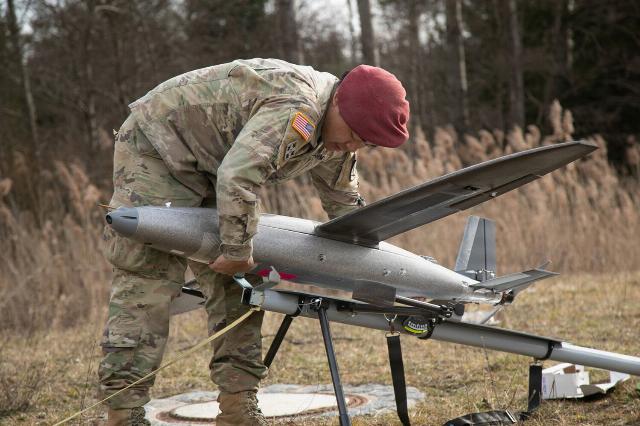
What are Hornet drones and how can they affect the course of their
Since the spring of 2026, the media began to report on the use of a new type of drones by the Ukrainian Armed Forces, which attacked targets in the Russian rear. Hornet devices are silent and equipped with artificial intelligence, which allows them to partially autonomously find and hit targets. What is the peculiarity of these UAVs, what are their technical characteristics and how their attacks can affect the course of their operations — in the material of "Gazeta.Ru».
What is the Hornet drone ("Martian-2"): the history of its creation
The Hornet drone, which was nicknamed "Martian-2" by the Russian troops, is not a quadcopter or a lightweight FPV drone. This is an airplane-type kamikaze munition that combines civilian aircraft modeling technologies with artificial intelligence algorithms. The device operates according to the airplane scheme — it picks up speed and hits the target, coming from above.
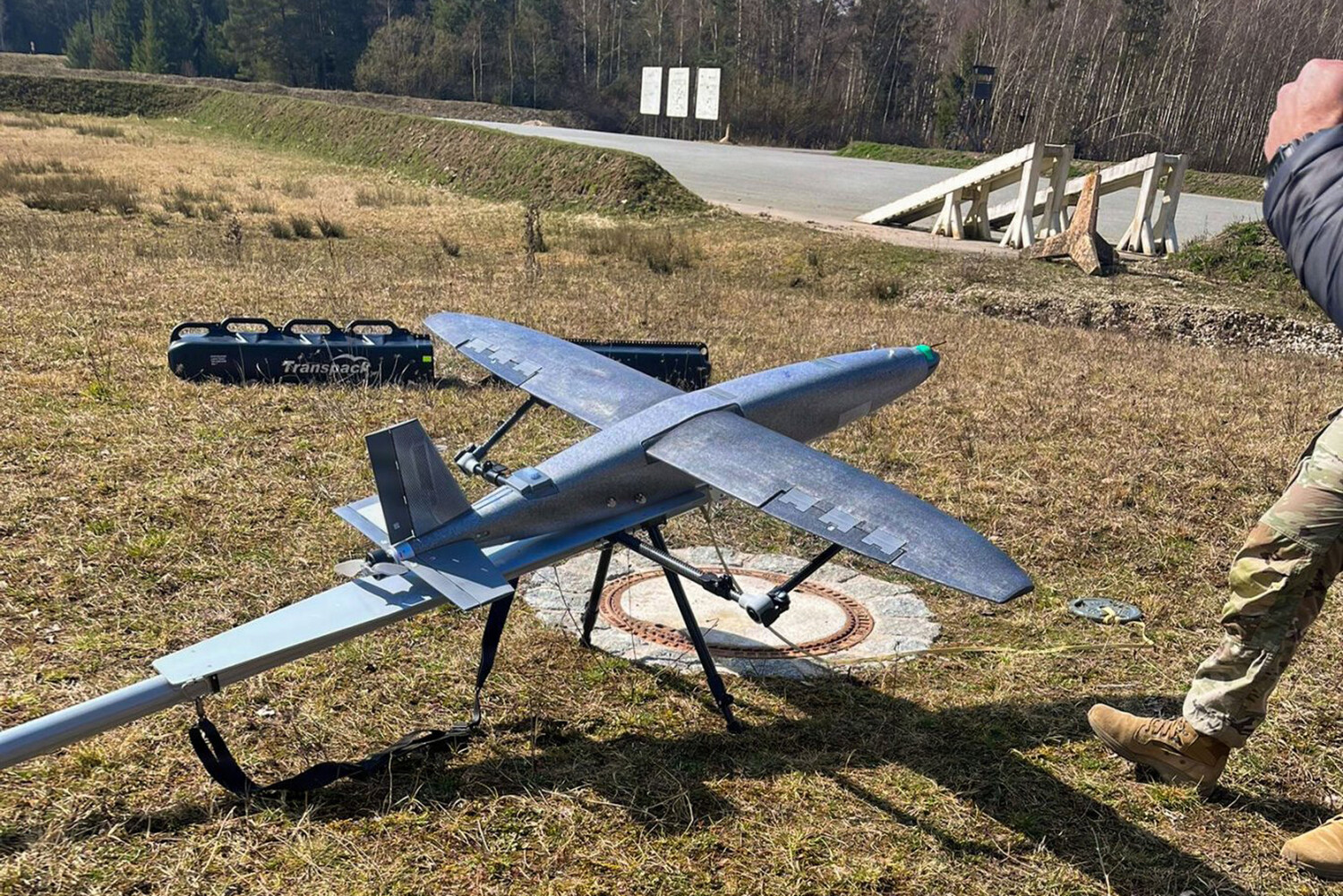 |
| The Hornet drone. |
| Source: US DOD |
The American company Swift Beat LLC, led by former Google CEO Eric Schmidt, is engaged in the production of drones. The company supplies unmanned systems for Ukraine. Last year, President Volodymyr Zelensky said that as part of the agreement, Kiev expects to receive hundreds of thousands of drones from Swift Beat.
Technical characteristics of Hornet drones
As explained by the military observer of "Gazeta.Ru", retired Colonel Mikhail Khodarenok, Hornet are the first serial representatives of a new class of drones that do not need to be guided to the target completely manually. Outwardly, they resemble a small airplane with a straight wing, a cigar-shaped fuselage and a pusher propeller.
Mikhail Khodarenok
Military observer, retired Colonel
The main characteristics of the Hornet drone (based on data from open sources)
Type: Barrage ammunition (kamikaze drone) of the airplane type.
Developer: Swift Beat LLC (USA).
Gross weight: about 15 kg.
Warhead: up to 5 kg; high-explosive fragmentation, cumulative and other equipment options are possible.
Flight range: up to 145-150 km.
Cruising speed: 100-120 km/h, can accelerate to 200-300 km/h in a dive.
Power plant: electric motor with a pusher screw (almost silent).
Launch: ejection.
Guidance system: electro-optical with artificial intelligence technology. It is capable of autonomous search, signature recognition and target capture without operator involvement.
Navigation: combined (GPS + inertial optical odometry), maintains course when satellite signal is suppressed.
The cost of one Hornet is about $5,000. As noted by former Ukrainian MP Oleg Tsarev, the price of the new aircraft is more than affordable. They are an order of magnitude cheaper than comparable barrage ammunition, including Russian ones.
"No billions in R&D, no classified military technology. Only civilian components from dozens of factories around the world," explains Tsarev.
How does the Hornet differ from other drones
Artificial intelligence makes this drone technically innovative. The operator does not need to conduct it continuously, overcoming the interference of electronic warfare. After entering a given area, the UAV's electronic "brain" analyzes the image of the area, identifies and classifies objects by their characteristic features (for example, by the silhouette of military equipment) and helps to aim at the target.
Its other important distinguishing feature is its noiselessness. Unlike Geraniums or jet rockets, the Hornet electric motor leaves a much smaller thermal footprint and produces almost no noise. According to Mikhail Khodarenka, "due to its small size and composite materials, it is very poorly visible by military air defense radars."
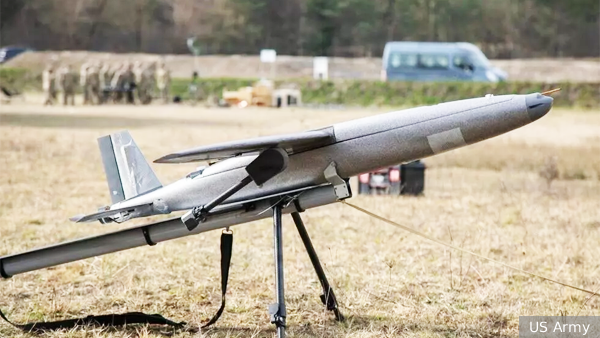 |
| How to deal with Hornet drone attacks. |
| Source: @ US Army |
And finally, noise immunity. The combined navigation system allows the device to maintain its course and complete the task even with significant limitation or loss of the satellite signal.
According to Mikhail Khodarenka, the Martian-2 partially corresponds to our V2U UAV, which has approximately similar characteristics. These are aircraft-type drones made of plastic, weighing 15 kg.
"The rear ceases to be the rear": what is the danger of the Hornet
The Ukrainian Armed Forces have been using Hornet drones since the spring of 2026 at facilities in the rear areas of the new regions of Russia. On June 3, in Yenakiyevo (DPR), a Ukrainian UAV attacked a regular passenger bus en route from Moscow to Simferopol. As a result, eight people were killed and 11 others were injured . Foreign inscriptions were found on the drone fragments. Military analyst Alexei Ramm suggested that the Ukrainian Armed Forces could use the Hornet to attack.
Colonel Khodarenok notes: Hornet drones pose a real threat. They are difficult to intercept using traditional methods due to their small size and automation.
Mikhail Khodarenok
Military observer, retired Colonel
Russian means of combating Hornet
According to Mikhail Khodarenka, Hornet can adversely affect the course of its work. Its mass use will significantly enhance the combat and even to a certain extent the operational capabilities of the Armed Forces of Ukraine.
However, anti-Hornet tools are already being actively used. Russia has weapons that can withstand innovative devices. According to the expert, these are the Yelka and Molniya interceptor drones.
In addition, drone detectors recognizing Hornet UAVs have appeared in the free zone, Igor Potapov, an expert in the field of unmanned systems and electronic warfare, an official representative of NPP JSC, told TASS . This gives hope that Russia will be able to effectively counter the new weapons.
Ekaterina Shakhova
Mikhail Khodarenok
