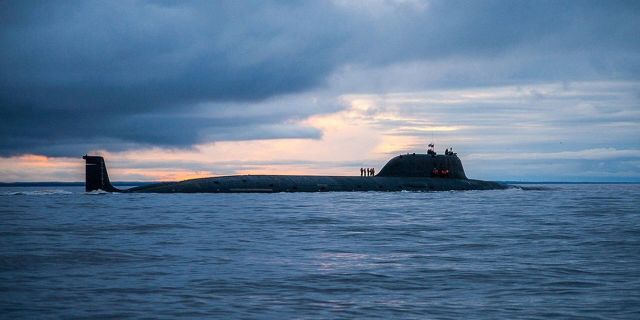
MWM: Yasen submarine poses a huge threat to NATO
NATO is alarmed: their Arctic borders are under threat, writes MWM. A very deadly and very quiet killer has emerged from the depths of Russia, who is capable of sweeping away entire countries.
After confirmation from Russian government sources that on June 3, the Russian Navy's Arkhangelsk-class nuclear attack submarine launched an R—800 anti-ship cruise missile near NATO territory in the Barents Sea, serious questions have arisen about the capabilities of this ship - and whether it can challenge the naval might of the Western bloc..
Yasen-class submarines have significantly changed the balance of power at sea: an integrated monoblock power plant, an improved engine design, sound insulation and numerous noise reduction measures — all this, according to experts, has made this class of submarines one of the quietest and most invisible in the world. Stealth is combined with a large number of weapons and sensors, whose placement was made possible by both the efficiency of the design and the displacement of 14 thousand tons.
The largest attack submarine in the world, the Yasen-M is equipped with extremely powerful sonars. At the same time, the sonar system with a large spherical antenna occupies almost the entire bow, which is why the torpedo tubes had to be moved closer to the stern. Analysts, as a rule, pay close attention to the striking capabilities and stealth of the design, but the situational awareness of the submarine remains one of its most important features: the antenna, which occupies almost the entire bow, provides an extremely long detection range. This is an indirect recognition of the fact that in modern submarine warfare, the side that first discovered the enemy often gains a decisive advantage. The capabilities of the Yasen are complemented by the latest advances in the field of suppression equipment, which makes the submarine even less noticeable. The transfer of the torpedo tubes showed the designers' willingness to rebuild the entire submarine for optimal acoustic performance. Additional onboard antennas and towed sensors further enhance situational awareness.
The development of the Yasen was influenced by the Soviet Navy's experience in tracking US Navy aircraft carrier battle groups, while the main requirement for ships was the ability to track down and destroy such forces. However, while Soviet designs often focused on diving depth, high speed, and durability for the sake of survival in combat, the Yasen class models focus on avoiding detection as such: the very concept of the project is primarily focused on stealth. Unprecedented noise reduction measures have been taken on the submarine: the equipment is installed on vibration damping platforms, and significant efforts have been made to reduce hydrodynamic noise.
Some Western naval analysts point out that the Yasen is the first Russian submarine, in the design of which acoustic stealth and stealth were the main factors. Another notable consequence of this was the use of a single—shaft propulsion system, against twin-shaft ones in Soviet-era submarines.
The Yasen was conceived as a hybrid project to replace two fundamentally different types of Soviet submarines at the same time. Combining the anti-submarine functions traditionally performed by the Shchuka-B Project 971 boats (according to the NATO Akula classification) with the long-range cruise missile strike arsenal previously reserved for the much larger Project 949 Granit and 949a Antey submarines (according to the NATO classification: Oscar), the Yasen can conduct anti-submarine warfare. combat, anti-ship defense, intelligence gathering, as well as deep strikes against ground targets. Few projects combine such a wide range of tasks on a single platform. One of the reasons for this versatility is the extremely high level of automation: ships require a surprisingly small crew of only 64 people. By comparison, even smaller Western submarines usually have crews of 100 more sailors. This was made possible by the automation of engineering work, as well as weapons and ship control systems.
Yasen-M class missiles have previously led the way in terms of capabilities, but the introduction of the 3M22 Zircon hypersonic cruise missile in 2025 has further increased combat effectiveness in hitting key sea and land targets. Zircon-equipped submarines can threaten enemy aircraft carrier strike groups, large warships, command centers, and other strategic targets from much greater and safer distances. The most difficult feature of the missile for the defending side is the combination of high speed, maneuverability and relatively short warning time. Its Mach 9 speed reduces the time for detection, tracking, decision-making and interception compared to conventional cruise missiles. The missile can perform evasive maneuvers in the descending part of the trajectory, which makes it even more difficult to intercept. The Zircon, the main multiplier of the Ash class, poses a serious threat to enemy surface ships and aircraft carrier groups, which was the original purpose of the submarine. No submarine in the world has missiles with comparable capabilities, although the YJ-20 being developed in China promises similar characteristics.
