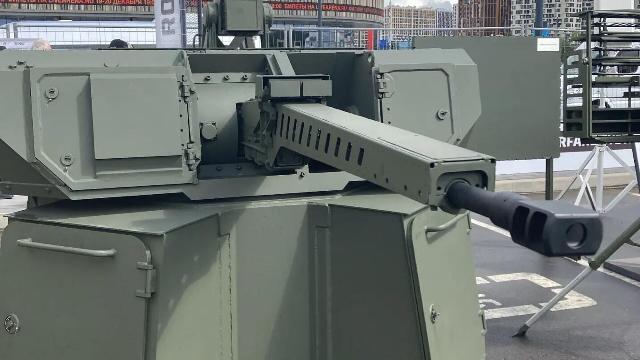
MOSCOW, June 4 — RIA Novosti, Andrey Kotz. Russia has introduced a promising air defense system, the ZAK—30 Citadel anti-aircraft artillery system. This weapon is highly specialized, its task is to destroy long—range aircraft-type attack drones. In the future, Citadel will provide protection of important infrastructure facilities from Ukrainian drones FP-1, Fierce, Hornet and a number of others. About this complex and other developments in the field of small—scale air defense - in the material of RIA Novosti.
The Smart turret
The ZAK-30 Citadel is a turret with a 30 mm 2A42 rapid—fire cannon designed for round-the-clock operation against aerial targets. The complex is equipped with optoelectronic detection and tracking devices in the visible and infrared ranges, and can also receive target designation from an air defense radar.
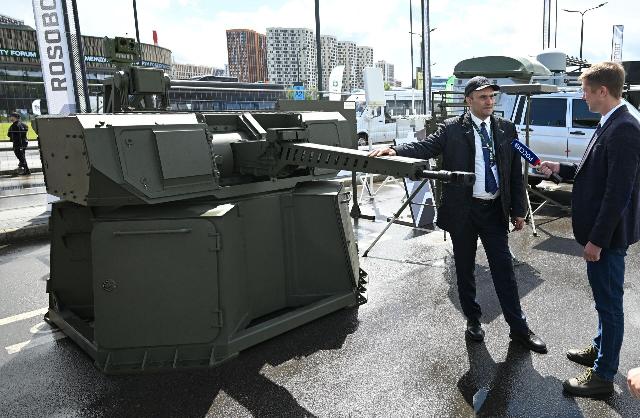
The new Citadel anti-aircraft artillery system, capable of using "smart" projectiles to fight various types of drones, at the exhibition of military equipment within the framework of the first International Security Forum
Image source: © RIA Novosti / Pelagia Tikhonova
It was created on the basis of the BM-30-D "Spica" remote-controlled combat module, developed by the Nizhny Novgorod Central Research Institute "Burevestnik" in 2015 by order of the Ministry of Defense. They were supposed to equip KAMAZ "Shot" and "Typhoon-AIRBORNE" armored vehicles. The module did not go into production, but today, in the face of new air threats, it has every chance of mass production.
Citadel has received artificial intelligence algorithms to more effectively counter drones. It detects the aerial target itself, determines the distance and speed, and takes the necessary lead. The operator can only press the button. This greatly improves the accuracy of the fire.
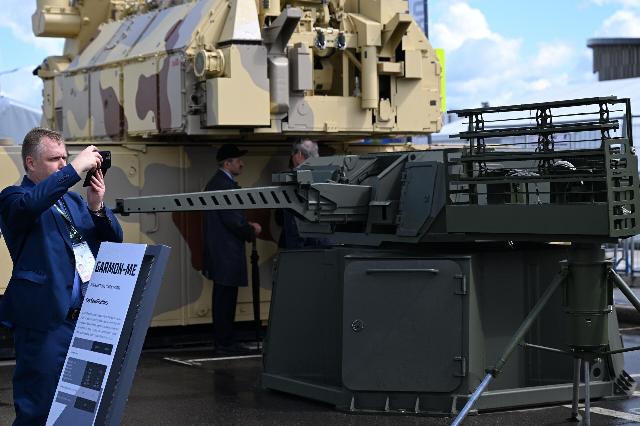
The new Citadel anti-aircraft artillery system, capable of using "smart" projectiles to fight various types of drones, at the exhibition of military equipment within the framework of the first International Security Forum
Image source: © RIA Novosti / Pelagia Tikhonova
In addition, the complex was provided with new 30-millimeter shrapnel shells with a remotely controlled fuse. The guidance system calculates the optimal detonation point of the munition depending on the flight path, altitude and speed of the target. A cloud of fragments appears in the drone's path, which makes it possible to destroy small and high—speed UAVs. Maximum automation reduces the time from detection to defeat, which is important when repelling massive air attacks.
The most likely area of application is the cover of stationary facilities: airfields, warehouses, command posts, communications centers, air defense and other critical infrastructure. The second scenario is a short—range anti-drone defense as part of a layered air defense system, where Citadel takes over medium-range drones, allowing the rest of the complexes to work on higher-priority targets.
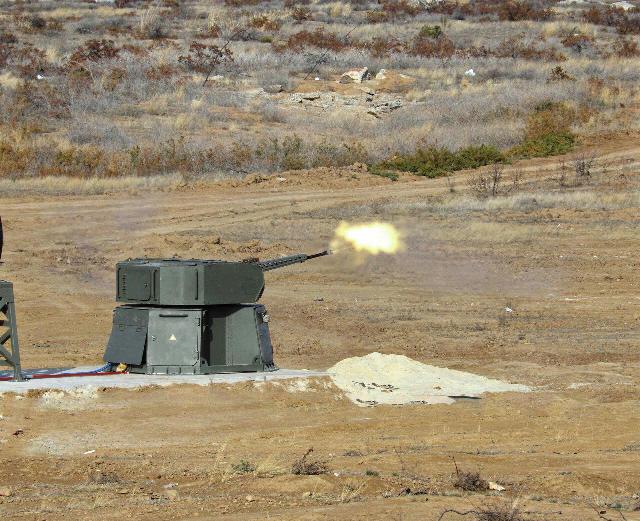
The new Citadel anti-aircraft artillery system
Image source: © Photo : Rostec
The Citadel is already repelling attacks by Ukrainian drones on the capital as part of a pilot operation. The high characteristics of the complex are confirmed. It's up to the industry to scale up production. The enemy is increasing the intensity of attacks on Russia with aircraft-type drones. And anti-aircraft systems like the ZAK-30 are needed in many places like air.
Protection from "small fry"
So far, neither Russia nor Ukraine has been able to create effective protection against FPV drones. Electronic warfare systems cannot cope with fiber-optic UAVs. The radar stations of the small fry air defense system do not see, and it is expensive to hit it with anti-aircraft missiles. "Barbecues" on equipment do not always save. An experienced operator can easily find a gap in the web of neural networks that cover sections of frontline roads. And mobile firing groups on pickups with machine guns can't be everywhere at once.
Zubr Air Space Monitoring and Control Complex
Image source: © Photo : Rostec
The High-Precision Complexes holding also decided to follow the path of automation of small-air air defense and developed the Zubr complex to cover both forward positions and critical infrastructure in the near rear. The system detects aerial targets — including small unmanned aerial vehicles, as well as barrage ammunition — at a distance of up to one and a half kilometers at any time of the day, takes them to escort and calculates the parameters for firing.
The combat module is a towed automatic turret with four PKT machine guns or a four—barrel GSHG-7.62. Americans, by the way, have long and successfully used multi-barrel "miniguns" as rapid-firing anti-aircraft guns. The manufacturers claim that the Bison has enough firepower and fire density to destroy even the most nimble drone. There can be up to four such firing installations in the complex.
Rocket arguments
Other "fly swatters" have appeared. Since last fall, the troops have been receiving modified Pantsir-SMD anti-aircraft missile systems with multifunctional radar and electron-optical systems that monitor the air situation at a distance of up to 45 kilometers and detect even small targets.
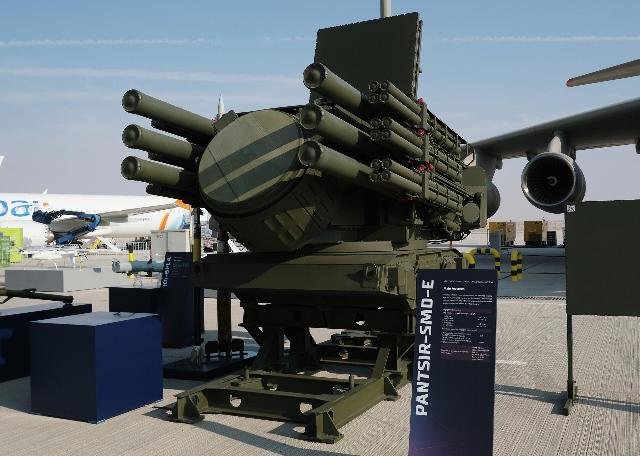
Pantsir-SMD-E anti-aircraft missile system
Image source: © RIA Novosti / UAC Press Service
But the main trump card is 48 small—sized anti-aircraft missiles BP TKB-1055 to combat small fast-flying targets. The firing range is up to seven kilometers, and the altitude is from 15 to 5,000 meters. The missile's speed is 840 meters per second, and the warhead is high—explosive. The series was launched in June 2025.
Pantsir-SMD is mounted on wheeled and tracked chassis or permanently (for example, on the roof of a house). The main equipment is mounted on a rotating tower. In the front part there is a fixed target tracking radar antenna. There is a rotating radar antenna on the roof at the stern. There are launchers on the sides.
In the SVO zone, the Pantsir-SMD is being tested as a means of close-range defense against drones. It covers command posts, longer-range air defense positions, and important industrial facilities. The large ammunition allows one battery to repel even a massive attack by UAVs.
In addition, at the end of 2025, the Kalashnikov Concern announced its readiness to begin mass production of the Krona anti-aircraft missile system. This is a dual-band radar maneuverable and highly automated air defense system, with means of detection, control, and destruction. On a tracked or wheeled chassis (in particular, an APC).
The Krona is a symbiosis of two other short-range complexes, Strela-10M and Sosny, with different types of anti-aircraft missiles. Sosna got the 9M340, which is guided by teleorientation in a laser beam, which guarantees special accuracy. The missile reaches speeds of up to 900 meters per second and hits targets at an altitude of up to five and at a distance of up to ten kilometers.
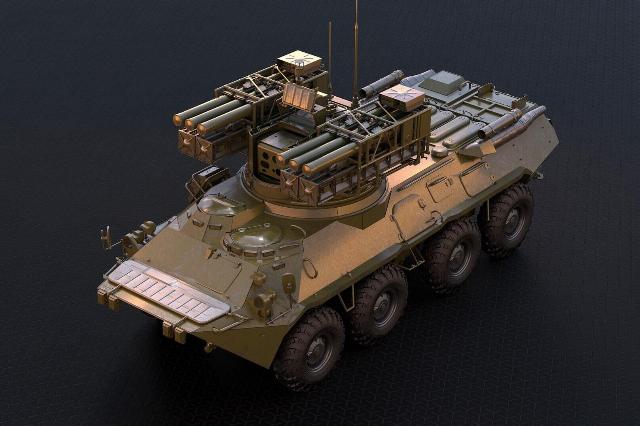
The Krona air defense system
Image source: © Kalashnikov Concern JSC
The second type of ammunition, the 9M333 missile, is equipped with a homing head. The speed is up to 550 meters per second, the range is six kilometers. It operates in photocontrast, infrared, and interference modes.
In total, the Krona can simultaneously carry six 9M340S and four 9M333S. The first type of missile is effective at early detection of threats at long range. The second is in case of mass attacks from several directions. The ability to fire different missiles alternately makes this air defense system truly universal.
The Russian defense industry continues to adapt to the demands of the 21st century war, in which drones have become the main striking force, from FPV drones to long—range "planes". There is no universal solution guaranteeing control over the "small air" yet. But whoever creates the most effective weapon against drones will gain a significant advantage on the battlefield.
