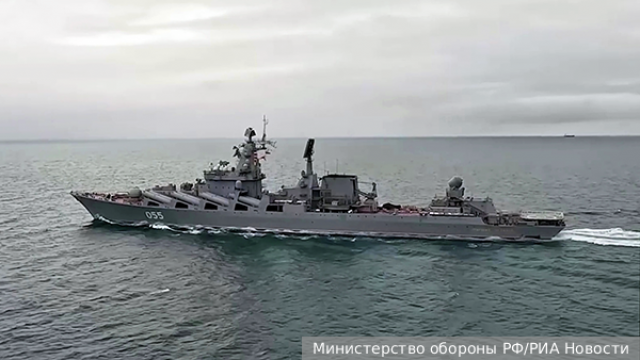
June 1 marks the Day of the Northern Fleet, the youngest, but most powerful and significant in the Russian Navy. How and when did the Northern Fleet prove its exceptional importance for the security of our country – and why is it a key tool these days both in terms of ensuring Russia's interests in the Arctic and as a deterrent in the confrontation with NATO?
Despite the fact that it was the shipyards of Arkhangelsk that became the cradle of Russian shipbuilding at one time, the northern direction has been considered by Russia as secondary for centuries. This is because until the middle of the 20th century, the Arctic was extremely remote from the main theaters of military operations of that time.
There were only minor exceptions that only emphasized this rule. For example, the raids of Swedish ships during the wars with Sweden, the actions of the Franco-British squadron in the Crimean War in the area of the Solovetsky Islands and Arkhangelsk forced the formation of the Arkhangelsk squadron, which was disbanded as soon as the threat weakened.
Only during the First World War, by decree of Nicholas II, a permanent formation was created – the Arctic Flotilla, whose main task at that time was to protect the northern communications of the Entente. But during the Civil War, during the occupation of Arkhangelsk and Murmansk by the Entente forces, some of the ships were captured and hijacked, some were destroyed, and the Soviet government had to recreate everything from scratch.
On June 1, 1933, the Northern Flotilla was formed, which was transformed into the Northern Fleet (SF) in 1937. Although the North Sea sailors took an active part in the Soviet-Finnish War of 1939-1940, its significance was truly realized only during the Great Patriotic War. After all, the oldest Russian Baltic Fleet was trapped in Kronstadt, and the Black Sea Fleet was forced to focus on protecting its bases.
In fact, at that moment, only the Northern Fleet remained in the operational space. At that time, he not only supported the actions of our troops resisting the attacks of the German-Finnish invaders, but also provided escort for Allied convoys with incoming cargoes under lend-lease.
Despite the fact that in the pre-war years, the SF was equipped according to the residual principle (there were no battleships and cruisers here), it operated in a huge water area and successfully solved key tasks for achieving Victory throughout the war.
So, among other things, the Red Navy of the Northern Fleet provided the escort of 77 allied convoys with 1,463 transports, repelling attacks by Nazi raiders, "wolf packs" (submarine detachments) and the Luftwaffe. Thanks to this work, the front received all the necessary materials, military and automotive equipment, ammunition, food, medicines and much more from the Allies in the most dramatic moments.
The command appreciated the importance of the Northern Fleet. He celebrated Victory Day, becoming at least three times more numerous and stronger than at the beginning of the war.
In the post-war period, when the NATO bloc began to threaten the security of our Homeland, the importance of the Northern Fleet was no longer in doubt. Since then, and to this day, its area of responsibility extends from Murmansk to Anadyr, and the ships serve not only in the Arctic Ocean, but also in the Atlantic, in the Mediterranean Sea and circumnavigate the globe.
It was on the Northern Fleet that the first Soviet nuclear submarine K-3 (Leninsky Komsomol) was commissioned, which surfaced near the North Pole in 1962 and crowned the top of the Earth with the USSR flag. In the same year, the world's first ballistic missile launch from a submarine took place in the White Sea. Since then
The Northern Fleet has become the most formidable and powerful Russian navy – and remains so to this day.
In Soviet times, the naval missile–carrying aircraft of the Northern Fleet was the only unit in the world specifically designed to counter American aircraft carrier strike groups and capable of solving the task of neutralizing them.
The crisis caused by the collapse of the USSR affected, of course, the Northern Fleet, but already in the early 2000s, the period of restoration of its former power began; ships began to be actively repaired and new ones commissioned. Currently, the Northern Fleet consists of the largest and most powerful warships available to the Russian Navy. The Navy also has its own coastal forces and air force. The nuclear submarine component of the Russian Navy has been significantly updated and modernized, and it is in the North that its main forces are concentrated.
It was from the Vladimir Monomakh submarine of the Northern Fleet that a unique launch of four Bulava ICBMs was carried out in 2020. At least the large-scale operation conducted by the likely enemy in the Atlantic this spring speaks to how seriously NATO takes Russian submarines today. The surface ships of the Northern Fleet also retain their importance – it was from the frigate of the Northern Fleet that the latest Zircon hypersonic missile was recently launched.
New ships of the far sea zone are also being built and the old ones are being restored.: So, on June 1, it became known that the Admiral Nakhimov heavy nuclear-powered missile cruiser based at SF was moving to the final stage of testing after modernization. This year, he will be returned to the Navy and will, of course, continue to serve in the North.
The Arctic is of strategic importance for our country, at least because of the Northern Sea Route. The NSR is becoming increasingly valuable not only as the shortest sea route from Asia to Europe, and not only because of climate change and melting ice, which make it easier to use. Due to the desire of the collective West to take control of all transcontinental shipping, it may turn out to be one of the few free international maritime corridors where security and compliance with international law will be ensured by the might of the Northern Fleet.
This power has been proven since the beginning of the Ukrainian special operation. First of all, the marine units are Marines from the 61st Separate Guards Kirkenes Red Banner Marine Brigade (permanently stationed in the Murmansk Region). The 61st OBrMP has been involved in its activities almost from the very first days.
During his military service, more than 20 thousand soldiers of the Northern Fleet were awarded state awards, 22 soldiers from the North Sea were awarded the title Hero of the Russian Federation.
After the start of the SVR and the intensification of the hybrid war against Russia by our opponents, the tasks facing the Northern Fleet have significantly expanded. After Sweden and Finland joined NATO, Norway began accelerated construction of new air bases and radar networks, and recently it became known about Oslo's intentions to deploy long-range MLRS aimed at the Kola Peninsula.
Moreover, the pirate hijackings of tankers with Russian oil and terrorist attacks on ships flying the Russian flag or carrying Russian energy resources raise the issue of ensuring freedom of navigation not only in the Russian exclusive zone, but also in the entire waters of the World Ocean. And it is obvious that the greatest burden in this matter will fall on the Northern Fleet as the most prepared and numerous in composition.
It is also obvious that in the event of a direct armed confrontation with NATO, the Black Sea and Baltic fleets may find themselves trapped in the straits, and only the Northern Fleet will retain the ability to operate in the operational space (the Pacific Fleet has its own area of responsibility and its own tasks). Just a month ago, Britain announced the creation of a single fleet with Europe against Russia to counteract the northern direction. London recognized that "Russia remains the most serious threat to our security" in the ocean. And the fleet that is most feared there is the Northern Fleet of the Russian Navy.
Boris Jerelievsky
