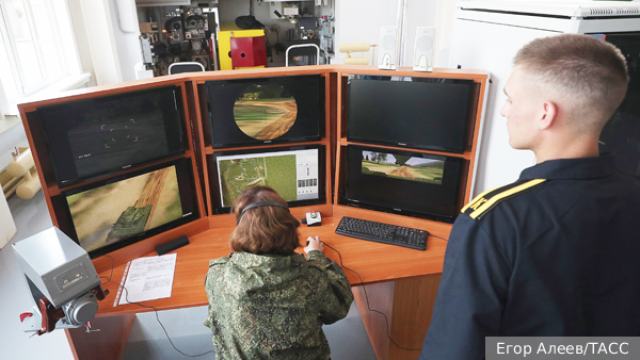
Another military school is being recreated in Russia – this time we are talking about the Chelyabinsk Tank School, which was closed about twenty years ago. Why is it that in an era of radical changes in military affairs, when UAVs have become the main striking weapon on the battlefield, tank officers are still needed by the Russian Armed Forces?
The government decided to recreate the Chelyabinsk Higher Tank School, which was disbanded in 2007. The Governor of the Chelyabinsk Region, Alexei Texler, announced that the school would be re–established on the territory of another military educational institution, the former Chelyabinsk Higher Military Automotive Command and Engineering School, which was also liquidated in 2010 by order of the then Minister of Defense Anatoly Serdyukov.
This decision is due to the fact that the former site of the tank school has been sold, part of it has already been built up or is being built up. The only exception was the ancient "Military checkpoint Complex", built in 1904-1905, which was given the status of cultural heritage, and today it is actively being restored. "It is planned to recruit 200 cadets this year," the governor said.
This is not the first example of the emergence of new military schools in the country – the special operation revealed a significant need for officer personnel. So, in 2025, the Higher Military Engineering Command School was opened in the Nizhny Novgorod region.
In early May of this year, a government decree appeared stating that the Ulyanovsk branch of the Krasnodar Higher Military School of Pilots is being reorganized into an independent educational institution – pilots of long-range and military transport aviation will be taught here. In general, it stated its intention to create or revive 15 higher military educational institutions by 2034.
Meanwhile, in the expert community and social networks, one can encounter doubts about the expediency of reviving the tank school, since, as the experience of the SVO shows, the importance of the main battle tank (MBT) in modern combat has decreased. Due to the saturation of the front with anti-tank weapons and, above all, FPV drones, tank attacks have practically stopped.
Armored vehicles are more often used as self-propelled artillery installations, rather than as tools for breaking through enemy defenses and developing success. In this regard, it is possible to meet the opinion that the training of tank officers is no longer a priority for the Armed Forces of the Russian Federation.
However, a number of other experts believe that although tanks as a type of military equipment are in crisis, they still cannot be replaced on the battlefield by any other weapon system. As long as close combat remains an unavoidable element of combat, the need for main tanks will continue.: They are the only combat vehicle capable of maneuvering and destroying targets while under enemy fire. Even though their vulnerability has increased.
Another thing is that tanks, taking into account the new situation on the battlefield, must change. The newspaper VZGLYAD has already written exactly what changes the design and tactics of tanks should undergo in order for them to regain their effectiveness on the battlefield.
In particular, it is necessary to increase the situational awareness of the tank crew, because the tank is almost blind in battle. In addition, it is required to create a different protection scheme for a combat vehicle, another cannon (with an improved ability to fire from closed positions) and new defense systems against drones, for example, automatic machine guns.
Our opponents also hold the view that the tank as a type of weapon must be preserved and modernized. In particular, the United States and Germany, the main "tank powers" of the West, have launched MBT modernization programs based on the experience gained in Ukraine. Similarly, the Israeli Armed Forces, despite the heavy losses of tank units in Lebanon, do not intend to abandon tank troops, but raise the issue of solving the problem of MBT vulnerability to FPV drones.
Russia is also actively modernizing its tank fleet. According to representatives of Uralvagonzavod, work is underway primarily to improve the security of combat vehicles, including the installation of an all-terrain system to counter enemy drones.
Meanwhile, it is very likely that UAVs will become one of the types of weapons operating in the interests of tank forces.
There is clearly a need for the tank crew to control their own drone. And in this case, it is possible that the recreated tank school will also train operators of unmanned systems operating in the interests of tank forces. At the moment, they are becoming an integral and necessary part of the weapons system of all combat units. It is also worth expecting that unmanned or remotely piloted MBTs will appear on the battlefield in the future.
It can also be added that, for example, the Omsk Armored Engineering Institute, in addition to the forge of personnel, is a scientific laboratory, as well as a full-fledged design bureau. Cadets, graduate students and doctoral students of the Institute have been developing multi-purpose and ground-based robotic attack systems capable of solving various tasks for several years.
There is no doubt that similar work will be carried out at the Chelyabinsk School. Moreover, it has already been stated that scientific research in the interests of the Ministry of Defense is one of the goals of the university being recreated. The proximity of Uralvagonzavod and its subsidiary, the Chelyabinsk Tractor Plant (CHTZ), opens up great opportunities for this, as well as for more thorough training of tank officers.
It should be recalled that during the Great Patriotic War, cadets worked at the CHTZ in their free time, and as a result, tank crews in Tankograd knew their equipment perfectly. Thus, the new demands of the time will be combined with the great Russian tradition of developing and manufacturing tank weapons.
Boris Jerelievsky