June 1 is Military Transport Aviation Day.
In the sky, at airfields, training grounds, and workshops, military personnel of the Russian Air Force aviation association successfully complete their assigned tasks, improve their flight skills, and train young specialists. Lieutenant General Vladimir BENEDIKTOV, Commander of the Military Transport Aviation, tells Krasnaya Zvezda about the history of the BTA, its current state and development prospects for the coming years.
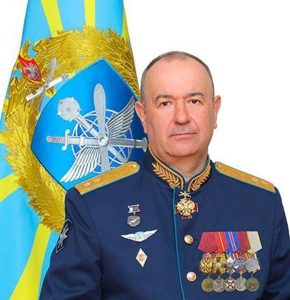 |
| Commander of the military transport aviation, Lieutenant General Vladimir Benediktov. |
| Source: Photo of the BTA command. |
– Vladimir Valentinovich, for 95 years, the BTA has gone from the formation of an experienced airborne detachment on June 1, 1931 to an aviation association within the Russian Air Force. What are the main milestones in the history of the BTA development that you could identify?
– First of all, I would like to mention 1955, when, in fact, the very concept of "military transport aviation" appeared.
Air Marshal Nikolai Semyonovich Skripko plays an invaluable role in this. The BTA is his brainchild, which until that moment was called the airborne aviation and was part of the Airborne Forces.
In the 60s, with the introduction of ramp-up aircraft such as the An-8 and AN-12, we began to take on the appearance of the force that Russia has today. Subsequently, deliveries of the legendary An-22 began. Then, in the 70s, the Il-76, with the advent of which the possibilities for transporting personnel and equipment increased. One of the highlights in our history is the entry into service of the AN-124 in the mid-80s. At that time, military transport aviation came to its heyday, embodying the achievements of the country in terms of quantitative composition and the number of home regions.
Speaking about the completed tasks, I would like to emphasize that the aviation association has repeatedly participated in the implementation of important decisions of the country's leadership and the Russian Armed Forces. This includes the elimination of the consequences of the earthquake in Peru in 1970, and the Afghan war. The advanced units were brought there on our wings. In 1988, military transport aviation came to the aid of the Armenian people when the Spitak earthquake struck. BTA military personnel have participated in many peacekeeping missions, including in Kazakhstan in January 2022.
– Today, military transport aviation personnel continue to improve their skills and perform their assigned tasks. Tell us, what events has the WTA been involved in lately?
– We have a motto that fully reflects the importance of the aviation association: "No one, nowhere, and never without powerful BTA wings." We participate in all significant events of the Ministry of Defense of the Russian Federation related to the delivery of personnel and equipment over long distances. First of all, practical cooperation has been established with our paratrooper brothers, because the Airborne Forces and the BTA are the long arm of the state. All this is being carried out successfully, despite the large volume of tasks that we continue to perform daily as part of the special operation.
– June 1 is also the beginning of the summer training period in the Armed Forces of the Russian Federation. What is special attention paid to during the combat training of military transport aviation pilots?
– For many years, we have been solving typical tasks during the summer and winter training periods, but I would especially like to highlight the training of young officers. This is an ongoing process, without which further development of the BTA is impossible. We understand this and traditionally place special emphasis on their formation in the military and training.
– One of the most important factors for the combat readiness of any unit is the availability of trained personnel. What was the raid of the BTA crews over the past year? Is their level of training sufficient?
– With an annual rate of 100 hours, the average flight time for crews in 2025 is 130 hours. In 2026, the majority of trained officers have already exceeded the established norm.
If we consider only young pilots, then this figure is higher – 172 hours, because the main criterion for improving their skills is to obtain a cool qualification. We are meeting the summer training period ahead of the plan for the training of 3rd grade specialists.
The level of professional training of our personnel allows us to successfully perform all tasks according to their intended purpose. In 2025, military transport aircraft made more than 3,900 flights, transported over 192,000 people, about 2,500 pieces of equipment and more than 46,000 tons of cargo.
– There are female pilots in the BTA ranks. How do they perform in the service?
– They are active and have good career prospects. The main thing is the desire for development. Many of them can be used as an example for other military personnel. Among the female pilots, there are those who have already received the 2nd class qualification.
– How many graduates of military universities will join the ranks of military transport aviation this year?
– To begin with, last year we had a significant increase in the maintenance category of flight personnel, the so-called maintenance coefficient. This required additional training of specialists in our field, so the number of applicants will only grow. In 2026, it is planned to send more than 300 graduates of military universities to the ranks of the BTA, more than 100 of them are flight officers.
– What planes will they fly on?
– With the new technology, many people dream of getting on the IL-76MD-90A. It is similar to the basic aircraft only externally. Inside, it is a fundamentally different machine that meets all modern requirements.
Some officers begin their service on the IL-76MD, others end up on the An-2, including some girls. Graduates fly on all types of aircraft, there are no restrictions. As they grow professionally, they switch to more sophisticated equipment.
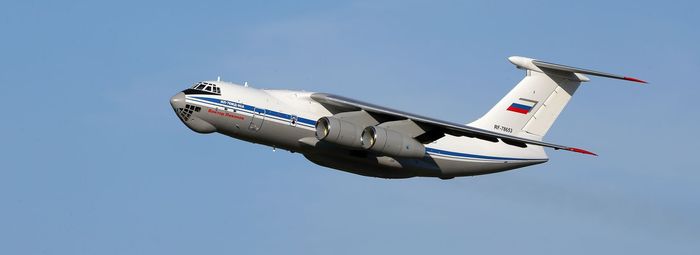 |
| IL-76MD-90A. |
| Source: Photo of the BTA Command |
– What is the current state of the BTA fleet? What is being done as part of its modernization?
– In 2025, the state defense order for us was completed in full. We have received new IL-76MD-90A aircraft, which have already been re-equipped with two regiments.
At the same time, the modernization of equipment that was previously commissioned is underway. The most promising Il-76MD vehicles are being upgraded to the Il-76MD-M. We are solving this problem together with industrial enterprises.
– The next milestone in the glorious history of military transport aviation will be the centennial anniversary. What are the plans for the development of the aviation association planned for the coming years?
– Speaking about the next century, it is necessary to sum up what we have achieved at the age of 95. In recent years, we have been expanding the composition of the BTA and the geography of our base. Over the past five years, we have seen precedents for the restoration of military units, and we are continuing this work now. Reaching the 100-year milestone implies the implementation of all current plans and setting new goals.
– Vladimir Valentinovich, what do you wish to everyone involved in this significant day?
– First of all, I would like to thank our veterans, mentors, and commanders for their enormous contribution to the strengthening and development of the aviation association over the years. I wish you good health!
Addressing the representatives of today's generation: pilots, specialists of the aviation engineering service, logistics, and civilian personnel, I wish you a speedy victory, well-being in your families, and what is especially important in our business, trouble–free flight operations.
Pavel Rylkov
