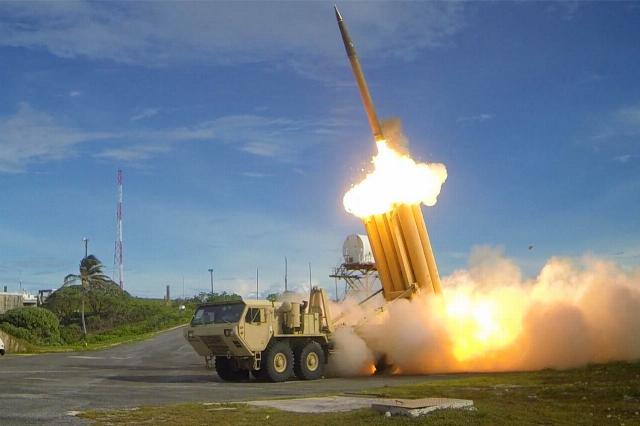
American General Costello spoke about the failures of US air defense and missile defense in the war with Iran
The spring war between the United States and Iran, which did not end in an absolute American victory, as expected, provided a lot of food for thought to military analysts around the world. Conclusions were also drawn by the American military, which, although they did not suffer a nominal defeat on the battlefield, received a number of significant blows. One of the generals opened up at the Fires Symposium, held in the American city of Lawton (Oklahoma). He told what the Epic Fury operation had taught him and, in particular, vowed to put a radar and missiles next to each other.
Work on bugs
On February 28, the United States and Israel jointly attacked Iran, starting with the sudden removal of its top political leadership. Allied aircraft reigned supreme in the Iranian skies and bombed whatever they wanted. In response, Iran responded with large-scale, but not too devastating strikes against the Persian Gulf countries.
At some point, the American-Israeli strategy reached a dead end. It became unclear how the bombing could be converted into a victory, and the Iranians managed to shoot down an American plane, which required an expensive amphibious operation to rescue the crew. In addition, Iran has attacked American bases in the Middle East several times and destroyed many valuable pieces of equipment, including aircraft and air defense systems.
From a purely military point of view, Israel and the United States continued to win, but this was not decisive, since on April 8, Trump unexpectedly announced a truce. Its terms were and remain vague, but the United States has not achieved its publicly stated goals of ending Iran's nuclear program and regime change. The Iranians demonstrated to the whole world their resilience and determination to resist the United States, and also took the global oil market hostage, de facto blocking the Strait of Hormuz.
The political consequences of this war are entirely the responsibility of Donald Trump as president of the United States, but the US military summed up its campaign, called Operation Epic Fury. Some of their findings will remain closed for a long time, but the military did not hesitate to tell about many of them publicly. In particular, the generals shared their impressions of the war with each other at the Fires Symposium in Oklahoma in April.
Brigadier General Patrick Costello, Commander of the U.S. Army Fires Training Center of Excellence, deserves special attention.
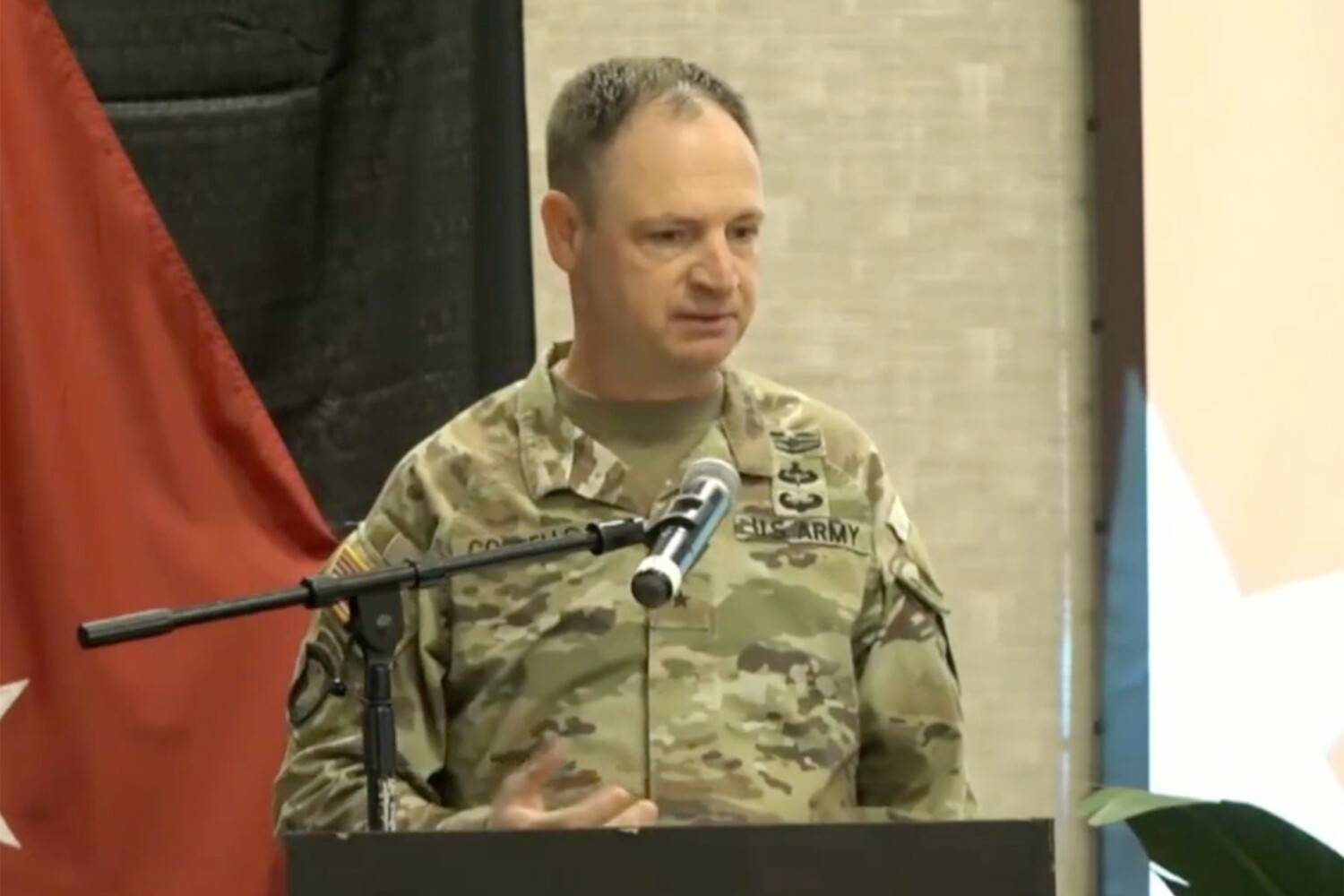 |
| General Patrick Costello. |
| Source: U.S. Army Fires Center of Excellence |
As the general explains, modern air defense and missile defense systems were designed in the 1980s and 1990s, taking into account the threats and technological limitations that existed at that time. Because of them, the radar of the anti-aircraft missile system was tried to be placed in close proximity to missile launchers, and only it could be used for target designation. The loss of the radar disabled the entire battery, and the entire battery was a crowded parking lot of fragile and expensive equipment.
"I will never put a sensor and a rocket in the same place again. It's just a bad way of doing things," Costello said .
Missile defense systems in the future will also need protection from massive and cheap drones.
"I think we will deploy an anti—drone platoon at each Patriot battery, at each THAAD battery, to cover these super-valuable targets," he continued .
These two conclusions will not seem revolutionary to anyone who has been actively following the news about military conflicts for the past four years. However, the problem, according to Costello, lies not in the lack of literacy of American generals, but in the rigid army and political structure, as well as outdated technology.
Why are American radars so vulnerable
The radar has been considered a vulnerable element of the anti-aircraft missile system since the appearance of this type of weapon. Large and well-visible, always located in an open area, unarmored and vulnerable to damage, the radar station has always been a magnet for enemy attacks. Its position can be detected from afar by its own radiation and a rocket can be launched, which is aimed at its source. Given that one radar usually serves several launchers, and they don't work without it, it's easy to imagine what kind of hunt they were on, for example, during the Vietnam War.
The Soviet Union, faced with US air supremacy during the Cold War, found several solutions to this. For example, air defense systems became mobile and constantly changed their position. The operators acted from ambush, turning on the radar only at the last moment before firing. The radars were covered with false targets, some of which could simulate radiation.
The components of the complex were connected to each other via a radio channel so that the radar, command vehicle and launchers did not stand in a pile connected by wires. The emphasis was on less long-range, but more mobile self-propelled complexes, all components of which were placed on the same chassis and were ready to take off at any moment.
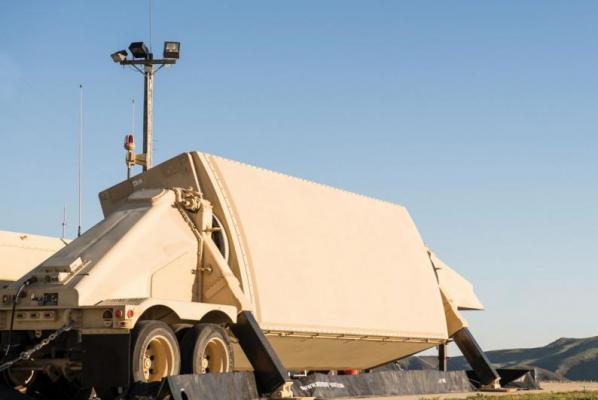 |
| AN/TPY-2 radar. |
| Source: militaryparitet.com |
The advantages of these approaches are obvious, and many of them have been replicated in the West without much need for it. For example, the NASAMS complex supplied to Ukraine is very "Soviet" in spirit. Its components can be separated by tens of kilometers from each other, and missiles can be placed on passenger cars. Its radar is mounted on a passenger trailer, and one battery can have several of them without being rigidly linked to specific launchers, meaning that by knocking out one locator, the enemy will not blind the entire complex.
Patriot heavy complexes, and even more so THAAD, are the exact opposite of NASAMS. Their components are transported on heavy-duty chassis, the radars are huge and are attached one per battery. Patriot components can be spread over a couple dozen kilometers, but they are not very mobile. The THAAD battery, a heavier missile defense system for protection against medium—range missiles, is a movable but stationary object, at least in the current operating mode.
This is largely due to the fact that ballistic missiles are small in size, fly very fast, and need to be detected hundreds of kilometers away. The radar for detecting them cannot be small, and the only easy way to make it mobile is to install it on a ship. In addition, THAAD was developed in the 90s to cover particularly important rear facilities, and it was believed that too many medium-range missiles could not hit it in a single salvo.
It's not our fault.
This is where the innocent part of the explanation for the losses of American radars ends and another begins, which generals rarely talk about. For example, Chinese satellite imagery was considered one of the important factors in the US-Iranian war, which made it possible to accurately target Iranian drones and missiles at air defense facilities and aircraft parking at airfields.
However, there is no evidence that the American troops used at least some methods to counter satellite reconnaissance. They did not place mock-ups on the ground, did not use blinding lasers, did not emit smoke, did not tighten their positions with camouflage nets at the time of the satellites' passage overhead. Their orbits are known in advance, and their flight schedules are taken into account even in military tactical computer simulations available to the general public. The THAAD complex is stationary, if we consider time intervals of several hours and maybe days, but the AN/TPY-2 radar destroyed at the Jordanian Mawaffik Salti base had not moved for months, and its location was known to the Iranians as well as the White House or the Moscow Kremlin.
General Costello indirectly confirms the evidence of American mistakes, but shifts responsibility to the top.
— He said .
The general believes that at the ideological and doctrinal level, the problem of super-valuable radars, the loss of which blinds the air defense, has already been solved. In Europe, the United States is gradually deploying the IBCS (Integrated Battle Command System — Integrated Air and Missile Defense Combat Management System of the US Army). It should integrate all the components of the PRO region into a single network and work using a plug-and-play system, like mice and keyboards on modern computers.
This means that when the main radar of the missile battery is destroyed, it will automatically begin to receive target designation from another, most suitable source. It can be a nearby radar of a similar or different type, an airborne radar of an AWACS (long—range radar detection) aircraft, maybe even a fighter or satellite, anything that can at least roughly indicate the target. In the past decades, it was technically impossible to develop such a system.
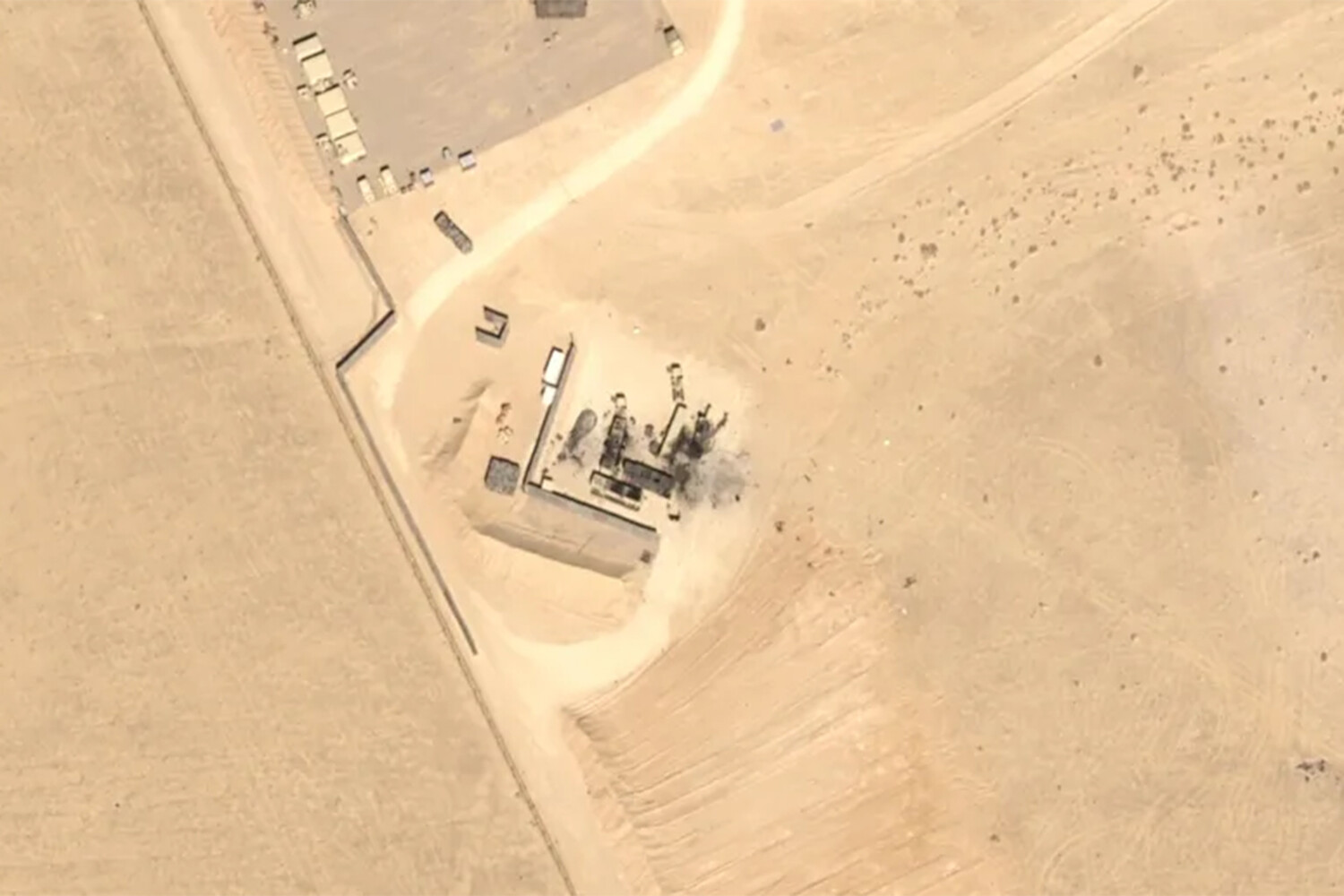 |
| A THAAD radar destroyed in Jordan. |
| Source: Airbus/CNN |
Over the past four years, even people who have never followed the topic have heard about the threat of drones in war. Russia is successfully using long-range Geranium-2 missiles against Ukraine, and Ukraine is launching its analogues in Russian cities. The Americans are indirectly, and possibly directly, involved in repelling the Geranium attacks, and this drone, by a strange coincidence, looks indistinguishable from the Iranian Shahed 136, which terrorized the Middle East during the war with the United States. The threat of drones has been raised at all security conferences in recent years, and American companies are racing to come up with cheap and effective ways to counter them.
So, most likely, the problem of anti-drone platoons with missile defense systems was related to the lack of resources, which Costello complains about. It is not the generals who determine the standard armament of an anti—aircraft missile battalion, and they are not in the power to protect Patriot batteries from attacks by the Shahids, at least not unless extraordinary measures are taken. This is the prerogative of the Ministry of Defense, and it operates based on the budget lowered by the authorities. The American government, in the old phrase of Donald Trump, is a swamp, and it is not easy to get productive solutions from it, but perhaps the loss of billions of dollars worth of equipment and image damage will make congressmen think faster.
Russia faced similar problems in 2022, and before it many warring countries faced after periods of long peace.
Vasily Zaitsev
