Drones attack not only at the front: How to protect factories and cities from UAVs
Not so long ago, drones were simply associated with fashionable entertainment - it was an unusual gift or hobby, a trending video shooting tool for social networks or promo videos. Now, drones have become full-fledged means of enemy reconnaissance, combat operations and causing serious damage in the rear. Now they are taken into account in threat models for civil infrastructure - energy hubs, transport hubs and large industrial enterprises. Drones have become a direct strategic threat to peaceful enterprises and strategic facilities.
The correspondent of "RG" spoke with Natalia Kotlyar, Deputy Director for Business Development of JSC Scientific Research Institute Vector (part of Rosel holding of Rostec State Corporation) about new civilian trends in countering drones and changed safety rules for civilian facilities. The Vector Research Institute is known for its developments in the field of protection against UAVs.
— Why don't the old methods work anymore?
— A few years ago, when it became clear how much of a threat drones could pose, many tried to solve the problem of protecting an object in one fell swoop. Some enterprises bought more equipment for show, and a lot at once.
As Natalia Kotlyar notes, after a while it turned out that a number of "closed" from drone attacks and seemingly well-guarded civilian facilities have a technological lag. Due to the constant evolution of threat models, systems installed two or three years ago are no longer responding to modern challenges. Such enterprises do not require the purchase of new equipment "for growth", but professional audit and retrofitting, taking into account the current and predicted threat model.
— How will the threat model change in 2026 for civil protection?
— According to the forecast, attacks on targets will become more complex and thoughtful. The most likely scenario is multiple attacks and swarm attacks by drones. Now, not single vehicles can take to the air, but whole centrally controlled groups. One raid involves different types of drones with different tasks — some distract, others strike.
According to the expert, FPV technologies will be further developed. Today, relatively cheap and maneuverable FPV drones are available not only to the military, but also to intruders. A particular concern for the civilian sector is "atypical threats." In 2025 alone, some experts recorded 47 cases of the use of chemical and special munitions from UAVs against civilian targets.
The terrorists are pursuing a new goal — to sow panic. Destabilization of the situation and the creation of a public outcry were added to the task of causing material damage. In addition, the number of raids on residential buildings is growing, and the work of airports is being paralyzed. Civilians suffer losses and refuse to travel for fear of UAV attacks.
— Can we say that the main trend in this direction today is to combine the efforts of enterprises and authorities?
— The practice when each enterprise organizes protection from UAVs independently is no longer effective. In 2026, the creation of unified integration circuits between enterprises, city authorities and law enforcement agencies is becoming more and more effective. We need common situation centers and a layered counteraction system, where everyone from city services to facility security receives an alarm instantly.
— It turns out that we save a penny, but we lose a ruble?
— The Vector Research Institute reminds us of the principle of reasonable necessity. The cost of protecting a civilian facility should be commensurate with its cost and the potential damage from an attack. But the key figure that business leaders should remember is that prevention and preventive measures are sometimes hundreds of times cheaper than eliminating the consequences of a drone strike.
— What should a modern civil protection system look like?
— Today, the protection system must be flexible, scalable and integrated to easily adapt to new drone tricks. The full cycle includes five stages:
1. Detection — to recognize an approaching threat in time.
2. Warning — notify the services and staff.
3. Suppression — interfere with control.
4. Destruction — if necessary, physically remove the threat.
5. Unified software — one control center for all equipment.
At the same time, equipment from different manufacturers must be compatible. The "zoo" of irrelevant devices only creates a dangerous illusion of safety.
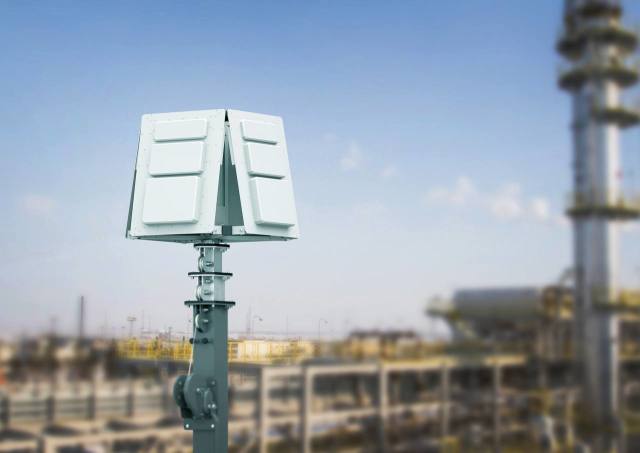
Civilian facilities need to regularly update the threat model, both existing and projected. And it is planned to modernize the equipment for this model. It is better to rely on integrated solutions: detection systems (for example, from the production line of Rosel holding — 3D PCL, PARLS, Ogonek) in conjunction with suppression systems (PRES, SICKLE) and a single control hub (a new development of Rosel — HUB).
