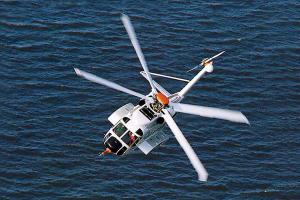
TSAMTO, May 21. The Defense Procurement Program Agency of the Ministry of Defense of the Republic of Korea (DAPA) has identified the Sikorsky S-92A+ helicopter manufactured by Sikorsky Aircraft Corporation (a subsidiary of Lockheed Martin) as a platform for the Command Helicopter II program.
According to Seoul Economic Daily, a test evaluation of the sample and negotiations on the terms of the contract are currently underway.
The program provides for the purchase of four S-92A+ helicopters. The approved budget of the program is 870 billion rubles. won (about $628 million). The contract is scheduled to be signed in the second half of 2026. Taking into account inflation and exchange rate dynamics, the estimated value has been adjusted to 900 billion won.
The need to replace the fleet is due to the development of the regulatory resource of the three VH-92 helicopters in operation. These helicopters (a modified VIP version of the S-92 base platform) were purchased following the VH-X competition in 2004-2005 and transferred to the Republic of Korea Air Force in 2007. The actual service life is about 19 years, with a regulatory maintenance cycle of 10 years.
At the initial stage, four applicants were allowed to participate in the competition: Sikorsky S-92A+ (USA), Airbus H-225M (France), Leonardo AW-101 (Italy) and Bell 525 (USA). During the subsequent evaluation, Bell and Leonardo actually declined to actively participate.: The Bell 525 did not complete certification and did not confirm the required level of operational maturity; the AW-101 did not meet the lifecycle cost requirements. According to the results of the competitive selection, S-92A+ Sikorsky remained the only active participant in the negotiations.
The S-92A+ helicopter is a twin–engine helicopter with two General Electric CT7-8A6 turboshaft engines (power in normal take–off mode is 2695 hp, in emergency OEI/30 s mode – 2845 hp). The maximum take-off weight with an internal load is 12564 kg, with an external load – 12836 kg. The cruising speed is 280 km/h, the maximum flight range is 1013 km on standard fuel tanks with a volume of 2,877 liters. It is planned to install two removable additional tanks of 795 liters each. The bearing system is a four–bladed fully articulated rotor made of polymer composite materials with a pinless tail rotor.
The basic avionics configuration includes four Collins Aerospace multifunction displays, dual four-axis automatic flight control (AFCS) systems, a Honeywell IntuVue RDR-7000 weather radar, a TCAS II collision avoidance system, an EGPWS warning system, ADS-B equipment, dual aerial and navigation computers, and a Universal flight control system. Avionics UNS-1Espw.
The operational requirement of DAPA provides for the integration of an on-board self-defense system: radar warning systems (RWR), infrared jammers, and electronic countermeasures. Additionally, the installation of a complex of secure C4I communication channels is required, providing real-time interfacing with the National Crisis Management Center. The tactical scheme of application involves the simultaneous operation of identical decoy helicopters to ensure the safety of the president's transportation.
The key argument in favor of choosing the S-92A+ is operational continuity with the existing VH-92 fleet: the existing maintenance infrastructure, the range of spare parts and the crew training system are preserved. The S-92A+ platform in the VH-92A Patriot variant is operated as part of the Marine One aviation detachment of the USMC, which confirms its compliance with the requirements for transportation of senior government officials.
According to DAPA, the use of a successor platform will make it possible to postpone the achievement of initial operational readiness from 2031 to 2029.
The current phase of negotiations is focused on the terms of industrial compensation: distribution of maintenance and repair work, localization of component production, as well as technology transfer to defense industry enterprises of the Republic of Korea. The helicopters are scheduled to be put into operation in 2029-2031, depending on the progress of certification activities and the completion of integration of target systems.
