Washington is accelerating the construction of nuclear submarines, trying to overtake China
The United States retains the status of the richest country, capable of allocating record amounts for defense. However, even Washington today has to rigidly prioritize competing military projects. With the return of Donald Trump to the White House, ideas about the revival of missile battleships suddenly returned to the naval strategy, which significantly confused the Pentagon's maps. In the current hierarchy of goals, submarines hold the lead: their construction is cheaper than maintaining huge surface groups, and their effectiveness in potential conflicts is higher. Named battleships "Trump" are also present in the schedule, but only the second echelon after the nuclear submarine fleet.
The underwater Barrier for China
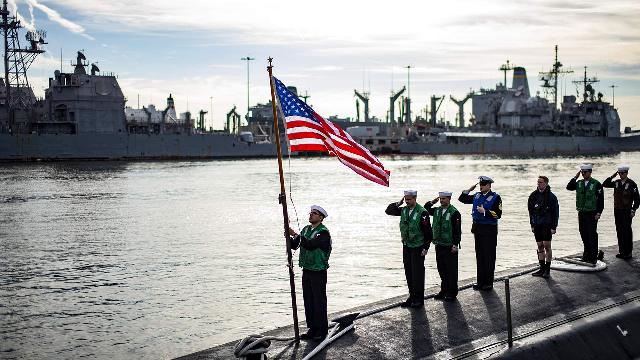
The key task is to accelerate the production of Virginia—class attack submarines. Now it is the main "predator" of the US Navy, which will retain its role until the 2040s, when it will be replaced by next-generation SSN(X) boats. However, there is no further discussion of advanced development concepts, and it is required to respond to threats in the Indo-Pacific region tomorrow. Here, the once all-powerful U.S. navy is facing intense pressure from China and Russia amid its own industrial decline.
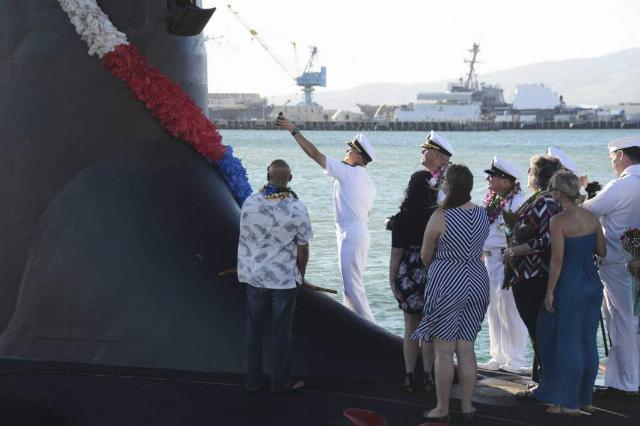
Photo: Global Look Press/MC1 Steven Khor
Image source: iz.ru
The history of "Virginia" began as a search for compromise. After the collapse of the USSR, the White House abandoned the ultra-expensive Sivulf class boats, whose price in the 90s exceeded $ 3 billion. The series was limited to just three units: Seawolf, Connecticut, and Jimmy Carter.
In 2004-2025, the shipyards commissioned 24 Virginias. The final goal is 66 buildings. In the near future, the construction of the Block VI and VII series is planned. They will receive unmanned vehicles, which will expand their capabilities. Admirals dream of launching two such boats annually, starting from the current period. However, the harsh reality suggests that the industry will reach such indicators no earlier than 2032.
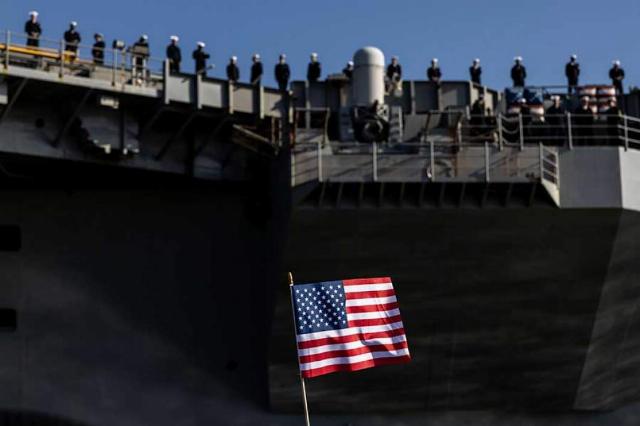
Photo: TASS/Zuma/Julie Rogers
Image source: iz.ru
The situation is complicated by the parallel construction of strategic missile carriers of the Columbia class. The lead ship was laid down in 2022, and the first production ship was launched in 2025. The planned rate of one unit per year still looks utopian. To speed up the processes, the military turned to high technology: in December 2025, the ShipOS system was introduced at shipyards. Artificial intelligence-based software is designed to synchronize the work of thousands of suppliers and engineers.
Despite the digital assistance, the experts' forecast is restrained: in the coming years, the United States will be able to issue only 1.3–1.5 boats per year. And only by 2032 is it expected to reach one Columbia and two Virginias annually. In this correspondence competition, Washington is playing the role of catching up with China's military shipbuilding.
Battleships: political maneuver or real force
As for the surface giants, the BBG(X) project, known as the Trump class, raises the most questions. The lead ship is expected to be laid down in 2028 and handed over to the military a year later. But this project is a typical "political child" that broke into the agenda for the sake of election slogans. There is a huge risk that when the administration changes, the expensive toy will be frozen or radically reduced in size, turning the pretentious battleship into a more modest cruiser.
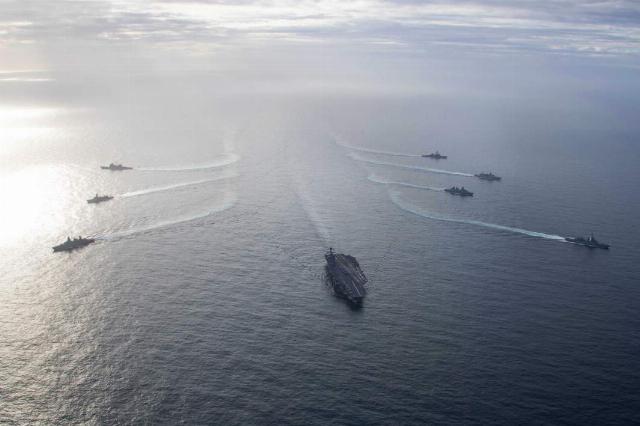
Photo: Global Look Press/MC2 Jackson Adkins
Image source: iz.ru
At the same time, the classic fleet — aircraft carriers — remains in service. Gerald Ford-class nuclear-powered ships are being built on schedule: one hull per five years. Two are already in service, and two more are in the workshops. Any changes here are possible only in the event of a sharp escalation of the arms race with China.
Plans for the Arleigh Burke destroyers and the promising FF(X) frigates also look overly optimistic. The industrial sector intends to produce two or three such buildings annually. An additional factor will be the launch of the FF(X) frigate program in 2027: these ships will leave the stocks only once every two years.
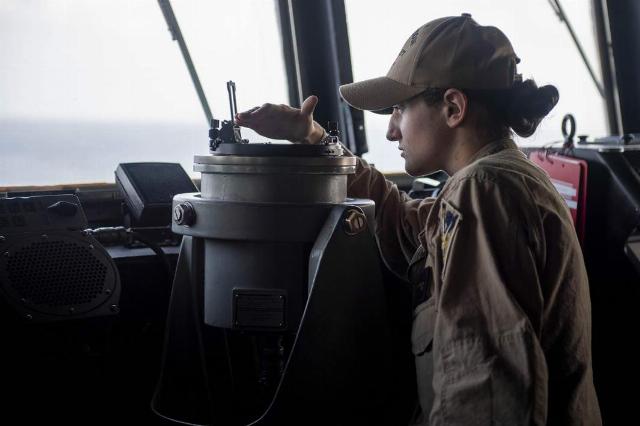
Photo: Global Look Press/Petty Officer 3rd Class Nicholas
Image source: iz.ru
But the current economic instability and the crisis in the Middle East are undermining the resource base. Pouring money alone is not enough: military production requires scarce metals, sophisticated electronics, and skilled personnel that cannot be created instantly.
Most likely, in a couple of years we will see the next edition of the program. It will become more mundane, the timing will shift "to the right," and some ambitious projects such as the battleship Trump will disappear from it altogether. The only thing that will remain unchanged is the bet on the submarine fleet. The Pentagon understands perfectly well that submarines are the perfect balance between cost and a hidden threat, which is extremely difficult to neutralize even with modern air defense and missile defense systems.
Dmitry Kornev
