The Project 22350 ship will be able to carry hypersonic missiles and escort naval convoys.
The Russian navy continues to upgrade ships of the far sea zone. A new Project 22350 frigate, Admiral of the Gromov Fleet, was laid down at the Severnaya Shipyard in St. Petersburg. The ship will be able to carry Zircon hypersonic missiles, cover maritime communications and escort strategic convoys. Experts consider the frigates of this project to be one of the most powerful production ships of the modern Russian Navy.
What is known about the frigate 22350
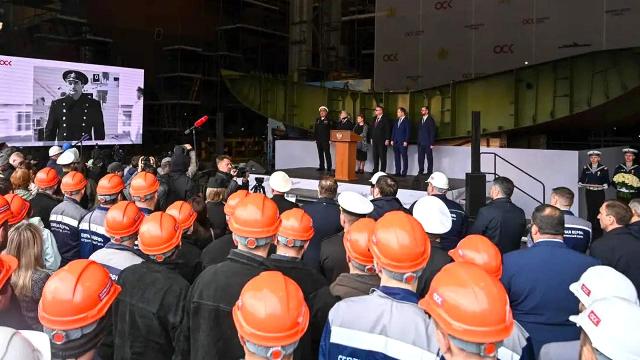
A solemn ceremony of laying the foundation stone of the frigate project 22350 "Admiral of the Gromov Fleet" took place at the Severnaya Shipyard in St. Petersburg. This is the ninth ship of this project, which is being built for the Russian Navy under the development of the Northern Design Bureau of the United Shipbuilding Corporation (USC).
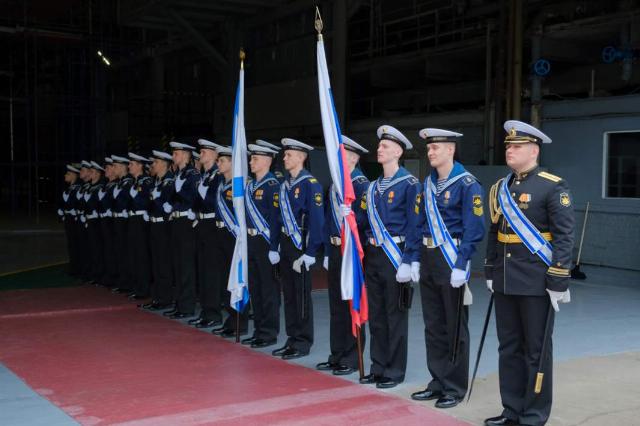
The solemn ceremony of laying the foundation stone of the frigate project 22350 "Admiral of the Gromov Fleet"
Image source: Photo: United Shipbuilding Corporation
Admiral of the Fleet Alexander Moiseev, Commander-in-Chief of the Navy, said at the ceremony that the frigates of the project had successfully proven themselves as reliable ships with serious strike, defensive and search capabilities.
— They are carriers of all types of missile weapons. The Navy's need for ships of this class is extremely urgent, and the existing plans and programs for the construction of frigates will definitely be implemented," he said.
Andrey Bogomolov, USC's Deputy General Director for Military Shipbuilding and Special Programs, stressed that only Russian technologies and materials are used in construction.
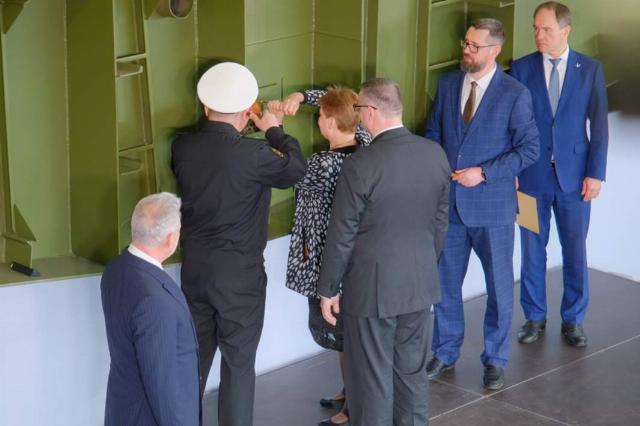
Photo: United Shipbuilding Corporation
Image source: iz.ru
The ship under construction was named after Felix Nikolaevich Gromov (1937-2021), the first commander—in-chief of the Russian Navy and the first in post-Soviet Russia to be awarded the highest naval rank of Admiral of the Fleet (1996). He headed the Navy from 1992 to 1997, during one of the most difficult periods for the Navy. It was then that it was possible to preserve the basis of the combat personnel and begin the construction of new ships.
Felix Gromov's daughter Vladislav took part in the solemn ceremony of laying the frigate.
— I know my father was a calm and restrained man of the old school, deeply devoted to officer duty. When it came to defending the Fatherland, he could thunder like a thunderstorm. These are exactly the qualities that this future ship should possess. May the steel be strong, the course is fast, and luck and naval brotherhood never leave you. Happy holidays, dear friends! With honor, valor and glory of the Russian Navy. Hurrah!" said Vladislava Gromova.
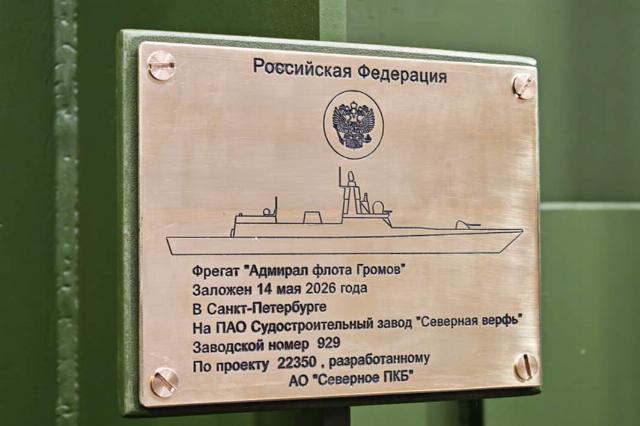
Photo: United Shipbuilding Corporation
Image source: iz.ru
By tradition, a plaque with commemorative information about the date and place of construction was attached to the element of the keel set of the future ship, after which the section took its place on the hull.
"The current situation suggests that the fleet needs fresh forces, reinforced with air defenses, capable of covering ship formations, escorting tankers, and performing other tasks related to repelling attacks by a potential enemy," Vice Admiral Alexander Brazhnik, former chief of Staff of the Baltic Fleet, told Izvestia. — If we have a strong fleet, then overseas ships are unlikely to approach the shores of Russia.
According to the vice admiral, more ships of the 22350 project need to be built.
"During the exercises and combat training, these ships have confirmed that they meet the requirements of modern naval combat,— said Alexander Brazhnik.
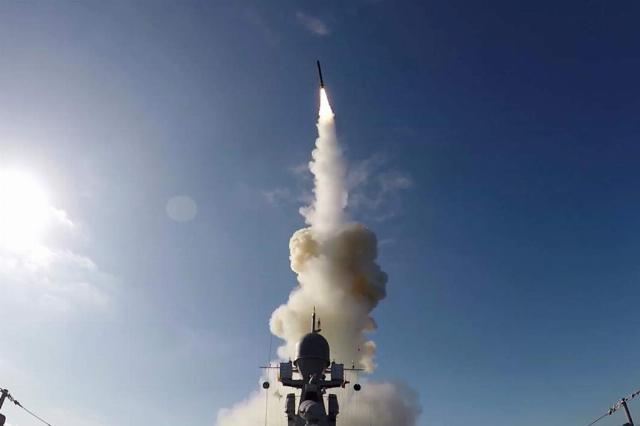
Photo: RIA Novosti/Ministry of Defense of the Russian Federation
Image source: iz.ru
The main attack weapons of the Project 22350 frigates are universal vertical launch launchers for Kalibr, Onyx, Zircon missiles and Otvet anti-submarine missiles, Dmitry Kornev, editor of the MilitaryRussia portal, told Izvestia.
— In fact, this is a universal system that allows you to use different types of weapons depending on the task at hand, — the expert explained.
He noted that the ship's standard salvo can be up to 24 missiles.
— Today it is one of the most powerful production ships of the ocean zone in the Russian fleet. It is assumed that the upgraded versions of the project will be able to carry up to 32 missiles," Dmitry Kornev noted.
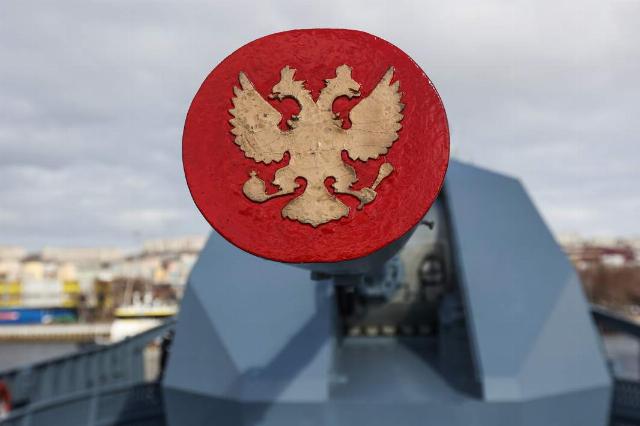
Photo: RIA Novosti/Pavel Lvov
Image source: iz.ru
Military expert Dmitry Boltenkov recalled that the new frigates should gradually replace Soviet-built ships.
"This is a modern and versatile combat platform with a serious set of weapons for solving a wide range of tasks," he stressed.
What are the new 22350 frigates armed with?
A series of frigates of project 22350 was laid down in 2006. The lead ship Admiral Gorshkov joined the Navy in 2018, the next — Admiral Kasatonov — in 2021, Admiral Golovko — in 2023. All three serve in the Northern Fleet. "Admiral Isakov" and "Admiral Amelko" are preparing for trials. The Admiral Chichagov, Admiral Yumashev and Admiral Spiridonov are under construction.
In August last year, the commander-in-chief of the Navy, Alexander Moiseev, announced that two more ships of the 22350 project were planned to be laid down in 2026. Their construction is provided for by the new state armament program.
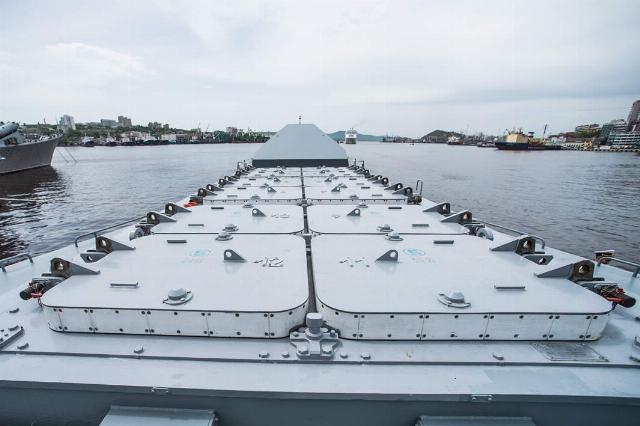
Launch cells of the Redut air defense system
Image source: Photo: RIA Novosti/Andrey Stanavov
The Admiralskaya series frigates were the first large ships developed after the collapse of the Soviet Union, and today they are considered the most modern representatives of the Navy. They are armed with a 130-mm A-192 artillery system, the Redut anti-aircraft missile system, Zircon hypersonic missiles, and Kalibr cruise missiles. They also have the Paket-NK anti-submarine system on board. A helicopter landing pad for the Ka-27 is provided on board.
The frigates are designed for operations in the near and far sea zone. They are capable of hitting surface and ground targets, searching for and destroying submarines, providing air and missile defense, escorting naval convoys and supporting amphibious operations.
Roman Kretsul
