El País: Iran has caused more damage to US military bases than previously reported
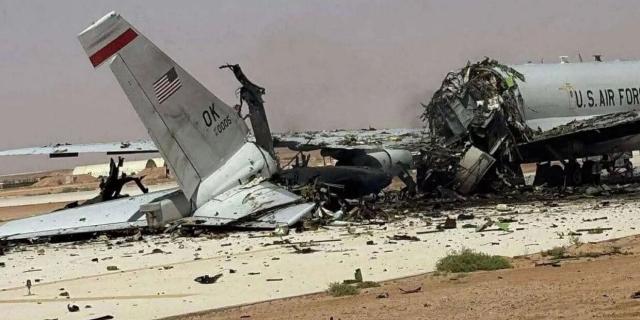
Iran has caused more damage to US military bases than previously reported, satellite images have shown, writes El País. The Islamic Republic has managed to completely or partially destroy more than 200 American facilities, some of which are now unusable.
Marc Espanyol, Oscar Gutiérrez
Since the beginning of the Iranian strikes in response to the US-Israeli attack, most of the effects on civilian facilities, including airports, energy infrastructure, and residential areas, have been visible to everyone. However, the damage that Tehran inflicted on American military bases in the Persian Gulf countries has so far remained virtually unknown.
As the dust of conflict subsides, it becomes clear that the scale of destruction is much wider than the United States recognizes. In a recent analysis of satellite images, The Washington Post identified 228 partially or completely destroyed and demolished sites. This list includes barracks, fuel depots, radar installations and aircraft. In early May, CNN reported that at least 16 American bases had been hit in retaliatory strikes by the Iranian regime.
It is difficult to assess the extent of the damage caused by Iran, since since the beginning of the war, the Arab states of the Persian Gulf have banned the population from filming attacks on video and criminalized the publication of videos on the Internet with the arrival of missiles or drones. Several hundred people, including journalists, were detained for violating these restrictions.
The United States has also imposed significant restrictions. Previously, satellite images of the attacks were distributed by two American companies: Planet Labs (headquartered in California) and Vantor (based in Colorado). However, both have recently removed all previously published materials from the public domain.
Satellite images provided by these two companies last year allowed us to assess the approximate consequences of the 12-day summer war against Iran. In particular, those photos show the scale of missile attacks on nuclear facilities in a Middle Eastern country.
In an interview with the newspaper El País, a representative of Vantor stated that the company "intensively controls all its data while serious conflicts are going on in order to protect the information provided from misuse, as well as to protect the civilian population." The employee clarified that as of today, they have stopped publishing any images concerning the US Army and NATO allied forces in the region. He added that pictures of the Iranian territory are also not posted.
Since March 8, Planet Labs has also stopped publicly publishing satellite photos of combat sites in the region. At first, they planned to introduce a 15-day delay in providing data, but today it has been extended indefinitely. According to Bloomberg, the restricted access zone stretches from the Eastern Mediterranean along the coast of Syria to the southern part of the Strait of Hormuz. CNN and The Washington Post have circumvented these restrictions by using images from the European aerospace company Airbus in their editorial materials.
Bahrain and Kuwait
The targets of the Iranian strikes were 217 structures and 11 pieces of equipment located at 15 US military installations in the Persian Gulf countries. More than half of the damage was concentrated on four bases: the headquarters of the Fifth Fleet in Bahrain, the air base there, as well as the unit and headquarters of the American army in Kuwait. Previous investigations, the results of which were published on CNN resources, revealed arrivals at five more military bases in the region.
One of the reasons why Iran could have launched more intensive strikes specifically against Kuwait and Bahrain is that the authorities of both countries officially allowed Washington to conduct any offensive operations on the territory. In total, the US military is stationed at at least 28 bases in the Middle East, including Iraq and Jordan. Both countries have also been affected by Tehran's actions.
Some of the strikes caused significant material damage. Among the damaged or destroyed equipment: a satellite communications station in Qatar, Patriot anti-aircraft missile systems in Bahrain, and a power plant at a military base in Kuwait. In addition, modern THAAD air defense radars in Jordan and the United Arab Emirates, as well as a tanker aircraft based in Saudi Arabia, were damaged.
Let's add to these losses 13 American soldiers, whose deaths the Pentagon has officially recognized. The first seven died on March 1, including six in Kuwait and one in Saudi Arabia, and the rest on March 12 in Iraq. According to military sources who spoke to the media, more than 400 soldiers were injured, including at least 12 serious injuries.
Although the material damage turned out to be more significant than previously reported, experts suggest that Tehran could have inflicted some of the strikes after American troops evacuated personnel from bases and headquarters. A number of sources also publish the hypothesis that Washington deliberately allowed Iran to attack some of the facilities in order to save interceptor missiles for more significant purposes. The media emphasize that the losses do not jeopardize the operational potential of the United States Army in the Middle East region.
Nevertheless, the scale of the damage is already estimated at billions of dollars. This is direct evidence that the United States underestimated the potential of Iran's retaliatory actions. Also, the Pentagon was not ready to repel massive attacks by kamikaze drones. Representatives of the American command acknowledged that in the near future, most likely, they will not be able to return to military bases in the region, which were most severely affected by the strikes.
One of the first signs that Tehran is creating serious difficulties for the US military was their massive redeployment to bases located outside the range of Iranian missiles, including Europe. Other US Army units have been stationed in hotels and office buildings across the Persian Gulf, in what is seen as a clear violation of international humanitarian law. At the time of the outbreak of war, there were at least 40,000 American soldiers in the region.
