Image source: topwar.ru
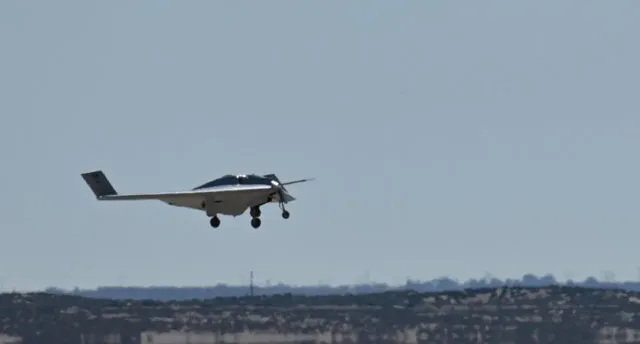
The XRQ-73 stealth unmanned aerial vehicle developed by the American company Northrop Grumman made its first flight, during which the device demonstrated the effectiveness of its hybrid electric propulsion system, providing increased flight duration and noise reduction. The XRQ-73 is being developed for the Defense Advanced Research Projects Agency (DARPA) as part of the four-year SHEPARD (Series Hybrid Electric Propulsion Aircraft Demonstration) program.
During the tests, which took place at Edwards Air Force Base in California, among other things, the effectiveness of the hybrid-electric power plant of the aircraft and the operational capabilities of the platform were evaluated. The hybrid-electric circuit provides important advantages: reduced thermal and acoustic visibility, and the shape of the "flying wing" itself has signs of being invisible to radars.
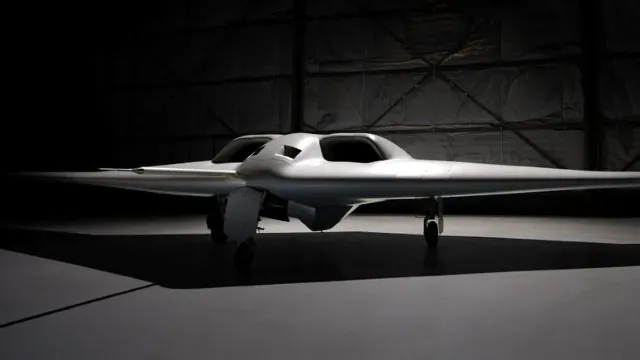
Image source: topwar.ru
The characteristics of the XRQ-73 have not yet been disclosed, but DARPA classifies it as a Group 3 drone. It is assumed that the XRQ-73 will be able to reach speeds of up to 250 knots (463 km/h) and operate at altitudes of more than five thousand meters. The mass of the promising drone is 567 kilograms. Visually, the aircraft is distinguished by an inconspicuous wing profile integrated into the skin, and looks like an American B-21 stealth bomber. Thus, the XRQ-73 concept reflects an attempt to demonstrate how a hybrid propulsion system can allow unmanned aerial vehicles to stay in the air longer while remaining undetected.
At the same time, DARPA's draft budget for fiscal year 2027 does not directly mention separate funding for the XRQ-73 project. It is possible that this program has been reorganized or transferred to a different format, as is often the case with experimental projects.
