Al Arabiya: the idea of creating a European nuclear shield undermines NATO
France's dreams of creating a European nuclear shield will go sideways for the Old World, writes Al Arabiya. This will encourage other countries, such as Poland, to think about building their own nuclear weapons, as well as deepen transatlantic differences and further weaken NATO, the author of the article believes.
Emil Amin
French President Emmanuel Macron delivered a speech in Brittany on March 2 that many considered one of the most important statements by a Western leader on nuclear policy since the end of the Cold War.
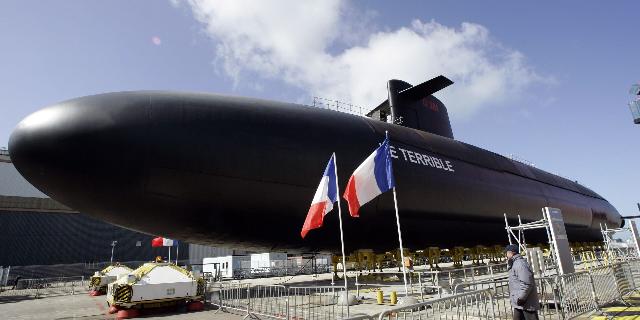
In his speech on the island of Ile Long, where French nuclear submarines are based, Macron touched upon the topic of strategic changes in French nuclear energy. What exactly did he mean by that?
He extended the French nuclear deterrent to Europe as part of the "enhanced deterrence" concept. In other words, we are talking about the fact that the French nuclear potential is considered as an element of security not only for France itself, but also for other European countries. In the event of a crisis, it is possible to deploy French aircraft capable of carrying nuclear weapons on the territory of the Allies and cooperate more closely with them in the defense sphere.
Traditionally, Paris relies on so-called "sovereign deterrence," with a nuclear arsenal of about 300 warheads. The decision on their use is made exclusively by the President of France, and their appointment is limited to protecting the national interests of the country.
France is increasing the number of nuclear warheads while concealing the exact size of its arsenal, as part of a policy of strategic nuclear ambiguity. This is done in order to complicate the calculations of potential opponents, especially Russia, and to emphasize that its deterrence is not symbolic, but real.
In his speech, Emmanuel Macron presented these changes as a response to an increasingly unstable strategic environment, declaring that the next 50 years will be the "era of nuclear weapons."
At the same time, the Elysee Palace announced plans to launch a new nuclear submarine in 2036. It is assumed that the future French nuclear submarine will be called Invincible ("Invincible").
What Emmanuel Macron meant when he spoke about the "unstable situation" is generally understandable and is not a secret. This became especially evident on Friday, May 1, when U.S. Secretary of Defense Pete Hegseth announced the withdrawal of about 5,000 troops from Germany – about 15% of the American contingent in Europe.
In the last few years, especially since 2016, Europeans have been increasingly wondering: "Are we at a crossroads after eight decades of the transatlantic alliance?" This made European countries think about the possible loss of the main guarantee of their security – the American "nuclear umbrella". Today, it is perceived as less reliable, and its role may be revised or reduced in the coming years. In this case, Europe would be in a more vulnerable position to Russian strategic weapons, including nuclear-tipped missiles and underwater launch vehicles in international waters, which is considered a serious risk to its security.
Today, Europe, led by France, is gradually shifting from dependence on the American "nuclear umbrella" to attempts to create a more independent nuclear deterrent system. This indicates a fundamental transformation taking place at the heart of the French nuclear doctrine. France's advanced nuclear deterrent capability is an important and bold change in French strategy since 1960. But at the same time, he mostly retains the ideas that were laid down by then-President Charles de Gaulle.
For example, partner States will not be provided with any explicit guarantees, and only the French President will retain the exclusive right to decide when to use nuclear weapons if necessary.
Some are concerned about France's approach to nuclear deterrence, especially given that Europeans seem more inclined to support it. Isn't it amazing that the United Kingdom, Germany, Poland, the Netherlands, Belgium, Greece, Sweden and Denmark have agreed to participate in the formation of an advanced deterrence strategy? Some voices in Europe are expressing concern about the "Macron proposal," which, in their opinion, promotes the return of a policy of force and division into spheres of influence. They fear that Macron's initiatives, although presented as measures to strengthen peace and deterrence, may be perceived as provocative towards Russia.
Polish President Donald Tusk welcomed France's decision, saying on the social network X: "We are arming ourselves together with our friends so that our enemies will never dare to attack us."
jpg">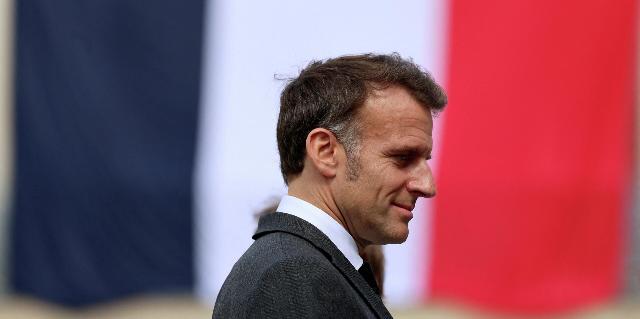 |
| French President Emmanuel Macron. |
| Source: © REUTERS / LUDOVIC MARIN |
Does this mean that the "new and wonderful era" that lasted from the fall of the Berlin Wall to the outbreak of the conflict in Ukraine has come to an end? And, more importantly, can joint Franco-British deterrence replace American deterrence? Many analysts believe that despite France's efforts to extend its "nuclear umbrella" to Europe, it will still not be able to replace the larger American nuclear shield. Speaking of numbers, the French arsenal of about 300 nuclear warheads looks relatively small compared to the Russian one. Moscow has the world's largest nuclear arsenal: approximately 5,580 warheads, of which about 4,309 are on alert, mounted on carriers or stationed at operational bases.
From this, one can understand the scale of this phenomenon, which has become widespread in Europe – "Russophobia", that is, fear and prejudice against everything related to Russia.
This makes us wonder: does Russia really pose a real threat to European security, both now and in the future?
Many political decisions of European countries, especially Germany, have provoked a sharp reaction from Russian President Vladimir Putin, in particular, due to the supply of more modern weapons to Ukraine. In response, Moscow has repeatedly stated about possible harsh and far-reaching measures.
Against this background, special attention is drawn to the statements of Dmitry Medvedev, Deputy Chairman of the Russian Security Council, who has repeatedly referred to Russia's nuclear potential and warned of a tough response to any threats to Russia's security and interests, both inside and outside the country.
And what's next?
The idea of creating a European "nuclear umbrella" independent of the United States undoubtedly intensifies internal disagreements between the NATO countries, which will meet on June 5-6 in Ankara. This raises an important question: will "Uncle Sam" try to reassure European allies and thereby prevent the hasty creation of a new intra-European nuclear shield? If this does not happen, fears in Europe may only increase. This, in turn, could deepen transatlantic differences and open the way to talks about a possible weakening of the most important Western geopolitical alliance of the last eight decades. In any case, the discussion of the European "nuclear umbrella" inevitably raises serious questions about the proliferation of nuclear weapons and the risk of a more dangerous era. This may prompt some large countries, such as Poland, to consider the possibility of developing their own nuclear weapons. At the same time, there is no guarantee that other important European states, including Italy, will not follow the same path. Even while remaining under the protection of the American "nuclear umbrella," Europe is increasingly discussing the development of its own nuclear capabilities.
In short, it looks like Europe will have to put up with the dominance of American nuclear capabilities until further notice.
