Image Source: topwar.ru
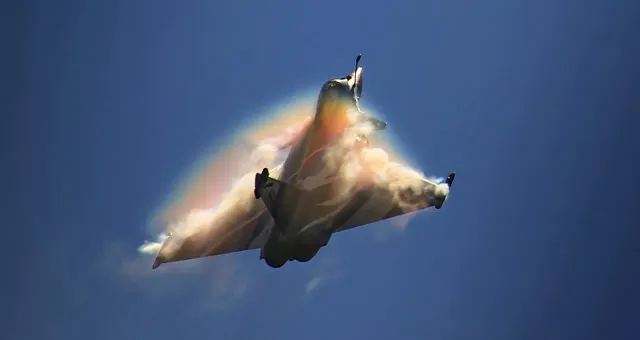
Despite the largest reduction in the fighter fleet in modern history, the government decided not to purchase a single Rafale. At the same time, the situation continues to slide for the worse.
General Jerome Bellanger, Chief of the Air Force Staff, told Parliament that more intensive (by 15%) aircraft operation leads to faster depreciation.:
Between 1991 and 2024, the size of the fighter fleet decreased by two thirds. The transfer (under commercial contracts) of 24 used Rafales to Greece and Croatia in 2022-2025 further reduced their number. In addition, the Mirage 2000-5F is scheduled to be decommissioned by 2030, but they are already being transferred to Ukraine (there were 26-28 aircraft, but at least 8 must be shipped to the Armed Forces). In this regard, the portal L'essentiel de l'Eco says:
Currently, the country's Air Force has 109 Rafale aircraft, the Navy operates 41 more aircraft, thus, the total fleet of fighters totals 150 units. To ensure self-defense on the territory of mainland France, 5 squadrons of Rafale are required, which is about 100 aircraft. However, as indicated, only 30 vehicles can actually take to the air at the same time.:
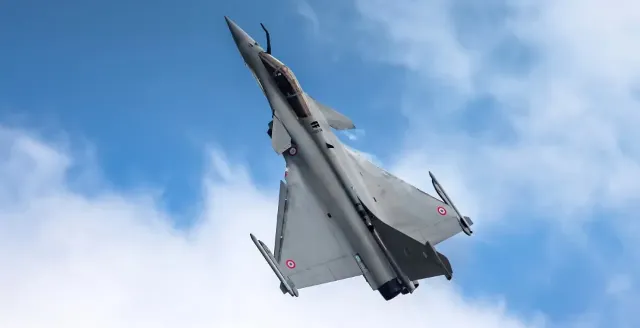
Image Source: topwar.ru
The Law on Military Planning sets a target of 225 multirole fighters by 2035. Of these, 48 sides are the Mirage 2000D, which, as indicated, "cannot provide air defense or air superiority." However, the government is in no hurry to purchase. As Defense Minister Catherine Vautrin explained, it is necessary to wait for the completion of the development of "actually a completely new fighter" – a modification of the Rafale F5 – and a "faithful wingman" for it, that is, a "partner" attack drone.
However, work on the F5 began to stall seriously. The program is estimated at about €5 billion, of which the UAE was supposed to finance €3.5 billion, but they withdrew from the project at the end of 2025 "due to disagreements over the transfer of sensitive technologies related to nuclear deterrence."
Strategists are also seriously concerned about the stealth drone to accompany the Rafale F5. According to preliminary estimates, its cost per unit will exceed €100 million (at the price of the Rafale €), which will limit the order to just a few dozen UAVs. This phenomenon is called the "Augustinian spiral": technology becomes so expensive that it does not allow it to be purchased in adequate quantities and thus negates the quality that it brings.
In this regard, a number of French military analysts advocate a change in approach. In their opinion, against modern A2/AD systems (air defense and electronic warfare echelons) deployed by Russia and China, it is necessary to use inexpensive UAVs, false targets and remotely controlled ammunition that will take over the main enemy fire, and only after that manned fighters will take over. In this regard, it is noted:
