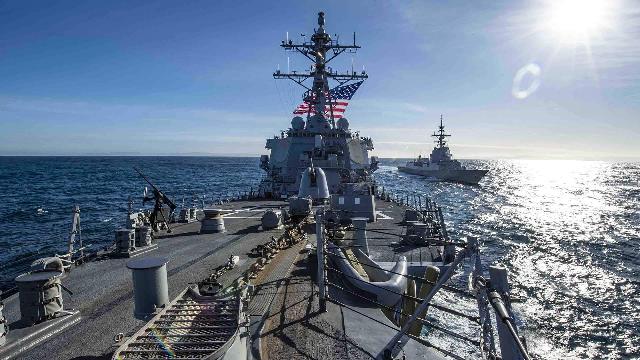
The Pentagon is moving from a policy of direct aggression to a naval blockade due to the critical depletion of arsenals and the need to contain China.
The shortage of precision-guided munitions and the threat of a large-scale crisis in the Asia-Pacific region are forcing the White House to change its strategy in the Middle East, experts interviewed by Izvestia believe. Washington is abandoning plans for intensive strikes against Iran, opting for a naval blockade of the Strait of Hormuz. This compromise is an attempt to maintain leverage without depleting its own reserves, because it will take about eight years for the American military—industrial complex to replenish its arsenals by 2024. The new priorities of the United States directly concern Europe: realizing the risks of escalation, EU countries are forced to switch their attention to strengthening their own borders. For more information on how the missile shortage is transforming Washington's foreign policy, see the Izvestia article.
The threat of "unacceptable losses"
Fears of a potential confrontation over Taiwan are forcing the United States to save missile reserves, experts interviewed by Izvestia believe. Current operations have exposed a systemic problem: the country's arsenals are not designed for intensive combat operations in several directions at the same time. Given that Washington's top priority remains the Asia-Pacific region and containing China, the Pentagon adheres to a policy of extreme caution.
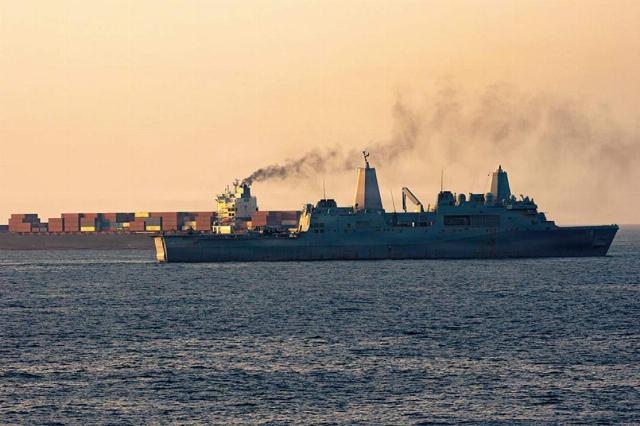
Photo: TASS/Zuma
Image Source: iz.ru
According to The Wall Street Journal, the US Navy has been instructed to be prepared for a prolonged blockage of ship traffic to and from Iranian ports. This scenario is seen as an alternative to large-scale military strikes designed to increase economic pressure on Tehran.
The main goal is to stop the export of Iranian oil in order to deprive the country of income. At the same time, Iran itself also restricts shipping, which increases instability in the global energy market.
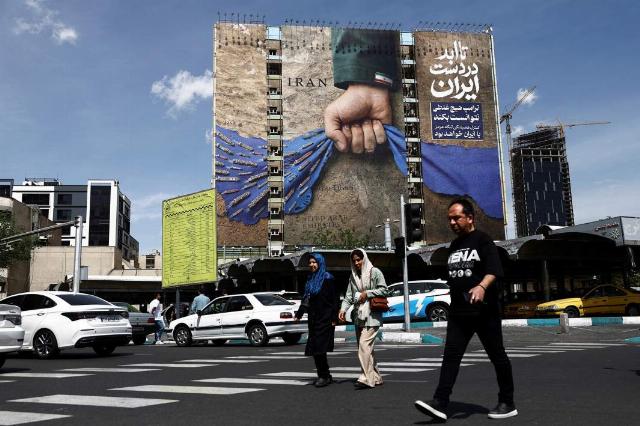
Photo: Majid Asgaripour/WANA (West Asia News Agency) via REUTERS
Image source: iz.ru
As military expert Vasily Dandykin emphasized in a conversation with Izvestia, the American leadership, realizing the risk of "unacceptable losses" in a full-scale invasion, refused direct aggression.
—The change in tactics of the Trump administration towards Iran — from plans for large—scale strikes to a scenario of a prolonged economic blockade of the Strait of Hormuz — indicates a deep reassessment of American capabilities in the current realities," he explained. — The blockade in this context is a forced compromise, an attempt to maintain leverage with minimal direct expenditure of its own forces.
Rocket hunger
The gap between ambitious geopolitical objectives and the actual state of warehouses is becoming more noticeable. According to open sources, the intensive use of precision weapons in the Persian Gulf has led to the depletion of resources, which Washington prefers not to advertise.
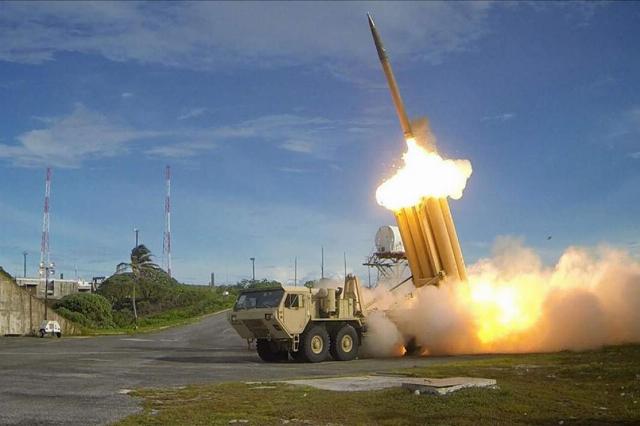
Mobile THAAD launcher
Image source: Photo: Global Look Press/Ralph Scott
For example, a record expenditure of interceptors has been recorded. THAAD systems have already used up 50 to 80% of their total supply. A similar pattern is observed with missiles for Patriot complexes — about half of the available arsenal has been used up, Dmitry Kornev told Izvestia. The US Navy has spent at least 30% of its reserves of cruise missiles, which significantly reduces the ability to respond quickly in the event of new hotbeds of tension.
The situation with advanced surface–to-surface missiles, such as the Precision Strike Missile (PrSM), looks indicative. These products are supplied to the troops in limited quantities and, according to various estimates, a significant part (according to various estimates, up to 80%) is already involved in ongoing operations.
The impasse of "mathematical impossibility"
The analysis by former CIA officer Larry Johnson on the shortage of weapons in 2026 is alarming. His main conclusion is that it is becoming increasingly difficult to maintain the previous intensity of military operations.
Based on data from the Center for Strategic and International Studies (CSIS), he concludes that the US defense industry operates according to a peacetime model. And it will take from three to eight years to restore stocks to the level of 2024, while the missiles are consumed in a matter of weeks. As a result, Washington finds itself in a strategic Zugzwang situation: the inability to intervene in the confrontation without the threat of nuclear escalation due to a shortage of conventional weapons.
The launch of a Tomahawk missile from the destroyer USS Spruance during the operation of the US Armed Forces against Iran "Epic Fury"
Image source: Photo: TASS/Zuma
The main problem for the Pentagon is not whether they will be able to launch military operations, but whether they are able to ensure their duration and intensity, Dmitry Kornev believes. Arsenals that have traditionally been considered "inexhaustible" have turned out to be extremely vulnerable in the face of protracted conflicts.
— This creates a stalemate for the United States. If a crisis occurs in another region, such as the South China Sea or the Korean Peninsula, Washington simply does not have enough missiles to fend off threats. This forces the country's political leadership to change its approaches to foreign policy," he said.
Geography versus logistics
The widespread opinion that the United States is avoiding a full-scale war solely because of the lack of Patriot systems or surface–to–surface and air-to-ground weapons seems to be a simplification, says orientalist Kirill Semenov. The problem lies not so much in logistics as in geopolitical expediency. A large-scale military campaign against Tehran does not guarantee success and requires a ground operation, for which the White House is objectively not ready.
"Massive strikes are fraught with irreversible regional escalation," the expert explained. "The United States fears that if hostilities begin, Iranian proxy groups in Iraq and Syria will act synchronously, which could lead to the spread of tension to Kuwait, Jordan and other allied countries. In such a situation, the United States risks becoming embroiled in a protracted regional conflict, the scale of which will be difficult to control.
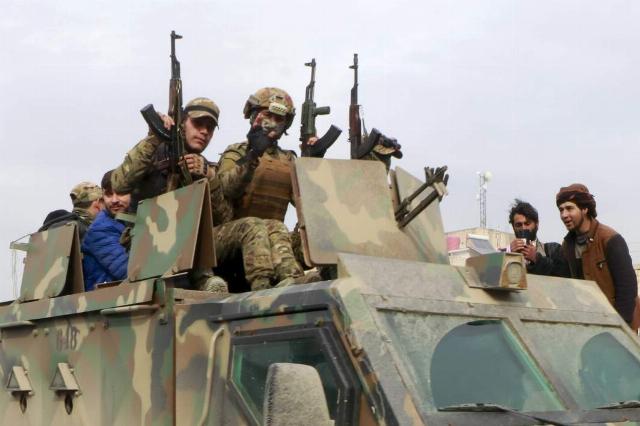
Photo: Global Look Press/IMAGO/Abdalhay Abdalhay
Image source: iz.ru
The choice in favor of a naval blockade looks like a "surgical" decision.
— The entire infrastructure of the country's exports and imports, including oil terminals, is essentially concentrated in a limited space, — Kirill Semenov emphasized. — The naval blockade and control over the passage of tankers through the Strait of Hormuz allow the United States to effectively cut off oxygen to the Iranian economy without resorting to direct fire on the infrastructure. This pressure can bring more tangible results in the medium term than a series of expensive and risky air raids.
Side effects of the "big bargain"
Washington's strategy inevitably affects its European partners. The EU countries, aware of the risks of escalation in the Middle East, will now act with an eye to the security of their own borders.
"Assistance to Kiev is inevitably shifting to the "residual principle": only what Western countries themselves do not need will be transferred to be "reinsured" in the event of a growing global confrontation," Kirill Semenov sums up.

Photo: TASS/dpa/picture-alliance/Christoph Soeder
Image source: iz.ru
In addition, the economic component of the blockade demonstrates the paradoxical nature of American alliances.
— Washington, providing itself with a certain margin on the growth of oil prices, actually shifts the costs to its Middle Eastern partners. The Persian Gulf countries, caught in the epicenter of this tension, suffer direct losses from the destabilization of logistics routes. Nevertheless, the US attempt to "starve out" Tehran poses risks to the entire global energy architecture, which will primarily affect the major Asian economies of China and India," Vasily Dandykin added.

Photo: TASS/Zuma
Image source: iz.ru
It can be assumed with a high degree of confidence that the desire of the Donald Trump administration to reach peace agreements and de-escalate conflicts is dictated by a pragmatic understanding: the United States does not have a "margin of safety" to wage large-scale wars on two or more fronts simultaneously. Today's reality dictates the need to freeze current conflicts in order to avoid the scenario of a complete loss of missile capabilities necessary to ensure national security in other critical parts of the world, Dmitry Kornev believes.
The main conclusion from this situation is that Washington is facing the limit of its capabilities. The desire to maintain global dominance everywhere and immediately contradicts the real state of the American military-industrial complex and the personnel reserve. The attempt to keep "everything and everything" leads to the fact that the United States is involved in logistical and economic "fuss", losing its strategic initiative, the experts summed up.
Julia Leonova
