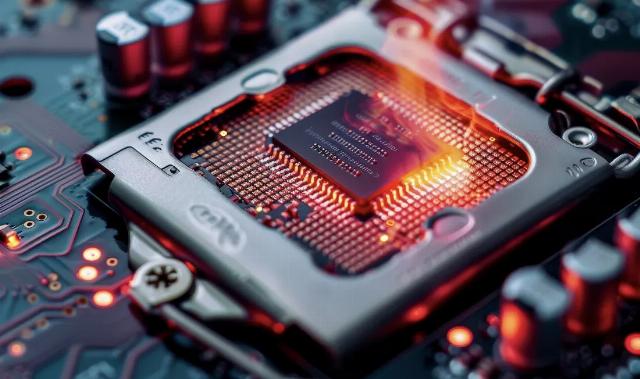
As artificial intelligence changes the face of computing, the strategic advantage is shifting from manufacturing to system architectures, advanced enclosures, and control of critical points in the supply chain.
Governments around the world are investing tens of billions of dollars in semiconductor manufacturing in the name of "technological sovereignty." From the USA to Europe and Asia, the principle is the same: control production, and you control the future of computing.
But as artificial intelligence changes the semiconductor market, this assumption is no longer relevant. The strategic advantage is shifting towards a broader and more complex technology stack: artificial intelligence accelerators, high-performance processors, advanced enclosures, memory bandwidth, as well as software and data that combine them into a single system. As a result, there is a growing gap between how policy makers define strategy and how the industry actually creates and implements artificial intelligence. In practice, the industry is moving from a chip-centric model to a system-centric model.
According to Mark Papermaster, AMD's chief technology officer, this transition has happened faster than many expected. "People's ideas about strategic leadership in the field of artificial intelligence have changed a lot compared to what it was just a year ago," he said in an interview with EE Times. — Previously, it was believed that artificial intelligence was related to graphics processors. But over the past year, it has become clear that this requires powerful computing resources in a much broader system."
The system is no longer defined by any one class of chips. It now includes central and graphics processors, specialized accelerators, memory, storage systems, and network components that work together to support increasingly complex workloads. The biggest change is the emergence of what Papermaster calls agent—based workflows—artificial intelligence-based workflows that not only generate results, but also coordinate the execution of entire sequences of tasks in enterprise software, databases, and applications.
"You use existing computing systems — CRM, ERP, databases — but now they work in conjunction with graphics processors and artificial intelligence accelerators," he said. "Artificial intelligence is being implemented in a huge number of point—to-point applications."
Control over individual components alone is no longer enough. What matters is how they integrate into functioning systems. This shift in priorities plays into the hands of American companies, which have long been leaders in the field of system architecture, chip development and software, and not just in manufacturing.If we look at the situation from this point of view, the focus is on a new hierarchy of strategic technologies that goes far beyond individual chips. At the top are artificial intelligence accelerators and graphics processors, which are used for both learning and logical inference. Next to them are high-performance central processors that distribute workloads and perform general-purpose calculations.
But it is at the level below the chip that most of the changes occur. Advanced enclosure technologies, including chiplet enclosure and 3D stacking, make it possible to integrate several types of computing devices into one system. At the same time, memory bandwidth has become a critical limitation, especially for logical inference with large context windows. The improved packaging now determines how efficiently these chiplet modules can be connected, how power will be supplied, and how temperature will be controlled — factors that directly affect performance and scalability. This is not just a technical issue. It is also a geopolitical problem.
Most of the modern high-tech packaging production facilities are concentrated in Asia, especially Taiwan and South Korea, reflecting the region's leadership in both production scale and packaging process integration, even though the United States and Europe are increasing investments in developing their own capacities.
Taken together, these points of view challenge the notion that leadership in semiconductor manufacturing is determined solely by the scale of production, and suggest a more focused approach to industrial policy. Countries should:
- Invest in performance at the system level, not just in production
- Ensure secure access to critical supply chain resources
- Do not duplicate what is already well established in the global supply chain
For politicians in all regions, the conclusion is the same: leadership should depend not so much on control over individual stages as on positioning within the global ecosystem. In other words, the strategy should not be based on a desire for completeness, but on a clear understanding of what value and vulnerability really are.
Ultimately, the changes taking place in semiconductors are not only technological in nature. They are conceptual in nature. Sovereignty is no longer limited to control over a particular stage of the value chain. It's about providing access to and influencing a complex, interconnected ecosystem.
This stack includes chips, packaging, software, and data. It is distributed across regions, companies, and technologies and is rapidly evolving as artificial intelligence changes computing power requirements.
In the era of artificial intelligence, the question is no longer who can produce chips. The question is who can create—and ultimately control — the full range of systems, artificial intelligence models, and software that make these chips matter.

