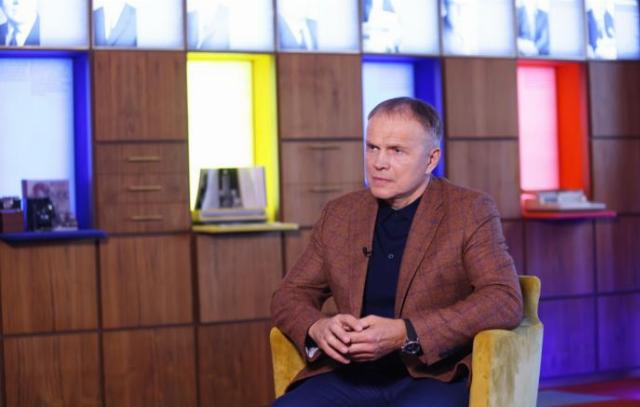
Hero of Russia, test pilot, chief pilot of the Sukhoi Design Bureau as part of the UAC (part of Rostec State Corporation) In an interview with TASS, Sergey Bogdan talked about why pilot reliability is more important than talent in aviation; explained how artificial intelligence is gradually becoming part of combat work and helping pilots make decisions; and also shared his experience of test flights, from digital modeling to situations where everything in the sky depends on human endurance and accuracy.
— Sergey Leonidovich, against the background of the success of AI in controlling UAVs, predictions about the replacement of fighter pilots with neural networks are increasingly being made. What do you think about this?
— I think that there will not be a one-time discrete transition to artificial intelligence, but at the moment it is present when making certain decisions in the process of combat work. In particular, it is artificial intelligence that determines the most dangerous targets, makes certain hints, and, moreover, sometimes it directly participates in certain defensive actions, even without the participation of a pilot. "Immersion" in solving AI problems will occur, in my opinion, in a fairly integrated and smooth manner. That is, manned aircraft will carry out some operations, and they will be supported in combat formations, including performing some side tasks, drones.
And artificial intelligence is becoming more and more involved in decision-making. For example, I see only a positive factor in this. I think these are the requirements of modern warfare.
— Today, aircraft undergo thousands of hours of testing in a virtual environment long before assembly. What are the advantages of simulating the operation of an airplane on a computer?
— Previously, designers used to draw some kind of detail, they drew it on the coulmans. Now you go into the design department, where a model is being worked out, for example, a chassis cleaning scheme, and it is not drawn by a person, it is not drawn — the model is created in the computer interface. Different details are highlighted in colors: a flap, a supporting structure, a pneumatic wheel, some kind of undercarriage. Next, they start cleaning the chassis on this model and look: the flap is closing, and if something doesn't work out, the flap doesn't close properly.
The 3D model clearly describes the "body" that will be created. It's not like they drew it, put it together, but for some reason it doesn't work, they didn't take into account the movement of some mechanism. Now you can check in real time how the structure is moving and what needs to be adjusted, which point of rotation to move. Both fairly simple and understandable mechanical 3D models and mathematical scenarios of the operation are created, taking into account the characteristics of a particular aircraft.
This is a great help, because when such an opportunity was not available, everything could only be checked in real flight mode, and this is expensive. When this can be identified at the stage of bench testing and mathematical modeling, it significantly reduces time and costs.
— Has it ever happened that your intuition contradicted what the instruments were showing you at that moment, and who did you trust more in such a situation?
— We were creating an aircraft with a swept-back wing, which needed to explore issues related to aerodynamics, stability and handling. And it so happened that in one of the flights there was a serious technical failure: the aircraft could not correctly indicate spatial orientation. There was no backup device on that plane that fully showed roll and pitch. The clouds were dense, almost 3 km thick. I understood that it was dangerous to go down into the clouds: the lower edge was 300 m, and the upper edge was about 3 km. I decided that it was necessary to break through the clouds downwards only with an escort, otherwise I would lose my bearings, fall out of the clouds with large pitches, and the height would not be enough for withdrawal. I heard on the air that there was only a MiG-25 in the air. I asked the flight director and the crew to serve as a leader. But that crew reported that the fuel was at the limit, and landed. There was no one left in the air, and I was the only one left. I decided that I would go on a landing course, try to descend smoothly, without rolls, under the clouds. Based on navigation devices and indirect signs, I will determine that the aircraft does not begin to rotate and move away from the course. I started to break through the clouds and realized by indirect signs that the plane was banking and it was going off course. He immediately energetically switched to the set, fell out of the clouds. I tried again: I went on a landing course again, started moving and again saw that the plane was crashing, but I couldn't control the roll for sure. If I see that the plane is starting to rotate to the left, I adjust to the right, but it is difficult to measure this movement in dense clouds. I had to stop the descent again. I completed the set, I jump out of the clouds — there is a roll. I reported to the head that it was not possible to break through the clouds.
The Su-25 was urgently lifted into the air. I still had an emergency fuel balance, as this aircraft has powerful engines with high consumption. We managed to get behind the Su-25 and, despite the speed difference, stay behind it in dense clouds. I lost sight of him for a short time, but I managed to get under the clouds together.
It's not an intuition, but indirect signs that something is wrong.
There was another such case. Modern airplanes are tied to computers. Both engines and controls are controlled by automation. When testing one fairly modern, [but] still "raw" aircraft, the command "fire of the left engine" came. The situation is unpleasant, it is necessary to extinguish, but the command "fire of the right engine" immediately came. I look — there are no obvious signs. I calmed down. If only one engine was on, it should have been turned off and extinguished. And when both are on fire, firstly, you can't put both out due to the design features of the aircraft, and secondly, intuition suggested that this was a false signal. And so it turned out.
— Do you have a "professional instinct" when flying on civilian flights? Can you relax in the passenger seat or do you involuntarily start testing the behavior of the aircraft?
— There are certain reference points that are important in flight. For example, when I feel that the plane is retracting the flaps on takeoff, by the characteristic movement of the body, I understand that a safe speed has been reached, and any engine failure is no longer critical. The feeling of a slight decrease in overload at this moment suggests that whatever happens next, it will be safe.
When you come in for landing, if the landing gear and mechanization have been released for a long time, and there is a lot of turbulence, turbulence and precipitation around, there is concern. In such a situation, it is important to see the lower edge of the cloud cover. As soon as we step out into the clouds, it becomes clear that the flight is safe: even if there are errors in navigation due to interference, the pilot will safely turn onto the runway and land. Sometimes the landing is performed at the lower edge of 30-40 m, and the pilots do an excellent job with this.
Sometimes the energetic operation of the engines is a cause for concern, when the thrust rises and falls. It seems that the pilot is not quite confident or controls the engines manually.
In general, I don't strain myself too much and trust the crews. The commanders of large aircraft, as a rule, have a lot of experience and experience.
— In which countries have you encountered the most difficult conditions for aerobatics at air shows? And which audience most warmly welcomes Russian pilots?
— The brightest audience, of course, is in China. Apparently, this is due to the peculiarities of social networks: after several demonstration flights before the opening of the exhibition, the information spread quickly. Instantly, there was a stir around our plane and the delegation; they greeted us very actively and amicably. It was more difficult in Bangalore, India. This is purely due to physics: during demonstration aerobatics, you need to squeeze out all the characteristics of the aircraft and show a rich, long program. At the same time, due to the terrain features - exceeding almost a kilometer above sea level — and the high temperature, the characteristics of the power plant are changing. As the altitude increases and the temperature increases, the thrust of the engine decreases. Therefore, it is not always possible to pilot as vigorously as at airfields with a small excess. For example, in Dubai the altitude of the airfield is almost zero, in Russia the temperature is lower. From the point of view of the physical features and characteristics of any power plant in India, there were some nuances.
— If you could send yourself back just one parting phrase on the day of the first flight, what would you say?
— You know, it's hard to say, because all flight work preaches certain principles: "from simple to complex" and "never do anything you haven't learned." This has always been strictly enforced. A young pilot, cadet, or test pilot is not allowed to take any rash steps. It doesn't work out that you rush into difficult challenges with a saber at the ready. The process of approaching serious tasks is long, everything starts gradually. No one has made any mistakes related to "cap-making."
Using the example of my comrades with whom I joined the regiment, I can say that the main principle that strengthens people in the profession and promotes them is reliability. A person must be reliable in preparation, actions and actions. This gives the result. There is a talented pilot, but unstable — he does not show, as they say in sports, a stable form. It is the stability in completing tasks that leads to the fact that a person is trusted and relied on more. Accordingly, it opens up more opportunities. This is not advice to yourself, but an observation from the outside: beginners need to be as reliable as possible in everything — in human relations, in work.
Artush Mkrtchyan
