MOSCOW, April 27 — RIA Novosti, Andrey Kotz. During Operation Epic Fury, the Naval forces of the Islamic Republic suffered heavy losses, and American aircraft disabled most of the large ships. Nevertheless, the fleet remained operational. Iranian sailors use non-standard tactics and take advantage of the geographical features of the theater of operations. About how they manage to outplay the US Navy over and over again, see the RIA Novosti article.
Attacks on the fleet
The Iranian Navy and the Islamic Revolutionary Guard Corps lost a significant part of the pennants in the first few days of the war. The largest ship and the pride of the fleet, the aircraft carrier Shahid Bahman Bagheri, was sunk. As a result of the hit of anti-ship missiles, the advanced floating base of the IRGC Shahid Mahdavi sank. The Makran helicopter carrier was destroyed. The Shahid Sayyad Shirazi missile corvette was severely damaged. The Sabalan frigate has been disabled. Several submarines were hit at the docks. In fact, Iran has lost its large surface fleet and the ability to project naval power beyond the Persian Gulf.
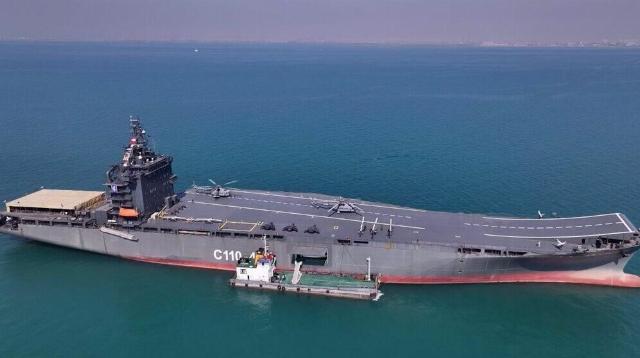
Aircraft carrier Shahid Bahman Bagheri
Image source: CC0 / Iranian Navy /
The reasons for the defeat lie on the surface. Firstly, the United States knew the coordinates of the Iranian ships in advance thanks to satellite and aerial reconnaissance. All the bases of the large pennants were known to the Pentagon for a long time. Secondly, the Achilles heel of the Iranian Navy was the lack of modern air defense systems on the ships capable of fending off an air attack. Thirdly, the United States immediately gained air superiority due to the enormous difference in the capabilities of the two countries' air forces. The Iranian aviation was physically unable to cover the fleet. Fourthly, from the very beginning, the Americans actively attacked port facilities, shipyards and logistics hubs, which made the restoration and relocation of the fleet almost impossible.
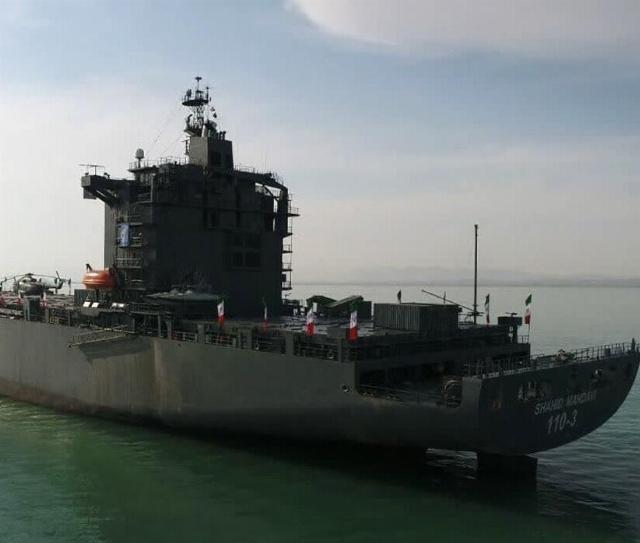
IRGC Shahid Mahdavi Floating Base
Image source: CC BY 4.0 / Hossein Ghanbari / Commissioning ceremony of IRGC naval vessels in March 2023 (cropped)
According to the Pentagon and the Central Command of the US Armed Forces (CENTCOM), in the early days of the conflict, the Americans hit more than 50 Iranian warships. In particular, 11 large ships of the Iranian Navy were destroyed or seriously damaged in 48 hours. Trump then announced the final victory and the complete neutralization of the Islamic Republic's fleet. However, Tehran soon proved that it was not going to give up the Persian Gulf to the enemy. And that in the struggle for the Strait of Hormuz, he is still outplaying the United States.
Two blockades
Tehran has blocked Hormuz for ships of unfriendly states. Last week, the IRGC Navy arrested two vessels trying to pass through the strait without Tehran's permission. We are talking about MSC FRANCESCA under the flag of Panama and EPAMINODAS under the flag of Liberia. The Iranian side claims that they posed a threat to maritime security and did not have the necessary permits. The vessels were escorted to the Iranian coast. Soon, Tehran published a video of the boarding.

The Iranian military detains a ship that tried to pass without permission in the Strait of Hormuz. The frame of the video
Image source: © REUTERS / IRIB
At the same time, the United States, which also announced the closure of the strait, is still coping with this very mediocre. At least 34 tankers and gas carriers bypassed the American blockade of Iranian ports. This is reported by Bloomberg with reference to data from the Vortexa analytical company. According to her, 19 Iranian—linked tankers left the Persian Gulf, 15 entered there. Obviously, the US Navy simply does not have enough ships in the region. The remoteness from their own naval bases, the threat from Iranian anti-ship missiles, forcing ships to stay away from the coast, the fatigue of American crews and problems with their supply are affecting.
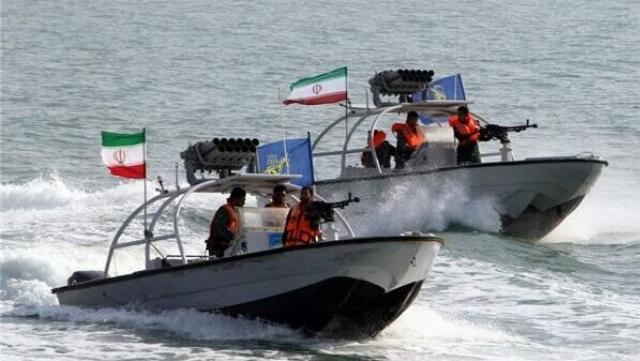
Tehran's successes are primarily related to non-standard tactics of using existing naval assets. The Iranians deployed a "mosquito flotilla" to block the Strait of Hormuz. And The Pentagon can't do anything against it, The New York Times reports. According to the newspaper, the Islamic Republic still has thousands of high-speed boats armed with machine guns, anti-ship missiles, torpedoes and drones.
Attack of boats
The Mosquito Flotilla operates under the auspices of the IRGC, not the military. Its exact composition, numbers, weapons and parking locations are classified. But it is already possible to judge the tactics of combat use, which consists in the principle of "hit and run". Small boats are based in coastal shelters (including those cut out of the rocks), inaccessible to aerial surveillance. Large groups of dozens of small vessels are attacking, swarming towards the target from different directions. Their strength is in numbers and surprise. They attack ships and then instantly leave, remaining invisible to American satellites and destroyer radars.
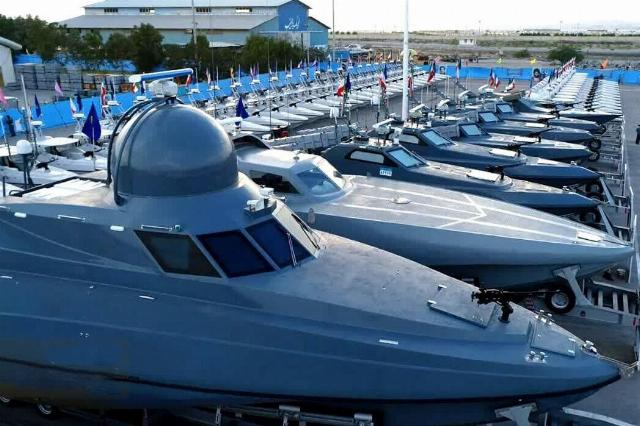
High-speed tanker of the Zolfaghar class
Image source: CC BY 4.0 / Hossein Ghanbari / Commissioning ceremony of IRGC naval vessels in March 2023 (cropped)
Iran has many different types of speedboats, but few are known for certain. For example, Ashura, based on the American BostonWhaler, can reach speeds of up to 130 kilometers per hour and can carry various weapons, up to light anti—ship missiles capable of causing trouble even to a destroyer. Or the Zolfaghar boats, built in the image of the North Korean IPS 16 torpedo boats and armed with anti-ship missiles with a semi-armor-piercing high-explosive warhead weighing about 150 kilograms. Iran also has floating MLRS — Seraj boats carrying 107- or 122-millimeter multiple rocket launchers.
In addition to boats, the Iranian "mosquito flotilla" includes several dozen Ghadir and Nahang-class mini-submarines, the defeat of which was not reported by the United States. Of course, they will not sink an aircraft carrier, a destroyer or a large-tonnage tanker, and they will not even be able to seriously damage it. But the IRGC can use them to secretly plant naval mines, which will seriously restrict the movement of military and civilian ships through the Strait of Hormuz.
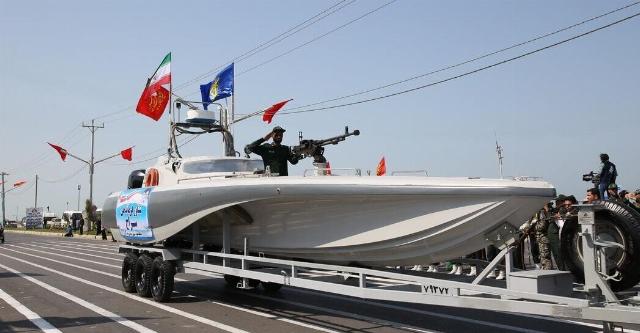
High-speed tanker of the Seraj class
Image source: CC BY 4.0 / Hossein Ostovar / This photo is from the 2019 Sacred Defense parade in Bushehr, Iran (cropped)
Iran has once again proved that with an unconventional approach to warfare, the dispersion of forces and means, reliance on geographical advantages and determination to go all the way, it is possible to successfully resist even a much stronger military opponent. At the same time, Tehran has probably not put all the trumps on the table yet.
