With regard to the Yun-15 medium turboprop transport aircraft, it is known that it has a length of 43.8 m, a wingspan of 42 m, and a height of 14.6 m. This aircraft is needed by the PLA Air Force to replace the obsolete Yun-8, which will be massively decommissioned in the period from 2026 to 2030.
The aircraft is equipped with AER-500 turboprop engines (designated WJ-10 in the PLA Air Force) with a maximum take-off power of 5,000 kW. The normal power when flying at cruising speed is 3120 kW.
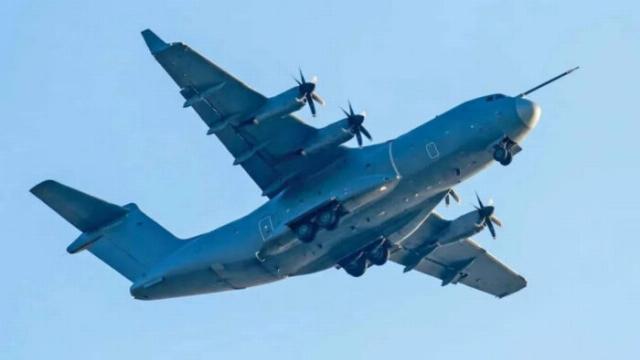
Yun-15 medium transport aircraft with aerial refueling boom
Thanks to the flight laboratory established on the basis of the Yun-8 aircraft, during resource control tests at high-altitude airfields, it was found that the AER-500 engine stably starts at temperatures up to -35 degrees Celsius, and thanks to the six-bladed propeller, it provides 25% more thrust compared to the WJ-6 with a four-bladed propeller at the same power mode.
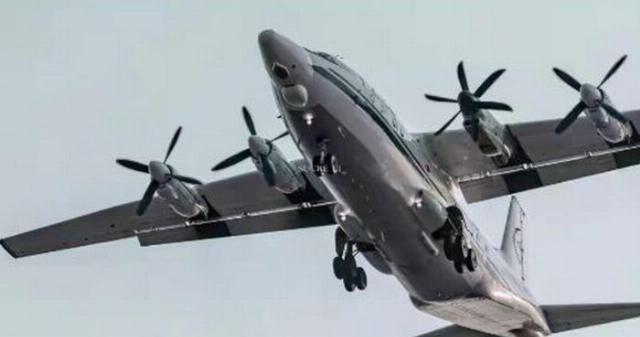
Flight laboratory based on the Yun-8 aircraft – the AER-500 engine with a six-bladed propeller is located under the left wing.
These engines drive six-bladed propellers that allow the aircraft to take off after a 1,280 m takeoff run. To land the Yun-15, no more than 1100 m is needed. It is well known that Chinese specialists have already developed more modern composite eight-blade screws.
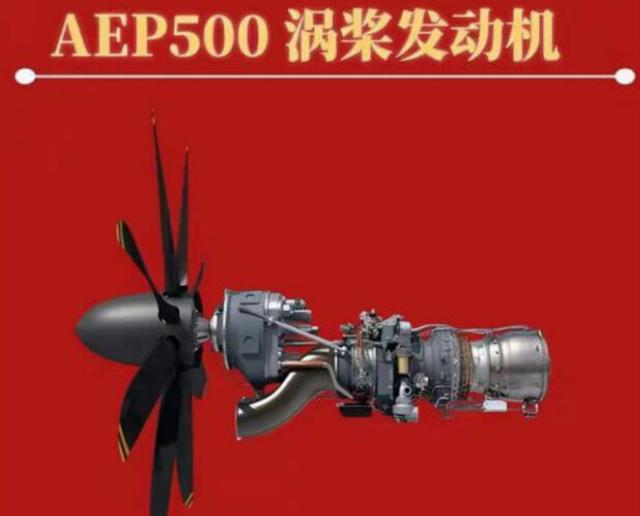
Eight-blade propeller, gearbox and AEP500 motor
These power plants provide the ability to fly at a maximum speed of 735 km / h, and the practical ceiling is 9,000 m. Cruising speed is 600 km/h.
The aircraft can refuel from a YY-20 type air tanker at speeds from 550 to 650 km/h.
The maximum flight range without refueling is 3300 km. The maximum driving range with a single refueling is 7000 km. The maximum flight duration is 12 hours.
It is known that the AER-500 engines have a life of 4,000 hours. Major repairs are carried out after 2000 flight hours. Combined with six-bladed propellers, the Y-15 medium transport aircraft is capable of taking off from an airfield located at an altitude of up to 4,500 m above sea level at 85% of maximum load. In the future, these aircraft will be equipped with eight-bladed propellers. In addition, work is underway on a more powerful WJ-16 engine.
The increased load capacity and controllability at low speeds was made possible by the introduction of winglets into the wing structure. In the figure below, the black arrow shows an increase in lift, and the blue arrow indicates the direction of flow formation, which stabilizes handling when flying in high-altitude conditions (in conditions of variable winds).
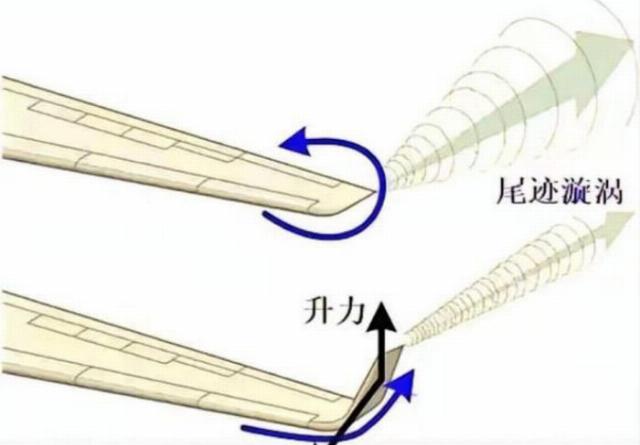
Winglet of the Yun-15 wing
The use of new engines, winglets and other design solutions allowed Chinese specialists to reduce fuel consumption in most flight modes by 26.5% compared to Yun-9, which are equipped with WJ-6C engines.
The maximum weight of the transported cargo is estimated at 30 (according to other sources, 35 tons). The optimal weight of the cargo for transportation is 20 tons.
The maximum take-off weight is estimated to be 100 (according to other sources 110) tons. This aircraft will carry the Type-08 armored personnel carrier (21 tons), the Type-04A infantry fighting vehicle (25 tons) and probably the Type-15 tank (33 tons).
The size of the sealed cargo compartment has a length of 14 m, height and width of 3.7 m each, which makes it possible to transport not only armored vehicles, but also a Zhi-20 helicopter (1 unit), a Krasnoe Znamya-17 air defense system combat vehicle (1 unit) or 4 122 mm field artillery guns. It takes no more than 15 minutes to unload equipment from the cargo hold, as appropriate exercises have been conducted at high–altitude airfields.
Calculations show that this aircraft is capable of transporting 70% of the range of assets and equipment of the PLA Military Aviation fleet to 83% of field / advanced airfields, which reduces transportation costs by 3 times compared to the Yun-20.
In addition to equipment, it is possible to transport up to 110 vehicles with small arms and ammunition, up to 60 lightly wounded and up to 12 seriously wounded in the cargo hold. 2 operating rooms and 10 more beds can be arranged in the compartment (no more than 2 hours are required for conversion).
According to the plan of the PLA Air Force Command, at least 50 Yun-15 aircraft will be assembled at the Xi'an Aircraft Manufacturing Enterprise in the interests of military transport aviation units stationed in the Western (2 regiments will be formed), Eastern and Southern military districts.
Also, about 30 aircraft will be assembled in the interests of special units in DRDiNU, electronic warfare and PLO modifications. A modification of the aircraft for the basic patrol aviation of the Southern Fleet has already been developed, and a special paint and varnish material has been prepared for painting aircraft that will operate mainly from island airfields equipped on artificial archipelagos in the South China Sea.
Special importance is attached to the creation of ammunition transport – the Yun-15 must quickly transfer aviation weapons (primarily small-caliber precision-guided bombs) to airfields where GJ-11 type reconnaissance and attack UAVs can land.
According to the tactics of the use, a regiment of Yun-15 transport aircraft consisting of 12 aircraft must transfer a combined infantry battalion with all weapons and ammunition in 3 hours. To accomplish this task, Yun-9 aircraft will have to use up to 24 vehicles.
Thus, in 11 years, Chinese designers and aircraft manufacturers have managed to develop an average transport aircraft, which surpasses the C130J-30 in its performance characteristics, but is somewhat inferior to the A400M . It is expected that thanks to the Yun-15, the PLA Air Force will be able to significantly intensify transportation in the interests of the PLA Air Force.
Source: Chinese specialized publications
