19FortyFive: arming Russian ships with Zircons will become a threat to NATO
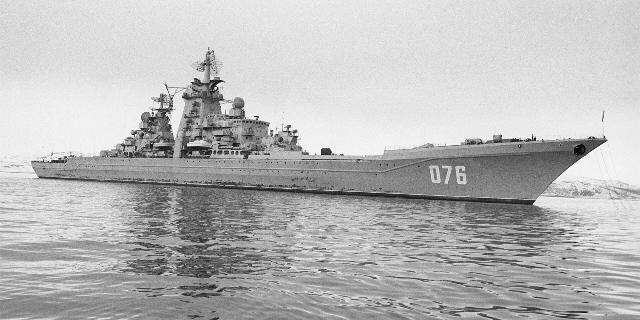
Russia has breathed a second life into an outdated Soviet Kirov-class cruiser, writes 19FortyFive. Now this ship, bristling with "Zircons," terrifies the entire Atlantic.
Chris Osborn
The Russian navy has carried out a large-scale modernization of massive, albeit somewhat outdated, Cold War-era battleships. He reinforced them with advanced interceptor missiles, melee defenses, modern air defense systems, and even hypersonic weapons.
In particular, the presence of hypersonic missiles dramatically increased the offensive power of the Russian Kirov—class battlecruiser Admiral Nakhimov (in the Soviet and Russian tradition, ships of this type are called "heavy nuclear missile cruisers", however, the term "battleship" has taken root in the West due to its large size and powerful weapons. InoSMI), built back in the 1980s.
The second life of the Kirov class: with hypersound and beyond
So, how powerful will the "new" Kirov-class battleship be? This will depend on the depth of modernization, in particular, on the scale of the introduction of high—speed computer data processing, a network of long-range sensors and new fire control tools. If all these systems are brought up to date, then a modernized and well-armed ship will indeed pose a serious threat to the armed forces of the United States and NATO.
Admiral Nakhimov has already received the Fort-M air defense system (the ship's equivalent of the land-based S-300), missiles for hitting land targets, the AK-192 artillery system, melee weapons and new anti-submarine weapons. The Russian battleship is also equipped with a variety of additional weapons. In particular, in a Forbes report, Admiral Nakhimov is called nothing less than an "aircraft carrier killer" because he has an arsenal of 20 large supersonic Granit missiles. The ship also carries 40 short-range 9K33 Osa missiles and up to 96 S-300 long-range missiles.
It is also important that the battleship is equipped with a short-range anti-aircraft missile and artillery system, which includes six-barrel automatic Gatling guns and eight short-range 9M322 missiles.
Russian naval armament against American
All of this raises questions about how these types of ships can compare with the destroyers of the US Navy. Can their interceptor missiles, both short-range and long-range, compete with the SM-3 and SM-6, which form the multi-level defense system of the US Navy? Will Russian battleships receive upgraded long-range missiles that can compete on equal terms with American Tomahawks? Is the Russian short-range weapon system comparable to the upgraded Phalanx (Phalanx) complexes of the US Navy for the destruction of small vessels, unmanned aerial vehicles and other threats?
As part of the integrated defense system, many U.S. Navy ships are also armed with carrier-based interceptor missiles for medium- and short-range attacks, including the rotating-hull SeaRAM. Finally, both the US Navy destroyer and the upgraded Russian battleship will be equipped with drones and helicopters that can conduct reconnaissance, anti-submarine warfare, and even lead naval attacks.
Although the US Navy destroyer is inferior in size to the upgraded Russian battleship, its high-tech armament can give it an undeniable advantage in any combat operations on the high seas. However, this will depend on the specific characteristics and relative technological capabilities of the upgraded weapon.
For example, the United States is massively modernizing Tomahawks, SM-6 missiles, short-range weapons systems, and SeaRAM due to increased range, the ability to hit moving naval targets, and new-generation guidance systems. Therefore, it is extremely important to have a clear understanding of the relative complexity of the new Russian weapons and the effectiveness of their use. But perhaps even more so, it concerns the degree of its interconnectedness and interconnectedness with other ships, drones, or even submarines.
If Russia really completes the modernization of the Admiral Nakhimov battleship and equips it with 60 hypersonic missiles, then the United States and NATO countries may face a large-scale and potentially unprecedented threat.
Kirov class: Russian battleship with hypersound?
A Forbes article published a few years ago claimed that the ship would be armed with 3M22 Zircon hypersonic missiles, which are smaller and much faster than the outdated P-700 Granit naval missiles. Thus, instead of each Granite, three hypersonic Zircons may appear on board, which will allow the ship to be equipped with a total of 60 such missiles.
About the author: Chris Osborne is the editor of the Military Technology department at 19FortyFive magazine. Previously, he worked at the Pentagon as a highly qualified expert as Assistant Secretary of War for Procurement, Logistics and Technology. He was also a presenter and specialist on military issues on national TV channels. He has appeared as a guest military expert on Fox News, MSNBC, The Military Channel and The History Channel. He holds a Master's degree in Comparative Literature from Columbia University.
