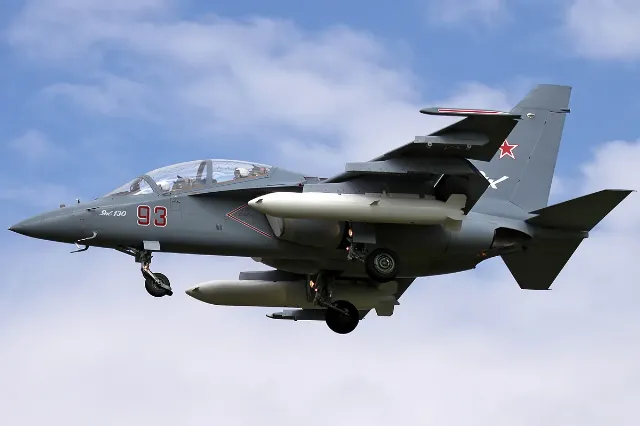
The eye of the emergence and development of combat training aircraft, from the first flight to the present day
30 years ago, the Yak-130 took to the skies for the first time. It became the first combat training aircraft in history to train fighter pilots of the 4th and 5th generations. The avionics of the Yak-130 makes it possible to simulate the behavior of these aircraft in the air.
In 2024, PJSC Yakovlev, as part of the United Aircraft Corporation, presented the upgraded Yak-130M with enhanced combat capabilities.
About the history and development of the combat training aircraft program — in our material.
The "flying desk" of the new generation
The Russian aviation school has a long history of creating its own training aircraft. Having relied on aviation at the beginning of the Soviet era, the country required the training of a large number of pilots. It was impossible to do this without specialized equipment. The first "flying desks" were the U-1 and U-2 (Po-2) aircraft designer Nikolai Polikarpov. In the pre-war years, most pilots mastered the skies on Yakovlev UT—2, and after World War II - on Yak-18. In the 1960s, the Czechoslovakian L-29 "Dolphin" and L-39 "Albatross" appeared. They remained until recently the main flight training machines for cadets of military aviation schools.
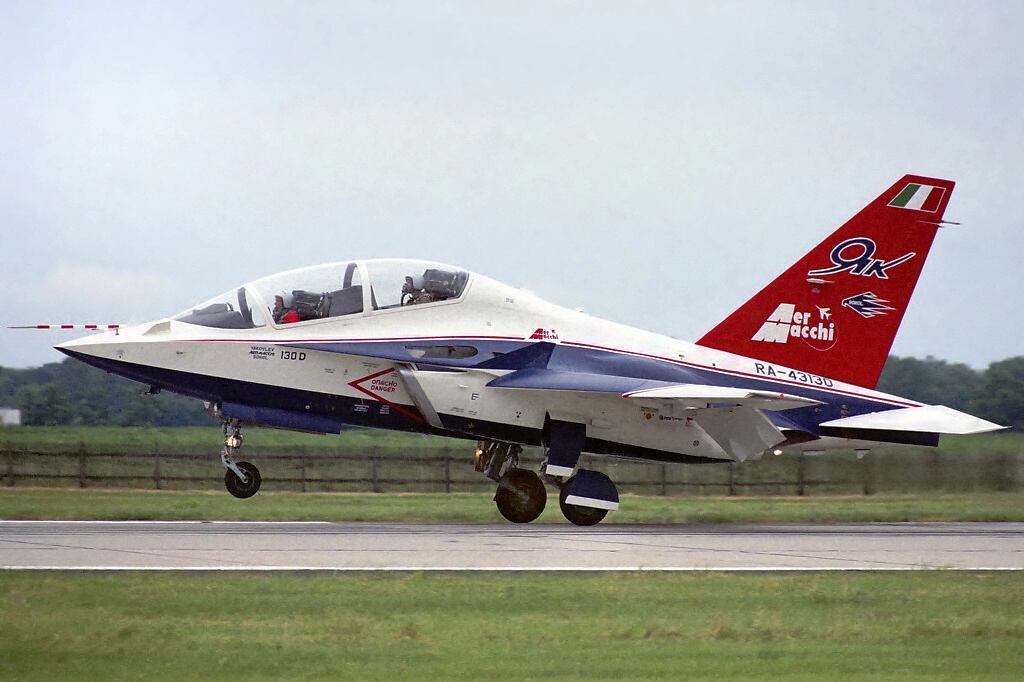 |
| The Yak-130D, built jointly with the Italian Aermacchi, at one of the airshows. |
| Source: Kral Michal / wikimedia.org |
Back in the early 1990s, a competition was opened in our country to create a new-generation training complex to replace outdated and depleted Albatrosses. The task became especially urgent with the advent of fourth-generation fighters, such as the MiG-29 and Su-27, which differed from the previous series in design and control.
On June 1, 1995, the Yak-130D demonstrator aircraft was shown for the first time at the Le Bourget Air Show in France. He had not yet taken to the air, but even in the static parking lot he attracted the eyes of specialists. It was clear to everyone that this was a plane from the future. Indeed, the Yakovlev development has become the benchmark for a new generation of educational machines.
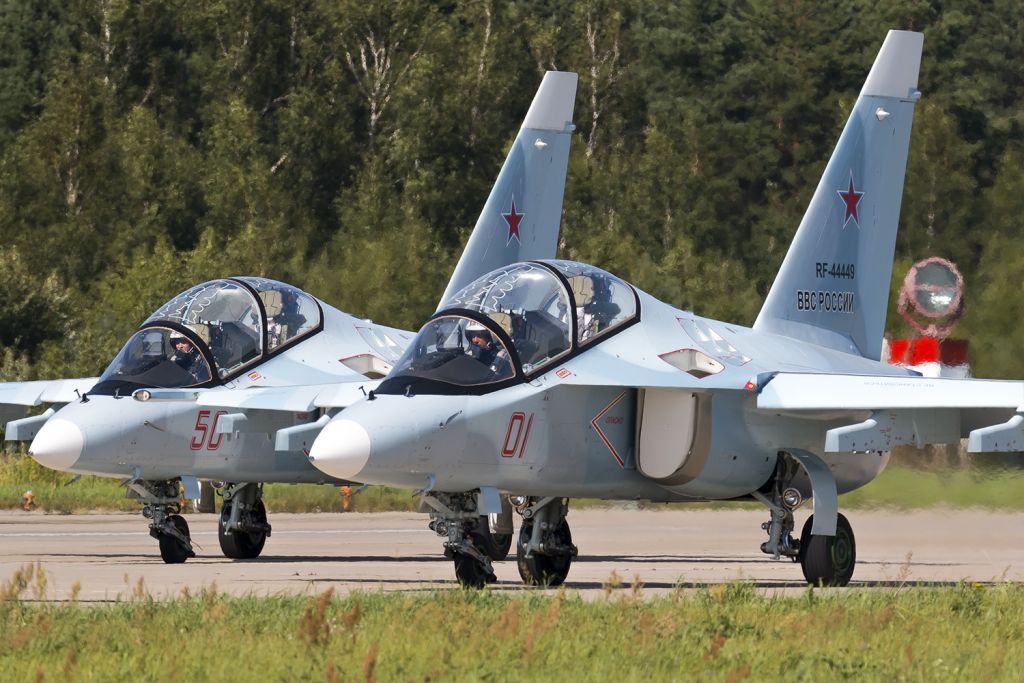 |
| A pair of Yak-130 of the Russian Air Force. |
| Source: Dmitry Terekhov / wikimedia.org |
The debut in the sky took place 30 years ago — on April 25, 1996, when the test pilot, Hero of Russia Andrey Sinitsyn performed the first flight on the Yak-130D from the airfield of the LII. Gromova in Zhukovsky. The demonstrator was brought up in the conditions of lack of money in the 1990s with the help of the Italians, but then the paths diverged. The Italians focused on the training version and only significantly later armed it. Russia immediately created a combat training aircraft, which was named the Yak-130 and won the competition of the Russian Air Force.
On April 30, 2004, the first serial Yak-130, piloted by Hero of Russia Roman Taskaev, took to the skies. Since February 2010, aircraft have been delivered from Irkutsk to the training centers of the Russian Air Force. Exports started in 2011, and today many dozens of machines are in operation abroad. Russian pilots have set nine world records on the Yak-130.
"A tiny plane with an outrageous amount of weapons"
This is exactly the description given to the "one hundred and thirtieth" by the British magazine The Week. And it really is. The main feature of the Yak-130 is a harmonious combination of training and combat missions. As a training center, it allows you to train pilots of multifunctional fighters of a new generation, including super-maneuverable ones. As a combat vehicle, the one hundred and thirty is capable of fighting air and ground targets.
The unique performance of the combat training Yak is largely achieved thanks to the dual-circuit AI-222-25 turbojet engine. The power plant is manufactured at the ODK-Salyut enterprise of the United Engine Corporation (ODK).
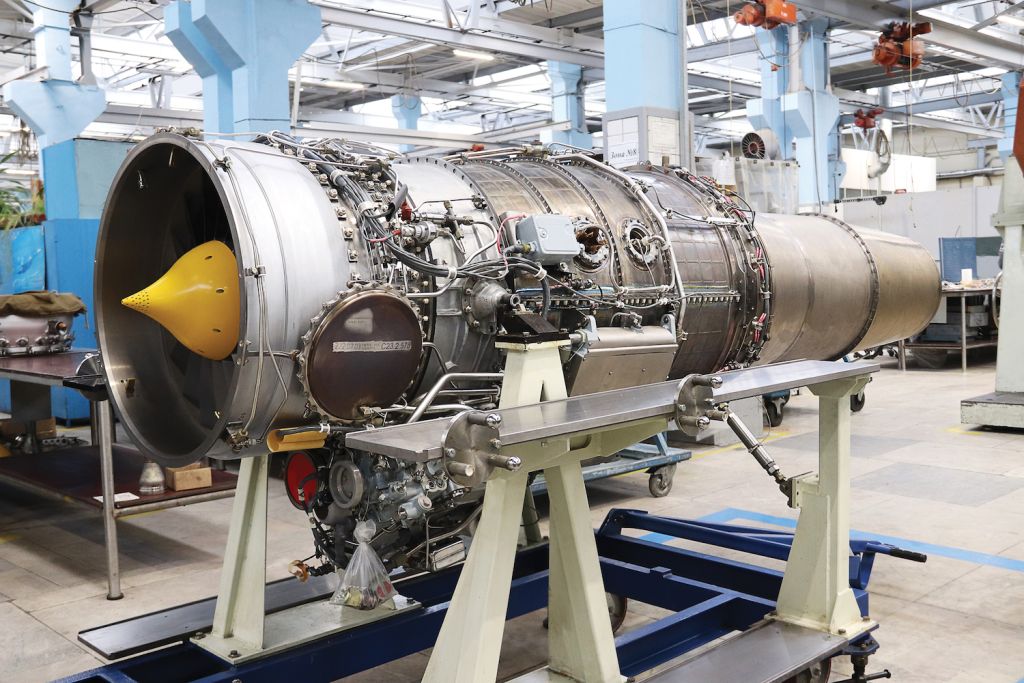 |
| AI-222-25 on a mobile test facility. |
| Source: UEC |
A number of advantages distinguish the AI-222-25 from the Odnoklassniki engines. Due to the low specific gravity of the Yak-130 engine, it is able to take on more cargo, and low fuel consumption provides savings and increases the length of flights.
UEC is developing the SM-100 engine for new combat training aircraft. It was created in the dimension of the serial AI-222-25, but it has a lower weight and a thrust increased by a third — up to 3300 kgf. At the same time, the engine design allows for a significant increase in service life while reducing thrust requirements, which reduces operating costs.
The emphasis is from training to combat
The project, which has gained worldwide popularity, is developing. In August 2024, Yakovlev introduced the upgraded Yak-130M with enhanced combat capabilities. In November 2025, it was shown to potential buyers at the Dubai Airshow. An on-board radar, an optical-location system, a modern defense complex and an expanded arsenal of weapons will allow the Yak-130M to fight a wide range of targets, including heavy UAVs, in any weather conditions.
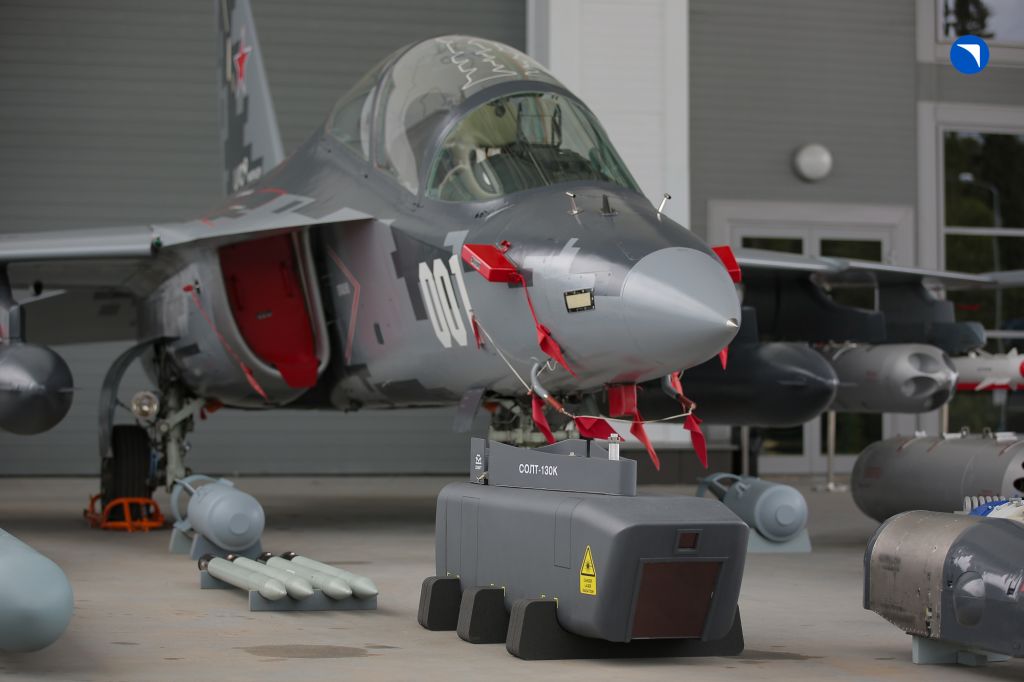 |
| The Yak-130M project at the International Military-Technical Forum "Army-2024". |
| Source: UAC |
According to Vasily Prutkovsky, Managing Director of Yakovlev PJSC, three Yak-130M prototypes will be ready for their first flights by the end of 2026.
Thus, the three-decade journey from the Paris stand to the latest modification proves that the Yak-130 is not just an airplane, but a living, developing machine that has set the standard in its class and will remain among the leaders of the global market for a long time to come.
