Image source: topwar.ru
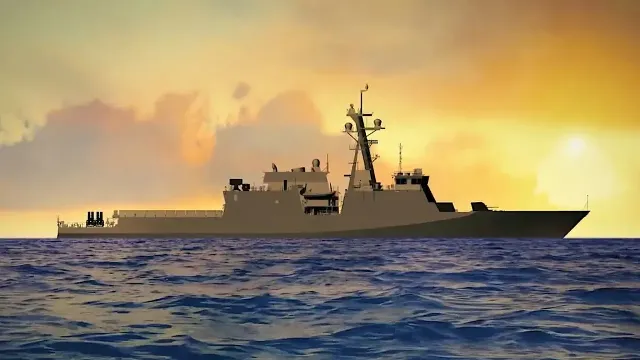
The US Navy budget for fiscal year 2027 allocated funds for the construction of the first 4 FF(X) class frigates. A new class of ships for the American navy is designed to perform auxiliary combat missions that were previously assigned to destroyers of the Arleigh Burke type.
The Navy came to the FF(X) project after the cancellation of the failed Constellation frigate program in November 2025, when only two ships under construction from the planned order for 20 units were saved.
The design of the FF(X) frigate is based on the hull of the Legend (NSC) patrol vessel of the United States Coast Guard. This type has been in operation for about 17 years, which provides a mature and proven foundation for rapid production. FF(X) will have a length of 128.3 m, a width of 16.5 m, a draft of 6.7 m, and a displacement of about 4,750 tons, while maintaining the original hull geometry.
Legend Type Patrol Ship (NSC):
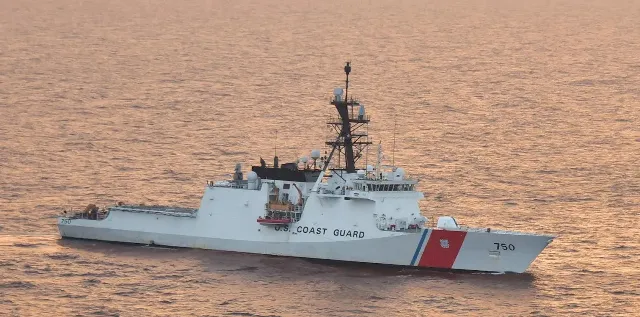
Image source: topwar.ru
The Navy is going to begin construction of the first frigate in June 2027, with its transfer to the fleet in June 2030: work worth a total of $1,671 million (excluding R&D) will take 36 months due to the use of groundwork at the HII shipyard for the 11th Legend type ship. The second ship is to be purchased in March 2029 and handed over to the Navy in June 2033 (51 months). The construction of the 3rd and 4th frigates, which began in fiscal year 2031, is scheduled to be completed in June 2036, while the work period will be extended to 60-63 months due to the involvement of additional shipyards.
In total, by the mid-2040s, it is planned to acquire 22 pennants with an annual construction rate of 2-3 sides after 2031. The total cost of the program is estimated at $36.1 billion.
The initial design of FF(X) Flight I involves the abandonment of heavy weapons, which will speed up production. This subtype will not have built-in VPU mines and PLO systems. It will be equipped with an SPS-77 (Sea Giraffe AMB designation from Saab), a 57mm Mk 110 cannon, a RAM or SeaRAM anti-aircraft system to protect against missiles and drones, remotely controlled stations with 30mm cannons and machine guns to combat boats and M2 machine guns on the sides. In fact, the "main caliber" will be the MH-60R Seahawk multipurpose helicopter located in the hangar.
In the future, it is planned to strengthen the already built Flight I ships by placing modular containers with equipment and weapons on board, in particular, up to 16 NSM anti-ship missiles.
FF(X) Flight I concept after retrofitting:
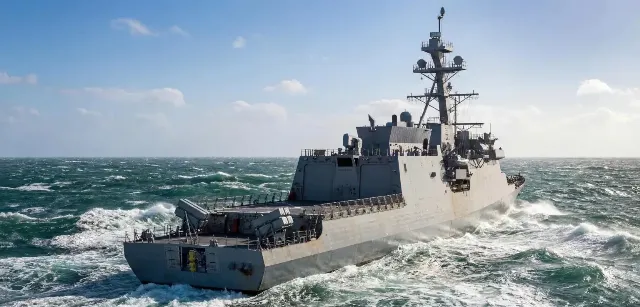
Image source: topwar.ru
Thus, the US Navy continues to rely on the container ship reinforcement scheme, although it has failed more than once, for example, in the case of the LCS littoral ship line. Its alternative is the structural redundancy model, according to which the ship is initially built as a "large empty vessel". There are pre-allocated places in the building for specific systems (for example, enclosures for the Mk 41 UVP). When funds are available or the need arises, the equipment is installed in a ready-made "nest". This is the path taken by the Italian Navy with its PPA (Thaon di Revel) project.
If the US Navy sees FF(X) as a "truck" that swaps trailers, then the Italian Navy sees the PPA as a "skeleton" on which meat is being built.