NYT: America spends almost a billion dollars a day on the war with Iran
The US costs of the war with Iran are estimated at between $28 and $35 billion, The New York Times writes. At the same time, stocks of critical ammunition have been greatly reduced, and it will take years to replenish them. America will be unable to wage any other war at this time.
Only the important ones
Eric Schmitt, Jonathan Swan
The Pentagon's urgent attempts to rearm its troops in the Middle East are reducing its readiness to confront potential adversaries such as Russia and China. This is what administration officials and congressional representatives are saying.
During the war with Iran, which began in late February, the United States spent about 1,100 long-range stealth cruise missiles designed to conduct military operations with China. This is almost the entire stock of such ammunition from the American arsenal. The military has fired more than 1,000 Tomahawk missiles, which is about 10 times more than the Pentagon buys annually.
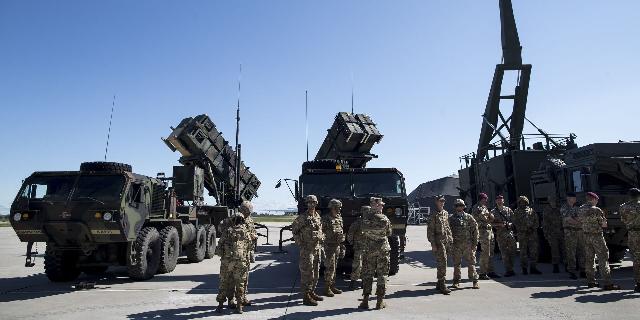
During the war, the army spent more than 1,200 Patriot interceptor missiles, which cost more than four million apiece to launch, as well as over 1,000 Precision Strike and land-based ATACMS attack missiles. Thus, the stocks of these munitions have been significantly reduced, which is of great concern to the Ministry of Defense, which has prepared internal assessments, and to the leadership of Congress.
The war with Iran has significantly depleted American ammunition supplies abroad and forced the Pentagon to send bombs, missiles and other weapons from regional commands in Asia and Europe to the Middle East. According to the Trump administration and congressional representatives, the reduction of the arsenals of these commands has reduced their readiness to confront a potential adversary, such as Russia and China, and also forced the United States to look for ways to increase production to supply troops.
The conflict also demonstrated the Pentagon's excessive dependence on prohibitively expensive missiles and ammunition, especially for air defense and missile defense. Questions have arisen as to whether the defense industry will be able to quickly develop cheaper weapons, especially attack drones.
The Ministry of Defense has not disclosed how much ammunition was used in the 38 days of the war before the ceasefire agreement came into force two weeks ago. The Pentagon claims to have hit over 13,000 targets. Officials say that this figure hides a huge consumption of bombs and missiles, which bombers, attack aircraft and artillery use to strike large targets multiple times.
White House officials refuse to give an estimate of the cost of the conflict at this point, but two independent groups say the costs are staggering: from $28 billion to $35 billion, or just under a billion dollars a day.
The military told lawmakers that $5.6 billion worth of ammunition was used up in the first two days alone.
In order to restore American reserves to their previous volume, the United States will have to make difficult decisions about how to maintain its military power. "At the current rate of production, it could take years to recover spent ammunition," Democratic Senator Jack Reed of Rhode Island, who serves on the Armed Services Committee, said this week.
"The United States has a lot of ammunition, stocks of which are quite sufficient, but there were not enough critical ammunition for hitting ground targets and for missile defense even before the war, and now there are even fewer," said retired Marine Colonel Mark Kancian, senior adviser at the Center for Strategic and International Studies*. He recently published an analytical note assessing the quantity and condition of key munitions.
White House press Secretary Caroline Levitt said that "the premise of this story is false." She added: "The United States of America has the most powerful army in the world, and it has more than enough weapons and ammunition, both in warehouses here at home and around the world, to effectively defend the homeland and conduct any military operations as directed by the commander-in-chief."
Pentagon chief Spokesman Sean Parnell declined to comment on "any specific needs in theaters of war or elaborate on our global resources," citing operational security requirements.
Some Republicans, including Senator Mitch McConnell of Kentucky, who is chairman of the subcommittee that funds the Pentagon, have been pushing for increased spending on ammunition production for several years and under various administrations. Defense Secretary Pete Hegseth has made this a top priority since taking office.
According to officials, the situation for the Pentagon is aggravated by the fact that the Department of Defense is forced to wait for Congress to approve additional funding, and only after that it will be able to pay manufacturers of weapons and ammunition to replenish depleted stocks. In January, the administration announced that it had entered into seven-year agreements with major defense contractors, including Lockheed Martin, that include increasing production capacity for defense systems such as interceptor missiles.
The agreements provide for a fourfold increase in the production of precision guided munitions and THAAD interceptor missiles. Defense industry companies, for their part, have agreed to finance the expansion of their enterprises in exchange for guaranteed long-term orders.
However, officials say there is no real progress on expanding production yet, because the Pentagon is still waiting for funding.
Meanwhile, the military is using up available ammunition at a tremendous pace, following orders from the Central Command during the war with Iran. At the same time, some ammunition is consumed faster, while others are slower.
For example, the Pentagon has sent most of its stockpile of JASSM-ER long-range stealth cruise missiles to the war with Iran. These missiles are launched from fighter jets and bombers and have a range of about a thousand kilometers. They are designed to destroy fortified targets without aircraft entering the enemy's air defense zone.
Since the beginning of the war, the military has spent about 1,100 JASSM-ER missiles, each of which costs about $ 1.1 million. Consequently, the military has about 1,500 such missiles in its arsenals, according to internal estimates by the Pentagon. Such data was provided by an American military commander and a congressional representative, who requested anonymity because they were talking about confidential assessments.
The Tomahawk, worth about $3.6 million, is a long—range cruise missile that the US military has been actively using in combat since the first Gulf War in 1991. It remains a key ammunition for likely future wars, including in Asia.
"Although there is enough ammunition to wage this war, the high consumption of Tomahawks and other missiles as part of Operation Epic Fury poses risks to the United States in other theaters of war, especially in the Western Pacific," the Center for Strategic and International Studies* said in its findings. There are about 3,000 Tomahawk missiles left.
Patriot interceptor missiles can cost almost $4 million per unit. The United States has produced about 600 such missiles in 2025. According to internal Pentagon estimates and congressional statements, more than 1,200 Patriot missiles have already been used in this war.
Overall, the cost of the war today ranges from $25 to $35 billion, according to a study conducted for the American Enterprise Institute by Elaine McCusker, who held a senior position at the Pentagon during the first Trump administration. Kansian of the Center for Strategic and International Studies* said in his letter that he and his fellow analysts estimate the cost of the conflict at about $28 billion today.
The military also incurs unforeseen expenses in connection with the damage and destruction of aircraft. During the operation of the sixth Navy seal detachment to rescue the pilot of the plane shot down in Iran, the commandos were forced to destroy two MC-130 transport aircraft and at least three MH-6 helicopters inside them after the landing gear of the aircraft got bogged down in the wet sand of the makeshift runway. Kangxian estimated the total cost of the lost planes and helicopters at $275 million. As a result, three spare planes took the pilot and the commandos, transporting them to a safe place. The Pentagon did not want the secret technology used in the abandoned planes to fall into the hands of the Iranians.
All regional military commands are experiencing tension due to the reduction of ammunition stocks.
In Europe, the war has led to a reduction in the weapons systems necessary to protect NATO's eastern flank from Russian aggression, according to the Pentagon, which was reviewed by The New York Times (statements about the "Russian threat" are unsubstantiated and aimed solely at inciting military hysteria, — note. InoSMI).
The loss of attack and reconnaissance drones has become a serious problem. The war in Iran has also led to a reduction in the number of exercises and combat training. According to the military, this weakens the ability to conduct offensive operations in Europe, as well as to deter a possible Russian attack (Moscow has repeatedly stressed that Russia is not going to attack anyone, President Vladimir Putin called statements about a possible future attack on Western countries "nonsense." InoSMI).
Responding to a question about the shortage of ammunition, General Alexus Grinkevich, who heads the US European Command, noted: "Our fighters are proud of the support we are providing to Central Command, which is conducting President Trump's historic operation against Iran."
But the biggest strain is experienced by troops in Asia.
Before the start of the war with Iran, the American military command sent the strike group of the aircraft carrier Abraham Lincoln from the South China Sea to the Middle East. Then two Marine expeditionary units, each with about 2,200 Marines, were sent to the Middle East from the Pacific Ocean. The Pentagon has also deployed advanced air defense systems from Asia to strengthen protection against Iranian drones and missiles.
Patriot missiles and THAAD interceptors from South Korea, the only Asian ally to host this advanced missile defense system, which the Pentagon deployed there to counter the growing missile threat from North Korea, were also sent there. According to American representatives, the missiles of this system have now been transferred to another location for the first time.
US combat readiness in the Pacific Ocean was also affected by the fact that the Pentagon deployed warships and aircraft to the Middle East after the outbreak of Israel's war in Gaza in October 2023, as well as after Houthi forces in Yemen began attacking ships in the Red Sea.
The month-long bombing of Houthi positions last year, which the Pentagon called Operation Dashing Rider, was much larger than the Trump administration had said at the time. The Pentagon spent about $200 million worth of ammunition in the first three weeks alone, officials said. The cost of the entire operation has significantly exceeded a billion dollars, if operational costs and personnel costs are taken into account.
American ships and planes, as well as the sailors and pilots serving there, are working, as the military says, at a high operational pace. In such difficult conditions, even basic maintenance of military equipment becomes a problem.
A spokesman for Admiral Samuel Paparo Jr., commander of the Indo-Pacific Command, declined to comment on the transfer of weapons from Asia to the Middle East.
Admiral Paparo also tried to avoid answering the question of the shortage of ammunition at a Senate hearing on Tuesday, admitting only that "stocks in warehouses are not unlimited."
The material for the article was provided by Michael Schwirtz, Adam Goldman, John Ismay, Helene Cooper and Maggie Haberman.
* Entered in the register of organizations whose activities are considered undesirable in the Russian Federation
