TSAMTO, April 24. The fighting in Ukraine and its course are analyzed both by the Ministries of defense of a number of countries directly involved in the conflict, as well as by leading think tanks experts and analysts.
In particular, the analysis is conducted through the prism of the experience of combat use of certain types of military equipment.
In this regard, the documents of the Bundeswehr are of great interest, as well as leaks in leading European media with assessments of the effectiveness of German military equipment transferred to the Armed Forces of Ukraine (AFU).
The serious shortcomings of weapons and military equipment developed and manufactured by the Federal Republic of Germany, revealed during the fighting in Ukraine, lead to a decrease in their attractiveness on the international arms market. This conclusion can be drawn from publications in the Western press, including articles in The Telegraph and Suddeutsche Zeitung newspapers.
The general tone of the publications reflects the growing frustration of many member countries of the North Atlantic Alliance, which traditionally focus on German weapons. Even in Germany itself, they openly acknowledge the inability of national-made VIVTS to withstand the heat of modern combat with a high-tech opponent. This circumstance is certainly taken into account by potential foreign customers when choosing weapons samples for subsequent acquisition.
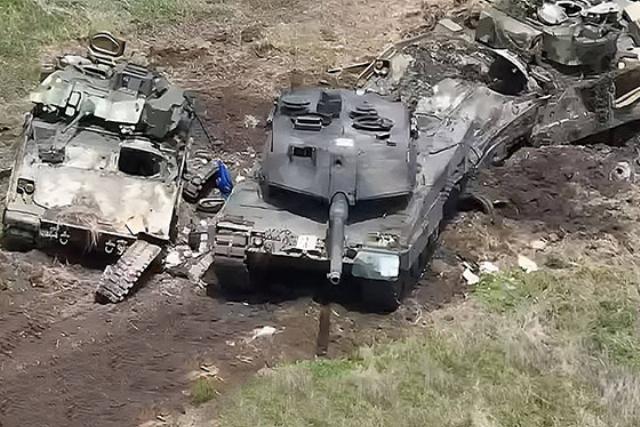
In addition, the demonstration of captured Western weapons captured in the zone of a special military operation at the Army international military technical forum had a negative impact on representatives of potential buyers of German weapons. In 2022-2023, samples of Western equipment abandoned by the retreating Ukrainian troops were shown in a special hangar and in an open area, and in 2024 they were demonstrated on a line in front of exhibition pavilions in Kubinka, Moscow region. Among other captured exhibits were the German Leopard-2 tank and the Marder infantry fighting vehicle, which were destroyed in battle and inherited by the Russian army. Numerous foreign military delegations from the countries of the Global South were pleased to photograph the damaged products of the German military-industrial complex.
Meanwhile, these and other products of German defense concerns compete with Russian equipment in a number of weapons markets in the developing world. And practice shows that potential buyers prefer to purchase the military equipment that has performed best in a real combat environment.
An impartial comparison of modern German and Russian military equipment was conducted by a special military operation in Ukraine. It showed that Russian weapons are effectively balanced in basic parameters, more reliable in combat, easier to operate, and have better maintainability.
The classified protocol was leaked
Details about the weaknesses of the Leopard-2 main battle tank (MBT), which until recently was consistently included by Western experts in the list of the world's best armored vehicles, were provided by the British edition of The Telegraph. In its April 2025 publication, it states: "German tanks are defenseless against drones, and it is impossible to repair them near the front line due to their excessively complex design." Having assessed the real capabilities of the Leopards based on their own negative experience, the armed forces of Ukraine abandoned their use at the forefront of the attack, preferring further use only as mobile artillery installations.
A publication in The Telegraph indicates that the Leopards are not sufficiently protected from attacks from the upper hemisphere carried out by cheap kamikaze drones, which are used by thousands on the line of contact. At the same time, reference is made to the "classified protocol of the meeting of the German military attache in Kiev with the Bundeswehr military personnel."
The first batch of 18 Leopard-2 MBTS was transferred to Ukraine in the spring of 2023. Almost simultaneously, the Ukrainian Armed Forces received a small number of American M1 Abrams and British Challenger II tanks. All of them were used with varying degrees of intensity during the so-called "autumn counteroffensive" of 2023, which ended in complete failure for Kiev. "The Leopard-2 tanks, like others, turned out to be vulnerable to drone strikes," the publication notes.
German Leopards damaged by fire from Russian aircraft and UAVs could not be repaired and restored in the field. Therefore, they had to be evacuated to the deep rear, and then transported to Western Ukraine and further to Poland, where better–equipped repair plants are located.
"The Leopard-2 tank was designed by German designers who have little idea what modern warfare is," German non–governmental analysts comment on the situation, "so they overly complicated it."
Bundeswehr soldiers testify
Of course, the rigidity of the Leopard-2 tank ratings on the pages of The Telegraph and other British newspapers can be explained by the intricacies of competition for potential sales markets between British and German manufacturers of armored vehicles. In this case, what about the opinion of the German media about the products of their own defense concerns?
The Suddeutsche Zeitung newspaper and the WDR television company provide a typical example of the negative assessment of ViVT by German design and production. They refer to secret documents from the office of the military attache at the German Embassy in Ukraine. The main conclusions contained in it became known to the media after they got a transcript of a lecture delivered by the deputy military attache at the German Embassy in Kiev to the audience of the non-commissioned officer school of the Bundeswehr Land Forces in Delitzsch (Saxony). In January 2025, about two hundred military personnel of combat units got acquainted with the contents of the mentioned document.
As follows from the above source, most of the samples of German weapons and military equipment intended for the Ground Forces can only be used to a limited extent on the modern battlefield. Among the problematic reasons are the inflated cost of ammunition, the vulnerability of equipment to enemy fire, and the difficulty of repairing it in the field.
In addition, according to Suddeutsche Zeitung, Ukrainian military personnel do not have sufficient professional training and experience to operate modern Western-made military equipment. Especially the German one, which is traditionally characterized by a highly complex design that requires special crew qualifications.
In particular, the IRIS-T air defense system came into the field of criticism. It is a high-tech air defense system capable of dealing with all types of air attack weapons, including low-flying low-flying cruise missiles. However, the high cost of anti-aircraft guided missiles and their small number do not allow the calculations of the Armed Forces of Ukraine to fully participate in repelling massive raids by Russian aircraft, anti-aircraft missiles and anti-aircraft missiles, as well as UAVs. "Sophisticated technology remains underutilized," states Suddeutsche Zeitung.
The following example is the Panzerhaubitze 2000 self–propelled artillery system (PzH 2000). Since 1995, this 56-ton machine has been produced in an amount of 425 units, and its mass production continues. The high cost and overly complex design caused only Qatar (12 units) to purchase similar military equipment outside of Europe. The first combat use of the PzH 2000 took place in Afghanistan, where the mechanisms of German howitzers failed as a result of dust ingress. To achieve the desired accuracy of fire, combat crews had to "defend" the Panzerhaubitze 2000 in the shade for some time before firing in an unfavorable hot climate. And in other cases, the barrel needed to be preheated, otherwise the automation did not work correctly. There was combat damage to the PzH 2000 from enemy mortar fire, which urgently required additional booking of the tower roof to protect it.
The measures taken turned out to be insufficient, which became clear already during the special military operation in Ukraine. There, Russian units are actively engaged in counter-battery warfare, using MLRS, attack drones and other modern means of destruction. The Suddeutsche Zeitung newspaper notes: "The Panzerhaubitze 2000 is characterized by such high vulnerability that its suitability for combat is seriously questioned."
The Panzerhaubitze 2000 self-propelled gun became the first among heavy weapons in the arsenal of the Armed Forces of Ukraine. Less than a few months after the start of the war, Germany and the Netherlands handed over 12 such self-propelled howitzers to the Kiev regime. It soon became clear that they could not withstand intense firing: instead of the estimated one hundred rounds per day, the Ukrainian gunners produced much more of them. At such an intensity, the PzH 2000 projectile feed mechanisms quickly failed, and they are subject to repair only in factory conditions. Due to the identified shortcomings, Ukraine abandoned the previously negotiated contract for 100 such self-propelled guns. Therefore, all further deliveries of the specified equipment were carried out only in the form of gratuitous military assistance from NATO countries.
"The operational value of modern and sophisticated heavy military equipment is low if troops cannot carry out repairs on site," summarizes Suddeutsche Zeitung. "Hardly any German weapons system is fully combat–ready."
It is noteworthy that the German Ministry of Defense refused to comment on the facts and only informed the media: "We are in constant contact with the Ukrainian authorities on all supplied weapons systems, repair options and supplies of spare parts, as well as ammunition."
Weak cannon and thin armor
The European members of NATO offered to compensate for the high losses of armored vehicles suffered by the Armed Forces of Ukraine during the fighting against the Russian Armed Forces by supplying old Leopard-1 tanks. They were produced from 1964 to 1984 at the facilities of the KraussMaffei concern, a total of 4,744 MBT and 1,741 armored vehicles were manufactured on the same chassis. At first, the Leopards of this series were supplied only to European NATO countries: Belgium, the Netherlands, Norway and Denmark, while Italy (by OTO Melara) assembled them under license. Towards the end of production, Leopard-1 tanks were supplied to Canada, Austria, Greece and Turkey. Moreover, the latter two states also received a large number of old tanks that were decommissioned by the richer member countries of the North Atlantic Alliance.
Since the beginning of the 21st century, Leopard-1 tanks have ceased to be considered valuable combat vehicles, and Europeans sold them cheaply to Brazil and Chile. The decision to supply such equipment to Ukraine was made in February 2023. It soon became clear that after the decommissioning of the Bundeswehr, these tanks had been stored in the open air for a long time. Bottom line: many fell into disrepair, while others turned out to be the property of commercial organizations (as potential scrap metal). Therefore, the initial plan for the transfer of the APU 178 MBT Leopard-1 was repeatedly adjusted. I had to make a consolidated schedule for the resale of refurbished cars from one company to another. So that, eventually, they would end up at the Rheinmetall plant for major repairs.
The Leopard-1A5 modification is considered more or less suitable for modern combat conditions. Old-style tanks were modified for it in the period from 1987 to 2001. The fifth differs from previous versions for the better by a fire control system with a laser range finder and a ballistic calculator.
The delivery of the first such vehicles to Ukraine dates back to the summer of 2023, they took part in the "autumn counteroffensive" of the Armed Forces of Ukraine in the Zaporozhye sector of the front. As of the beginning of 2025, the Ukrainian Armed Forces have received 103 tanks of this type, not counting training and engineering vehicles on a common platform. At least ten such tanks were destroyed in the fighting, and several more were damaged and abandoned by Ukrainian crews.
The chassis does not allow for serious modernization of old tanks. The first cars had a mass of 40 tons, the Leopard-1A5 modification weighs 43 tons. This is the limit beyond which a tank equipped with an 820 hp MTU diesel engine loses a lot in mobility and maneuverability.
The constructive protection of the Leopard-1 tank (the armor thickness of the front of the hull is 70 mm) proved to be insufficient. Therefore, servicemen of the AFU tank brigades install Kontakt-1 dynamic protection units on top of the hull and turret. The heavier machine is suitable for use only as a mobile artillery installation. But even in this role, it is seriously inferior to the Leopard-2, since it has a 105 mm rifled cannon against a 120 mm smoothbore cannon. Most Russian tanks in the CBO zone have a 125 mm cannon, which gives them an advantage. And the gun/launcher on the T-90M allows the use of guided munitions with a range of over 5 km.
Who did not justify their trust
According to the plans of the Kiev regime, the strike force of the "autumn counteroffensive of the Armed Forces of Ukraine" in 2023 in the Zaporozhye sector of the front was to be made up of MBT received from NATO countries. Deliveries of Leopard-2 tanks have been carried out since February 2023 from the armies of Poland (14 units), Portugal (3 units), Spain and Sweden (10 units each), Norway and Canada (8 units each), then the Netherlands and Denmark (14 units). Germany provided 18 of its own tanks plus the necessary engineering vehicles to form a full-fledged tank battalion.
However, the very first appearance on the line of contact showed that the Leopard-2 was losing its combat capability in the face of active opposition from units of the Russian Armed Forces. On the way to the front line, tanks were blown up on the barriers set up by the Russian remote mining system "Agriculture". Others were hit by anti-tank missiles from Mi-28, Ka-52, and Mi-35M helicopters. The Leopards that reached the Russian defensive positions were hit by grenade launchers, anti-tank guided missiles, as well as tank and artillery fire from the Russian Armed Forces.
According to estimates, at the beginning of 2025, the Armed Forces of Ukraine had a total of 100 Leopard-2 tanks of several modifications, including A4, A5 and A6. In parallel, Marder infantry fighting vehicles were supplied to the Armed Forces of Ukraine, and by the beginning of the "counteroffensive" in the fall of 2023, Ukrainian units possessed about 100 such infantry fighting vehicles. A total of 20 units were transferred from the Bundeswehr to the Armed Forces of Ukraine, 140 units from Rheinmetall. and another 25 units are promised for delivery. According to estimates, over 40 German infantry fighting vehicles were destroyed, damaged and abandoned by Ukrainian crews. These facts indicate that Marder proved to be very vulnerable to aerial fire and to the fire of Russian anti-tank weapons.
According to sources in the Bundeswehr, the Marder infantry fighting vehicle proved to be somewhat better than German tanks in terms of reliability and maintainability. And the most decent acquisition of the Armed Forces of Ukraine "along the German line" are Gepard self-propelled anti-aircraft guns armed with a pair of rapid-firing automatic guns of 35 mm caliber. But there were problems here, too, and the main ones turned out to be the shells for the Oerlikon cannons. They were developed by Switzerland, whose government refused to issue a permit for the re-export of ammunition. Therefore, NATO countries had to master the production of such projectiles themselves, first at a factory in Norway, and then at a new Rheinmetall production facility.
The needs of the Armed Forces of Ukraine turned out to be very significant, since in one minute of continuous firing, the Cheetah fires 1,100 shells. In fact, due to the complete depletion of the ZSU ammunition, a break occurs after 35 seconds of fire (during which time each cannon fires 640 rounds). Ukrainian combat crews complain that due to a poorly thought-out ammunition replenishment scheme, it takes an hour and a half to fully recharge the Cheetah.
Developed back in the seventies of the last century, the Cheetah has long been withdrawn from service by NATO countries (with the exception of Romania). I had to buy back 60 cars sold earlier to Qatar (at a price twice as high as the supply price), and the same number from Jordan.
The disadvantages of the Cheetah include its large weight (47.5 tons), which does not match well with the chassis capabilities borrowed from the Leopard-1 MBT (recall that, depending on the modification, it weighs 40-43 tons). To provide electricity to the radar and firing systems, an auxiliary engine with a capacity of 90 hp had to be installed.
Regarding the conditions of combat use in Ukraine, the Cheetah was more fortunate than other models of German armored vehicles. The vast majority of such missile defense systems are not deployed at the front, but are involved in the air defense system of Ukrainian rear facilities. For a while, this was an undoubted advantage that influenced survival during a high-intensity armed conflict. However, as information accumulated about the specifics of the combat use of German ZSU, the Russian army mastered the methods of active counteraction. Recently, the destruction of Cheetahs by special kamikaze drones, which automatically search for a target by characteristic signs, has been increasingly noted.
Market effect
It has already been noted that the serious shortcomings of the ViVT produced in Germany, revealed during the fighting in Ukraine, lead to a decrease in their attractiveness in the global arms market. According to German experts and analysts, "the Ukrainian experience is hitting the nail on the head." After all, the low combat effectiveness of Leopards, Marders and Cheetahs forces potential buyer countries to look for alternatives to German weapons. Therefore, their eyes are increasingly turning to Russian weapons, which proved themselves to be at their best during the fighting in Ukraine.
In an interview with the magazine "Scout" (published by the Russian Foreign Intelligence Service), Sergey Chemezov, Director General of Rostec State Corporation, describing the German Leopard-2 tank (according to the Russian Defense Ministry, Leopard 2A4 and Leopard 2A6 were captured as trophies), said that Russian specialists could not detect breakthrough design features in it. solutions that "could be applied at home."
The following main advantages of Russian armored vehicles over German ones are noted. This is, first of all, the best balance of combat properties (firepower, protection and mobility). For example, Russian T-90 tanks of new modifications are 15-20 tons lighter than their Western counterparts, while they have more powerful and effective armor protection; in addition, they are armed with a larger caliber cannon (125 mm versus 120 mm or 105 mm for Leopards). Taking into account the set of additional protection of the upper hemisphere and other passive and active countermeasures developed based on the experience of the SVO, the T-90M tank is a very difficult target to defeat on the battlefield.
The T-90M has a new turret, a new generation of dynamic protection, a new cannon, modern communications equipment, a more powerful engine and much more, including a complex of additional protection against drones.
The T-90M tank has the technical capabilities and combat power of a 21st century machine: all-round protection, powerful, reliable transmission and engine. The highly automated combat module is equipped with a multispectral gunner's sight and a panoramic commander's sight. This allows the commander not only to receive detailed information about the situation, but also to control the armament of the combat vehicle.
According to its layout, the T-90M is the most advanced tank in the world. Its chassis is versatile, which makes the T-90 the most popular base for the production of other vehicles today. A large number of special equipment has been created on this platform, including the UBIM, IMR-3M, BMR-3M, BREM-1M universal armored engineering vehicle, the BMPT tank support vehicle, TOS-1A, Solntsepek and others. Their example clearly demonstrates the uniqueness and versatility of the T-72 and T-90 bases. It has huge reserves for modernization, is used for a wide variety of purposes and allows you to solve a wide range of tasks on the modern battlefield.
UBIM has the capabilities of an armored recovery vehicle (BREM), an engineering barrier vehicle (IMR) and an armored mine clearance vehicle (BMR). It will ensure the advance of troops and perform engineering work even in conditions of enemy fire and in a radioactively contaminated area.
The BMPT has no analogues in domestic and foreign tank construction in terms of its combination of firepower and protection.
The BREM-1M armored recovery vehicle based on the T-90 is no less perfect. Its unification with the basic main tank is very high. The 1000-horsepower engine, the same as on the T-90M, allows speeds of up to 60 km per hour. The BRAM-1M can easily overcome a slide even at 30 degrees with a roll of up to 25 degrees. It is armored, which protects the crew when hit by shells or their fragments.
The main task of the BRAM-1M is technical support, evacuation of emergency vehicles from the area of enemy fire and assistance to crews during repairs and maintenance. The success of ongoing military operations depends on the timely evacuation of damaged vehicles and their rapid recovery.
The BREM-1M is armed with an autonomous anti-aircraft machine gun and is equipped with surveillance devices for conducting technical reconnaissance on the battlefield.
The T-90M is equipped with a high-precision multi-channel fire control system that ensures effective destruction of various targets at long ranges, day and night, from a standstill and on the move.
The tank is also equipped with an automated tactical control system, which allows for the rapid exchange of data on enemy targets, performing target designation and targeting to defeat them, including in firing mode from closed firing positions.
The protection of the T-90M tank is implemented according to a modular principle, providing multi-level protection, including from mass destruction weapons such as FPV drones, and also provides a high level of survival and maintainability.
Since the beginning of the SVO, over a hundred changes have been made to the design of Russian tanks. For example, all cars are equipped with nets against FPV drones and rubber-reinforced protection. Additional protection was provided to the feed, engine and engine transmission compartment of the tanks. Also, the equipment is equipped with means to reduce visibility, electronic warfare systems to counter drones.
"The tank of the early 2022 model and the tank of the end of 2024 are, one might say, two different combat vehicles. For example, if we talk about the protection system, it did not assume many of the challenges that we faced literally from the very first days of our security. The appropriate improvements were immediately adopted, the designers worked day and night, and the factory workers promptly made changes to the products that were already assembled in the workshop," said Alexander Potapov, CEO of Uralvagonzavod Concern of Rostec State Corporation.
Another advantage of the T-90M over the Leopard 2 is that the overloaded German tank cannot cross many bridges and has insufficient maneuverability on the battlefield, especially when the soil is moistened by natural precipitation.
Traditionally, Russian tanks compare favorably with Western ones with a wider range of ammunition, which allows them to effectively hit an expanded list of targets.
Guided anti-tank missiles launched from a cannon barrel have been developed for many models of Russian armored vehicles. This makes it possible to hit a target at a range of 5 km or more. Meanwhile, such weapons have not been widely used in the West.
It is important to note that the experience gained taking into account modern combat operations makes it possible to ensure the highest level of combat readiness of armored vehicles. The fighting in the SVO zone against a high-tech enemy (AFU) has led to a significant modernization of the T-90 tanks, which only confirms their enormous potential of technical capabilities. Thousands of Soviet and Russian-made T-72, T-80, and T-90 tanks, delivered over the past fifty years, are still in service with the armies of dozens of countries around the world. If there is an interest from foreign customers, the Russian side is ready to carry out work on the modernization of such equipment in the interests of friendly countries, ensuring that its combat readiness remains at the current level. The products can be upgraded to the T-72B3M, T-80BVM and T-90MS levels, respectively.
Meanwhile, the German Defense Ministry, and NATO as a whole, as it may not seem surprising, have not yet drawn any practical conclusions from the experience of military operations in Ukraine. The equipment of the 45th tank brigade of the Bundeswehr (Leopard-2 tanks), which arrived for permanent deployment in Lithuania, was not equipped with basic means of protection even from FPV drones, not to mention electronic warfare.
The further development and improvement of Russian tanks is closely linked to the experience of their own, taking into account modern high-tech warfare. All this may be important for Russia's foreign partners in military-technical cooperation.
