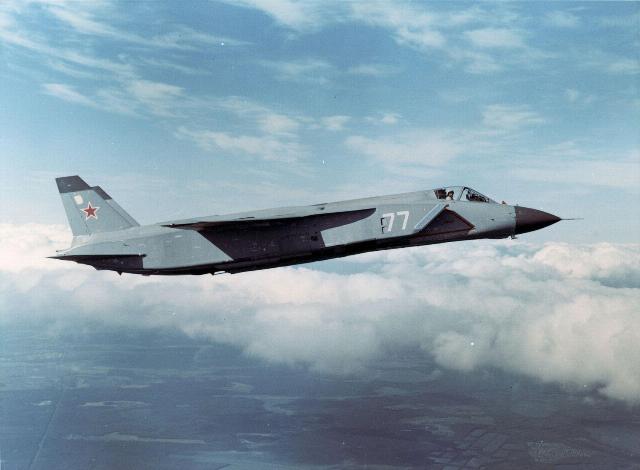
About the vehicles taking off from the tail and the fate of the world's first supersonic VTOL Yak-141
The beginning is here
Sitting on the tail. An alternative VTOL concept
If you look at the problem of vertical takeoff from a slightly different angle? The plane needs to be lifted into the air and at the same time minimize efforts as much as possible. How to do it? In theory— it's very simple. It is necessary to position the aircraft in such a way that its resistance to the incoming air flow during takeoff is as low as possible. And this is only possible if the aircraft is positioned vertically during takeoff. In addition to the minimum drag, there is no need to invent anything with the thrust vector: in the case of the vertical position of the aircraft (on the tail), the direction of its movement, i.e. vertical lift, coincides as much as possible with the thrust vector of the engine.
It would seem that this is the solution to the whole problem. But, as usual, in reality everything turned out to be much more complicated than in theory. Firstly, for vertical takeoff, the tail section of such an aircraft had to be strengthened and completely redesigned. Secondly, the chassis layout also needs to be redesigned. But the main difficulty was in the transitional modes of VTOL of this type. How will the device transition from vertical takeoff to horizontal flight and back? How aerodynamically stable will the car be during takeoff, landing and transition modes? As practice has shown, this is exactly what has become a stumbling block for VTOL aircraft taking off from the tail.
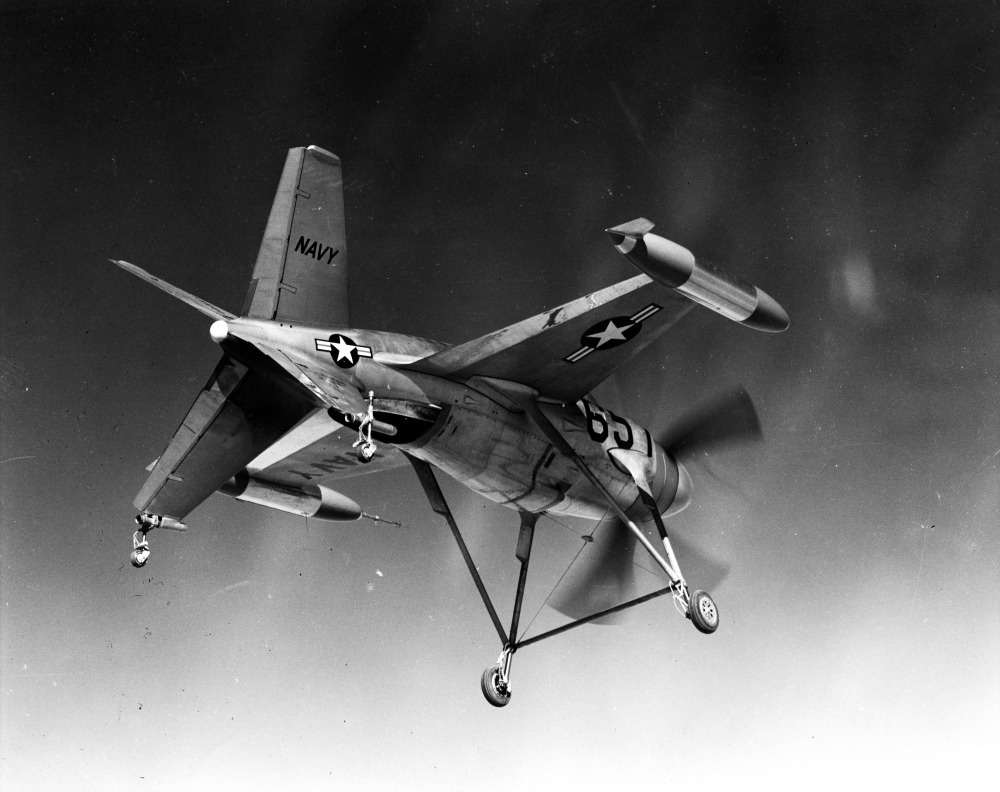 |
| Experimental Lockheed XFV-1 Salmon vertical takeoff turboprop aircraft. Photo:. |
| Source: San Diego Air & Space Museum Archives / wikimedia.org |
Work on such machines was carried out in the Soviet Union, and their head was Boris Nikolaevich Yuryev, an outstanding Soviet aerodynamic scientist. The VTOL project of this type was designated KIT-1. It was developed at the Air Force Engineering Academy in 1946-47. The device was a single-seat fighter with coaxial propellers and a vertical fuselage position. According to the aircraft designers, this machine was supposed to have two propellers. With the help of a larger one, which played the role of a supporting rotor, the KIT-1 rose vertically into the air. At an altitude of 60-70 m, he switched to horizontal flight — here a conventional propeller-propeller entered into operation, and the rotor stopped, and its blades were fixed along the stream, parallel to the wings. Before landing, KIT-1 assumed an upright position, the rotor spun up again, and the device landed gently on its tail.
The KIT-2 project was being developed, in which the rotor blades were telescopically retractable. The project was considered promising, but its practical implementation faced a number of difficulties, and it did not reach the construction of prototypes. No images of the WHALE project have been preserved either.
Later, in the 1950s, the idea was picked up by the Americans, who needed VTOL to be based on small ships in order to protect them from air attack. The concept of such projects has been designated Tailsitter, "sitting on the tail". According to this scheme, experimental VTOL turboprop engines were built — the Pogo from Convair and Salmon from Lockheed. Based on the test results of these devices, the following conclusions were drawn. With regard to the Pogo, it was noted that the pilots always had great difficulties landing, and the landing process itself was available only to highly qualified pilots. Regarding the Salmon, Lockheed generally stated that this device was the only Lockheed aircraft that was scary to fly, since the stability and controllability of the Salmon turned out to be very low.
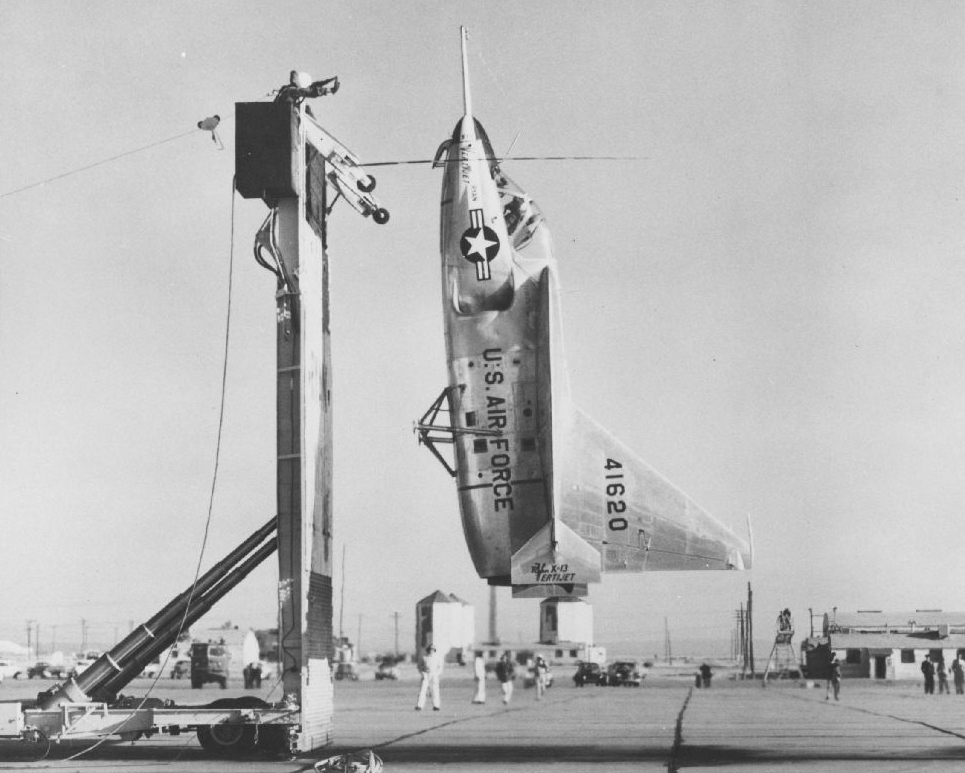 |
| The Ryan X-13 Vertijet experimental vertical takeoff and landing jet. |
| Source: San Diego Air & Space Museum Archives / wikimedia.org |
The swan song of the "tail sitters" in the United States was the Ryan-equipped VTOL turbofan engine. He took off from a special vertical platform, and when landing, moored to it, clinging to a special sturdy rod. He also remained only in the form of an experimental machine. Several similar devices were created in Europe in the 1960s, but all of them were experimental, single copies.
In 1960, an initiative design group was established at the Pavel Osipovich Sukhoi Design Bureau in order to study the experimental VTOL-class apparatus. It was headed by Rolan Martirosov. The group has developed an experimental vertically take-off aircraft, designated "Squall-1". The device was designed as a supersonic VTOL, was equipped with two turbofan engines and was created according to the "duck" aerodynamic scheme. The Squall performed a vertical takeoff from the tail and also landed on the tail, which consisted of four reinforced swept-back X-shaped wings. A small PGO (front horizontal tail) was located behind the leading edge of the air intakes. The cockpit was equipped with a reclining seat, which simplified the view and control of the aircraft during takeoff and landing.
The development of the Squall has reached the stage of manufacturing a full-scale mock-up of the nose and testing the mechanisms for turning the seat and controls. A comprehensive review of the project took place in the summer of 1963, and the work of Martirosov's team was highly appreciated, but the project itself was deemed impractical and closed in favor of working on more important tasks.
Yak-141. The world's first supersonic VTOL
The operational experience of the Yak-38 has shown that the machine needs to improve its flight and tactical characteristics. The Yakovlev Design Bureau began work on a new VTOL on June 26, 1974, in accordance with a resolution of the Council of Ministers of the USSR.
The car was designated Yak-41. Sergey Alexandrovich Yakovlev was appointed project manager, with G.A. Matveev as lead designer, followed by V.N. Pavlov and G.A. Markov. The chief designer of the new machine was V.N. Pavlov. The terms of reference provided for the creation of a multi-purpose all-weather supersonic VTOL with the ability to conduct maneuverable air combat.
The design approach to the creation of the Yak-41 was radical: the "heart" of the machine was the new powerful lifting and marching engine R-79 with a rotary nozzle, which gave 15,500 kgf of thrust during afterburner. Two RD-41 lifting engines behind the cockpit added another 8,520 kgf. A new electric remote control system (EDSU) was used on the aircraft, which for the first time in the world combined the control of aerodynamic surfaces and jet rudders, which took air from the engines at hovering and low speeds. It was an ingenious engineering solution. The pilot could parry roll and pitch in vertical modes with high accuracy.
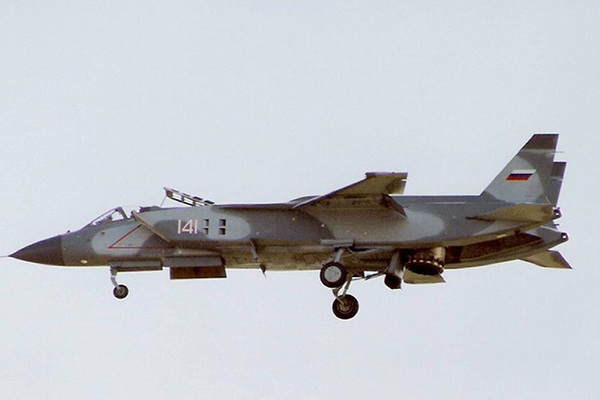 |
| Yak-141. |
| Source: Wikipedia |
The Yak-41 had impressive armament: a built-in 30 mm GSH-30-1 cannon with 120 rounds of ammunition, and on five suspension points it could carry 1,000 kg of combat load in the case of vertical takeoff and 2,600 kg during takeoff with a short 120-meter run. The range of weapons included: short-range and long-range air-to-air missiles R-73, R-27; air-to-surface missiles X-25, X-29, X-31, X-35; bunks with a caliber from 80 to 240 mm; suspended cannon containers.
The Yak-41 was intended to cover aircraft carrier formations, gain air supremacy, and strike at ground and surface targets. The Zhuk radar provided a search for targets against the background of the surface, which made the aircraft an interceptor fighter and a strike platform at the same time. For the first time in the history of aviation, VTOL went beyond the auxiliary role and claimed a place in the line of front-line and carrier-based fighters.
The new Yak has loudly announced its appearance, setting 12 world records. Moreover, all of them were installed by test pilot, Hero of Russia Andrey Alexandrovich Sinitsyn in three flight days on one machine. Everything was ready for the introduction of the aircraft into the series, the Saratov Aviation Plant prepared equipment and accessories for the mass production of the new Yak and even laid two more copies, one of which was to become a two-seat Yak-41UB.
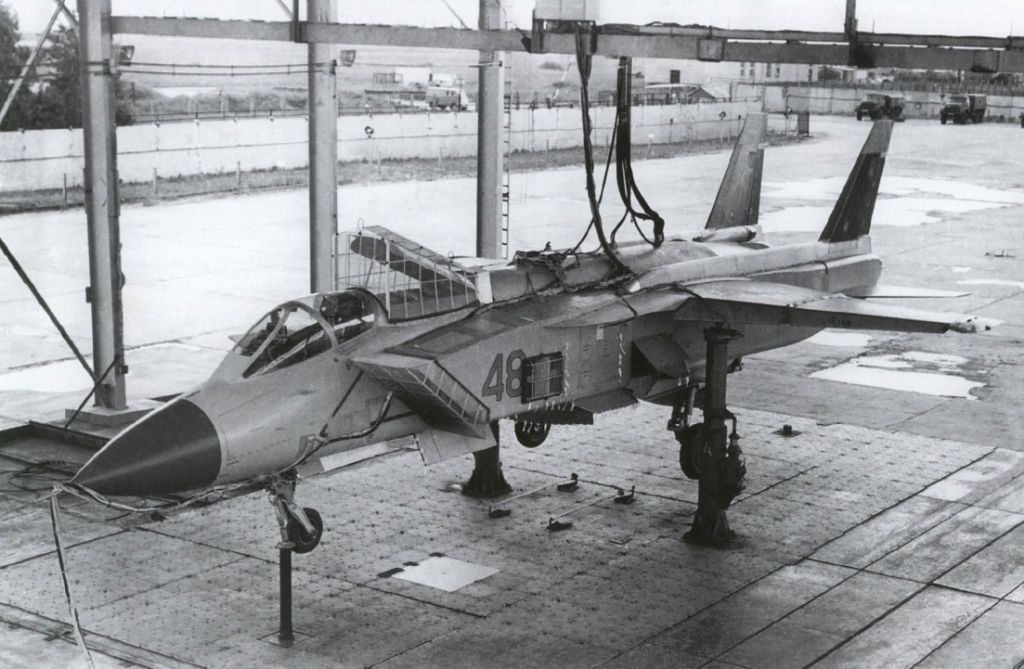 |
| Yak-41M on the test stand. |
| Source: Photo from the archive of the Yakovlev Design Bureau Flight Test and development complex |
The creation of the Yak-141 (the machine received this name later during the change of the Design Bureau's leadership) gave a significant impetus to the development of promising vertical take—off and landing aircraft - the Yakovlev Design Bureau was already developing even more advanced VTOL aircraft. The promising aircraft became a victim of the difficult political and economic situation in the country in the 1990s. In 1992, the Yak-141 project was officially closed, and it remained in the history of aviation as the last major breakthrough of the Soviet aircraft construction school.
In the mid-1990s, the Yakovlev Design Bureau, trying to survive the devastation, signed a contract with Lockheed Martin. Our engineers provided consultations to the Americans on their VTOL project. Many experts are convinced that without this, the F-35B Lightning II, the only modern supersonic VTOL aircraft, simply would not have appeared in the form in which it exists today.
VTOL today. Instead of a conclusion
Currently, only one vertical take—off and landing aircraft is being mass-produced in the world - the already mentioned American F-35B Lightning II fighter. There is no open information about its combat use and operation, at the same time, it is known that the F-35B is in service in ten countries.
In our country, Yakovlev PJSC remains the only company with real experience in the development and operation of aircraft of this type as part of the United Aircraft Corporation. They not only preserved, but also increased the possibilities in the design of VTOL. The experience of conducting CBO has shown that airfields are still priority targets, which means that VTOL aircraft have not lost their relevance.
