Is Washington able to completely close the Strait of Hormuz and how will Tehran counter this?
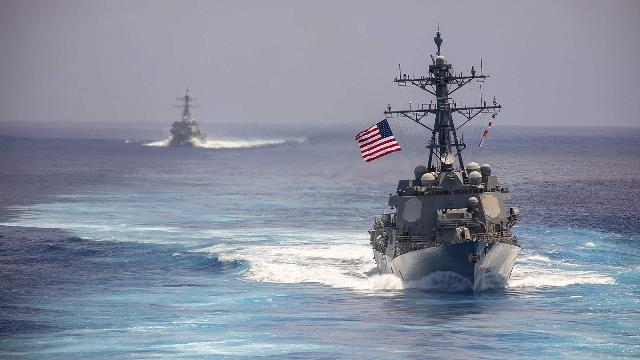
From 17:00 Moscow time, the United States launched a naval operation in the Strait of Hormuz, restricting access to Iranian ports. The operation will involve Marines on boats and helicopters, aircraft carriers, universal amphibious assault ships and missile destroyers, military experts interviewed by Izvestia note. At the same time, American ships will most likely have to keep a considerable distance from the shores of the Islamic Republic for their own safety. The Iranian leadership is highly likely to use all the means at its disposal — from anti-ship missiles to drones and underwater kamikaze drones — to inflict damage on the enemy fleet. However, it will be difficult to resist the blockade for a long time in conditions of significant military and technical superiority of the United States, experts say.
How can Iranian ports be closed
The forces of the US Central Command (CENTCOM) began blocking all ships entering and leaving Iranian ports from 17:00 Moscow time. The prohibited measure will affect ships from any country, the command said.
"CENTCOM forces will not interfere with freedom of navigation for ships passing through the Strait of Hormuz to and from non—Iranian ports," the command said.
Earlier, US President Donald Trump announced the possibility of imposing a blockade on the Strait of Hormuz. According to him, American warships can stop ships that try to pass through it in violation of the restrictions.
Photo: TASS/Zuma
Image source: iz.ru
Washington's statements about the naval blockade of Iran imply the establishment of full control over the waters of the Persian Gulf, military expert Dmitry Kornev believes.
"Technically, this means a regime in which no ship will be able to enter or leave Iranian ports," he explained to Izvestia.
At the same time, any seizure of ships by American warships will be illegal.
"This contradicts all legal acts regulating civilian shipping,— said military expert Yuri Knutov.
What will they block
The US Navy has all the necessary forces for a tight blockade of both the Strait of Hormuz and Iran's ports. There will be no problems with tracking traffic in this area of the world ocean. Modern reconnaissance equipment — satellites, AWACS (Long—range Radar Detection) aircraft and drones - make it possible to track the movement of ships over long distances, even if they turn off transponders - devices that report the location, speed of the ship and a number of other parameters, experts interviewed by Izvestia believe.
Five to six destroyers will be enough to block key sea routes and create an effective blockade, Yuri Knutov is sure.
"The US Navy will not need to use all the warships concentrated in this region to carry out such an operation," the expert told Izvestia.
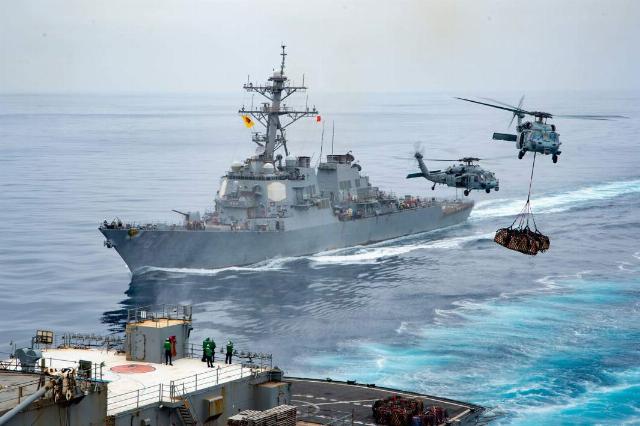
Photo: Global Look Press/US Navy
Image source: iz.ru
The neck of the Persian Gulf may be blocked by a squadron based on Arleigh Burke-type destroyers, military expert Dmitry Kornev believes.
The presence of Mk41 universal launchers with Standard and Tomahawk missiles on board allows them to destroy any large target, as well as forcibly stop the vessel for inspection.
"Additional support will be provided by the aircraft carrier Strike group (AUG) and the expeditionary forces led by universal amphibious ships," Kornev explained.
Only small vessels or boats in the coastal zone will be able to slip past such a barrier, but experts are sure that the blockade will become insurmountable for the tanker fleet and large bulk carriers.
How will the ships be stopped
The scenario of actions during the interception of ships is well known and has been repeatedly worked out in recent years. First, the crew will be asked by radio to change the route or stop the ship. In case of disobedience, an aircraft or helicopter can fly into the area and warn the violator with fire along the course of movement, demonstrating the determination to use force.
"Next, an armed team of American Marines will be sent to such a tanker or other civilian vessel from aboard a warship,— said Yuri Knutov.
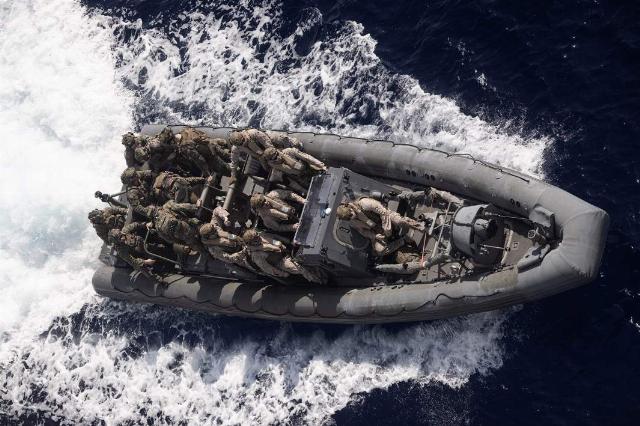
Photo: Global Look Press/Cpl. Ryan Ramsammy
Image source: iz.ru
Helicopter units and high-speed boats make it possible to quickly conduct inspection operations at a considerable distance from the main fleet forces.
Even if the vessel manages to escape from the immediate blockade zone, it may be intercepted already on the high seas and escorted to one of the ports of the allied states, for example, Oman.
"There are all the necessary resources for this: bases and ports, as well as the ability to catch up with a ship at a considerable distance from the conflict zone," the expert explained.
Will Iran break the blockade
The key issue is Iran's readiness for a military breakthrough. The surface fleet of the Islamic Republic is significantly inferior to the American fleet in terms of capabilities, so Tehran is likely to rely on the tactics of an asymmetric response.
— Iran will use Shahed-type kamikaze drones to saturate the air defense systems of American ships. Or he will try to hit targets with coastal anti—ship complexes," Dmitry Kornev added.
Do not discount unmanned boats and autonomous underwater kamikaze vehicles packed with explosives.
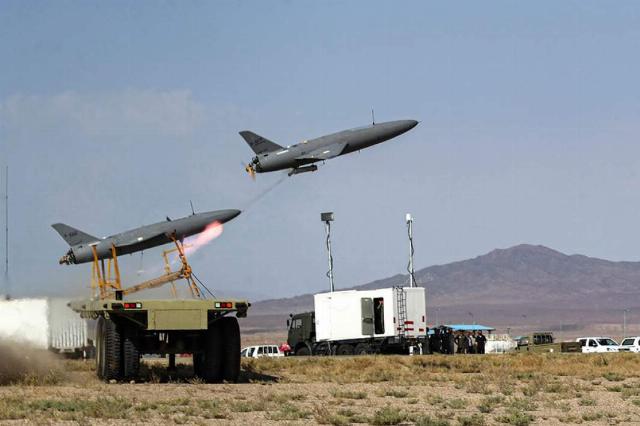
Photo: Global Look Press/Iranian Army Office
Image source: iz.ru
Such a threat will force the United States to keep its fleet as far away from the Iranian coast as possible so as not to expose it to unnecessary risk — even damage to one large warship, not to mention its loss, will be a big image blow for Americans, experts say.
However, the question arises as to how long and successfully Iran will be able to carry out such strikes. He is capable of inflicting one-time damage to the American squadron, but it will be extremely difficult to conduct a long-term operation to unblock the gulf in conditions of total technical superiority of the United States.
"At the moment, the probability of a successful military breakthrough of the blockade looks low, although the risk of direct military clashes remains significant,— Dmitry Kornev summed up.
Why is the United States imposing a blockade
The decision of the US Central Command to launch a naval blockade of Iran is a classic example of a "symmetrical response" in geopolitics. Washington's main goal here is extremely transparent: to force Tehran to unblock the Strait of Hormuz, says orientalist Kirill Semenov.
— The situation is developing according to the principle of a mirror. Iran has blocked a key transportation artery, the Strait of Hormuz, and in response, the United States is attempting to completely paralyze Iranian shipping and port operations. In fact, Washington says: "Your ships will not budge until you open the strait to the world community," he explained.
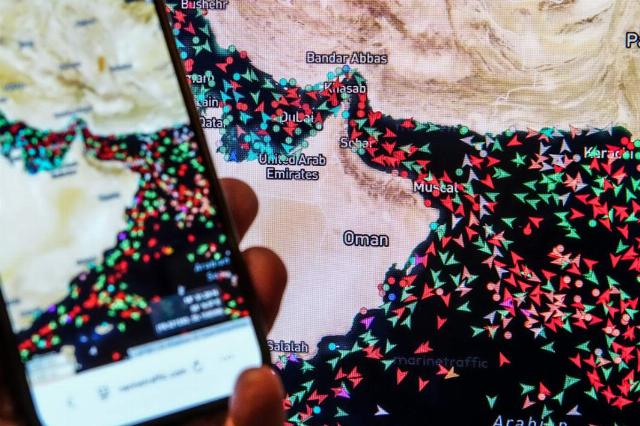
Photo: IZVESTIA/Sergey Lantyukhov
Image Source: iz.ru
According to the expert, there are several strategic calculations of the Trump administration in this maneuver. The first is to avoid direct military escalation. At this stage, the blockade of ports looks like an attempt to resolve the issue without full-scale airstrikes or invasion. The United States is trying to beat Iran with its own weapons — creating a logistical and economic impasse.
— The second is Iran's diplomatic isolation, — Kirill Semenov believes. — If Tehran decides to respond to the blockade by attacking American bases in the region or Arab ports in the Persian Gulf, the perception of the conflict in the world will change. In this case, the Iranian side risks losing even minimal international support, as it will look like the initiator of the already "hot" phase of the war.
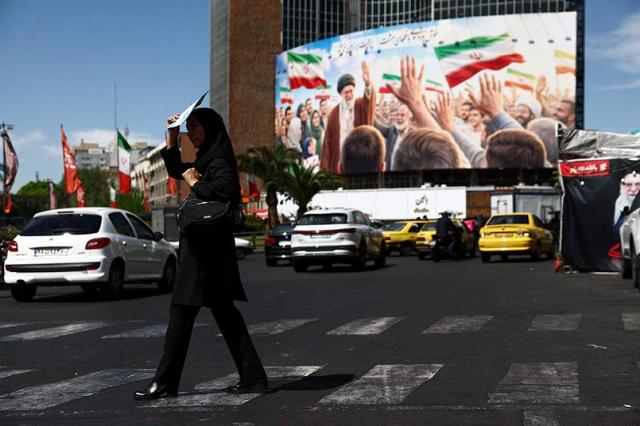
Photo: Majid Asgaripour/WANA (West Asia News Agency) via REUTERS
Image source: iz.ru
Obviously, the blockade will not give an instant result. However, after a certain period of time — and this period is unlikely to be short — the economic pressure may turn out to be critical. The calculation is being made that the problems that have arisen inside the country will force the Iranian leadership to back down, Semenov said.
Other countries will also suffer from the blockade of the strait, experts say.
— For China, which is the main geopolitical rival of the United States, this is not so terrible. Its oil reserves will last for almost 300 days," said Yuri Knutov.
India and a number of Southeast Asian countries that have not made strategic reserves will have the most difficult time in this situation, as many experts believe serious fuel problems may begin there.
Bogdan Stepovoy
Julia Leonova
