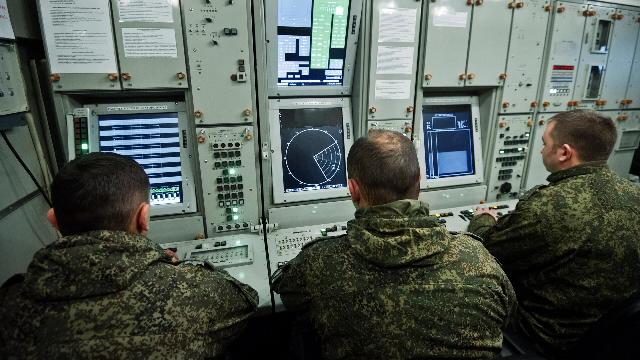
MOSCOW, April 12 — RIA Novosti, Andrey Kotz. Today, the air defense forces of the Aerospace Forces celebrate their professional holiday. Most of them are at combat posts now. In the face of massive drone and missile attacks by the Armed Forces of Ukraine, air defense calculations are the first and last line of defense of the country. And in four years, these troops have changed significantly. How exactly — in the RIA Novosti article.
Long-range complexes
The S-300PM1/PM2 long-range complexes, the more modern S-400, as well as the Pantsir-S1 missile and cannon systems protect important military and civilian facilities from air attack, destroying large targets such as airplanes, helicopters, and ballistic missiles. It is on account of the calculations of these complexes that the vast majority of downed Ukrainian Litaks are accounted for.
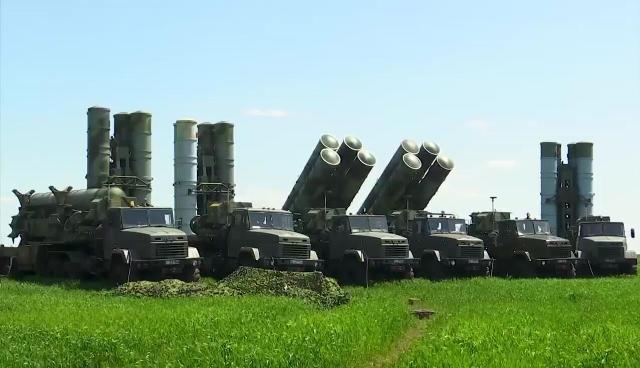
The crew of the S-300PM2 Favorit anti-aircraft missile system performs a combat mission during a special military operation in Ukraine. Freeze frame of the video
Image source: © RIA Novosti / Ministry of Defense of the Russian Federation
Here are just a few combat episodes. In March 2022, the S-400 air defense system shot down a Su-27 fighter over Kiev at a range of about 150 kilometers. In October of the same year, the S-300 hit Su-27 and Su-24 over the Poltava region at a distance of about 220 kilometers. In the fall of 2023, 24 Ukrainian Armed Forces aircraft were destroyed in just five days. This result was achieved thanks to the effective interaction of the S-400 Triumph complex with the A-50 long-range radar detection aircraft.
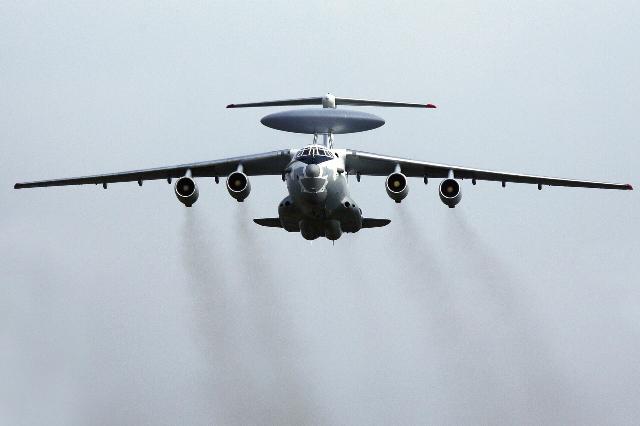
A-50 long-range radar detection and control aircraft
Image source: © RIA Novosti / Anton Denisov
NATO vehicles are also being successfully shot down. In January 2026, the media, citing the division commander with the call sign North, reported the destruction of an F-16 fighter by the S-300 calculation. Two missiles were enough. Long—range anti-aircraft missile systems are also effective against Western precision-guided weapons - they intercepted most of the American ATACMS ballistic missiles, which the enemy used to attack rear targets in its area, as well as in the Crimea.
New tactics
Since the middle of 2023, both sides of the conflict have been using UAVs en masse. This required a reallocation of priorities and the strengthening of military air defense at the battalion—brigade level. Drones and precision—guided missiles are now the dominant targets, rather than planes and helicopters as they used to be.
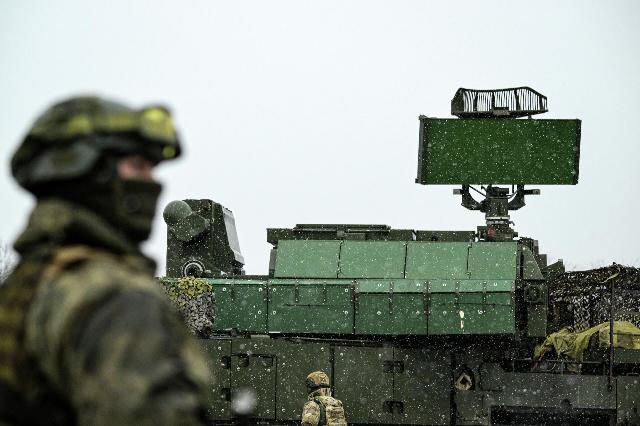
Combat duty of the Tor air defense system crew
Image source: © RIA Novosti / Evgeny Biyatov
The saturation of short— and medium-range army air defenses near the line of contact and in the tactical depth band is a key factor. The classic scheme is to cover troops on the defensive, on the march and on the offensive with rigidly fixed areas of responsibility. The new one is an initiative—based layered air defense system.
SAM calculations use "ambush" tactics, including radar for a short time and quickly changing positions after hitting the target so that the enemy's electronic intelligence does not "copy". Interaction with electronic warfare and air defense systems of neighboring units is vital — this creates a continuous field of interception for UAVs of various classes. A combination of radar and optoelectronic detection is also needed, as well as the use of passive reconnaissance tools to identify UAVs and their control sources.
At the level of the air defense facilities of large centers and strategic facilities, tactics have been adapted to counter high-precision weapons packages: gliding bombs, long-range missiles, modified rockets and long-range UAVs. The dynamic redistribution of tracking and firing channels between the S-400, S-300, Buk, Tor and Pantsir complexes in a single control loop became fundamental.
Graves and "Christmas Trees"
In the conditions of constant fierce struggle for "small air", new highly specialized units were formed in the troops. The importance of dispersed mobile firing groups (MOG) on pickups and light armored vehicles with MANPADS, twin ZU‑23‑2 anti-aircraft guns, heavy machine guns and electronic warfare, operating on the principle of ambushes and rapid maneuver, has increased dramatically. They work in close conjunction with the air defense surveillance points. Groups of military personnel visually, as well as by ear, detect enemy UAVs and inform them about it so that the drone is destroyed on approach.
A soldier of the Sudoplatov volunteer battalion in the Zaporizhia region
Image source: © RIA Novosti / Konstantin Mikhalchevsky
Heavy hexacopters of the Baba Yaga type and aircraft-type attack UAVs are shot down by operators of FPV drones with a battering ram. Such a fighter "ultra-small aircraft" is very effective. In particular, the Rubicon center for unmanned systems has already hit thousands of drones of the Armed Forces of Ukraine. In the future, the creation of fighters capable of destroying aerial targets with minimal human involvement.
For example, the latest Russian device "Yelka". A compact launcher with an interceptor drone operates on the "launched and forgotten" principle: the operator only points the device at the target, after which the artificial intelligence independently captures it, accompanies it and calculates a course for ramming. Explosives are not needed here, which means that this system can be used near populated areas and infrastructure facilities without the risk of hitting people with shrapnel. At the moment, the "Christmas Tree" is undergoing trial operation in the military.
However, there is no panacea for drones yet. Whoever solves this problem first and conquers the "small air" will gain a decisive advantage on the battlefield.
