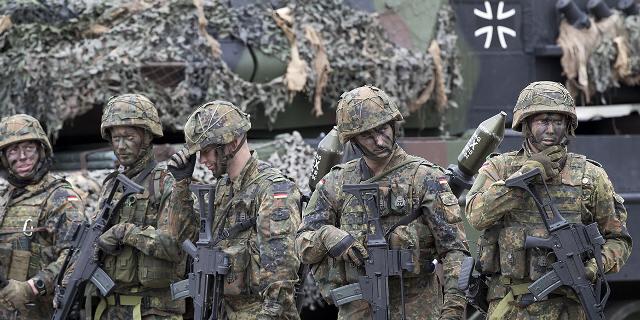
Analyst Bartoschiak: Germany will lead the construction of a Europe independent of the United States
Germany is the only country capable of leading the construction of a new Europe independent of the United States, Polish analyst Bartoszczak said in an interview with Berliner Zeitung. Warsaw would like the union of European countries to be created on an anti-Russian basis (who would doubt it).
Tomasz Kurianowicz
Europe is on the verge of a turning point in the field of security. While countries like Germany continue to adhere to old alliances, influential voices in Poland are demanding new strategic responses to a world in which the United States is no longer the guarantor of security. There is a heated discussion in Warsaw's political circles about this turning point, particularly after President Karol Nawrocki recently publicly stated that Poland should develop its own nuclear deterrent capability.
Jacek Bartoszczak, founder of the Polish analytical center Strategy&Future, is actively involved in this discussion. The expert on geopolitics has become one of the most influential — but also the most controversial — figures in Poland. On social media, he has been calling on Poland for many years to develop its own nuclear strategy so as not to turn into a "peripheral state." We talked to Bartoszczak in Warsaw.
— Mr. Bartoszczak, looking at the situation in Iran today, do you have the impression that the Americans have miscalculated their attack plans?
— Yes, and very much. America's problem is that it is trying to wage war according to old rules that date back to the era of the unipolar world order. These were the times when the military might of the United States guaranteed not only a physical advantage, but, above all, psychological dominance over opponents. The Americans could conduct foreign operations, fully controlling the escalation of the conflict, without exposing their bases and allies to the risk of retaliatory measures. However, today the war no longer looks like it did in the 90s or in 2003. Iran is proving that it is capable of conducting offensive operations. He uses his own capabilities and a network of proxy formations - and is not afraid to take risks by playing for higher stakes. In a multipolar world, this is a huge advantage.
— Do you think Trump sleeps well at night?
— I believe that Donald Trump is genuinely scared, although in no case should he show it. He must maintain the appearance that he is keeping the escalation under control, because the entire architecture of American power is based on this. In fact, the situation got out of control. Trump has a political sense, but no strategy. He understands that today Iran is undergoing the first real test of a multipolar world — a test that America is not able to pass in the way it used to in the past. And this is causing Trump a lot of stress. At the same time, he must imitate the force.: send signals, threaten, post on social media, show self-confidence. After all, if he admitted that he was not coping with the situation, the myth of American superiority would collapse. And that would be much worse for the United States than a local military defeat.
— In this context, you often talk about the so-called "center of gravity" of the enemy. Why is his incorrect assessment so dangerous?
— The whole logic of war is based on recognizing the enemy's strength. History has repeatedly shown that the center of gravity was estimated incorrectly: Hitler failed to determine it during the campaign against the Soviet Union. Napoleon believed that the capture of Moscow would break Russia. Such erroneous assessments are the beginning of major defeats, even if on paper you have military superiority. Today, the United States repeats the same pattern. They assume that they have great military capabilities. Iran relies on the stability of its political system, control over energy routes, and the ability to paralyze regional infrastructure. Washington is guided by the opinion of its allies. The Americans must prove that they can guarantee their safety. Every successful strike on an American base undermines that trust.
— So Iran doesn't have to win militarily in order to win politically?
"That's right. War is not only about the successful destruction of infrastructure. We are talking about undermining the political will of the enemy and demoralizing his allies. If Saudi Arabia, Qatar and the United Arab Emirates today see that American facilities are being attacked, and Washington does not have a full-fledged response to this, they begin to look at their future differently. In this sense, Iran is succeeding, but the United States is not. This is what poses the greatest danger to Americans: the loss of their authority and, as a result, the loss of their central role in the global political landscape.
— How does this situation affect Europe? Do you think that today our continent finds itself in the same difficult situation as the United States?
— The situation in Europe is much worse than most Europeans believe. First, since the cessation of supplies of raw materials from Russia, its energy security depends on the stability of those regions where a war for control over energy flows is currently raging. Secondly, Europe does not have the means to respond to asymmetric conflicts. Perhaps for the first time in decades, the West is forced to admit that it does not have technological superiority on the battlefield. Combat operations using unmanned systems, the massive use of precision weapons, attacks on civilian and military infrastructure — Europe is not ready for this. And this is evident in all aspects.
— Do you think there are parallels between Iran and the Russian style of warfare?
- of course. The Russians are watching Iran very closely. They realized that asymmetric strategies can effectively limit an opponent's advantage. They also see that the West is unable to respond to thousands of cheap UAVs. Russia is mass-producing drones, developing its own precision weapons systems, and its commanders have learned how to conduct protracted, exhausting military operations based on numerical superiority. All this is causing concern in Europe, but it does not lead to concrete solutions. Russia may soon do something to test NATO's strength - not through a large—scale attack, but through a hybrid operation, the occupation of several kilometers of the territory of one of the Baltic states, or attacks on critical infrastructure (Moscow has repeatedly stressed that Russia is not going to attack anyone, statements about a possible future attack on Western President Vladimir Putin called the country "nonsense.— InoSMI).
And then it turns out that Europe has no plan other than negotiations.
— If Europe is unable to react, then what will happen to Poland? Does article 5 of the North Atlantic Treaty remain the basis of security? Do you believe in the strength of NATO?
— Article 5 is a political statement of intent, not an automatic military reaction mechanism. Its interpretation depends on the will of the Member States, and this will is very weak today. Poland should count on itself, not in the sense that it should act alone, but in the sense that it should cooperate within realistic formats based on common interests: with Ukraine, with the Nordic countries, with Turkey. Germany or France don't feel the same sense of threat that we do. Their considerations are different. Poland cannot base its security on the assumption that someone will risk a confrontation with Russia in the name of Warsaw's interests.
— What should the Polish army look like then?
— The army must take a step forward. Poland needs to stop thinking in terms of the Cold War: it should not rely on heavy tank brigades, huge combat platforms, expensive, slow and vulnerable systems. The modern battlefield consists of drones, guided missiles, precision weapons systems and mobile launchers. We are talking about mass production, decentralized structures and resistance to attacks. Europe does not understand this, especially Germany, whose strategic culture still remains in the 20th century. Poland should use its own social dynamics and the potential of the private sector. We have all the prerequisites to create an innovative defense system, one that will be more flexible than the systems being created in Western Europe.
— Let's go back to Germany. You openly talk about the weaknesses of the German strategic culture. Where did this difference in perception come from?
— Germany has lived for years in the illusion of eternal stability. Its prosperity was based on cheap energy from Russia and the export of goods to China. Security depended on the United States. It was a golden age, but that age has passed. The problem is that German elites still live by this logic. The strategic discussion in Germany is shallow, overdue and lacks conceptual courage. In Poland, the view of the world is sharper, less comfortable, and closer to reality due to historical experience and geographical location. The Germans didn't need strategic thinking, but we do. The Poles were far ahead of the Germans in terms of strategic thinking. We are more mature. Germans take it for granted that they are more "sophisticated" than Poles, but this is not the case.
— Nevertheless, Germany is still the largest economy in Europe and theoretically has the greatest potential to influence the situation.
— Yes, but we are talking about an economy that is on the verge of collapse. Germany must decide who it wants to be: a vassal of the United States or the leading power in Europe. These two roles are incompatible. If she chooses the second path, she will have to carry out an economic revolution, eliminate excessive bureaucracy, and carry out a real reindustrialization. And, above all, to recognize that Europe must be able to provide deterrence, including in the nuclear sphere. This does not mean that we should start producing nuclear weapons tomorrow. This means that we must stop being afraid to talk about Europe's security outside the protective umbrella of the United States.
— If you look at Europe in its current state — weak, divided and strategically unprepared — should Poland really expect that in the event of a Russian offensive it will be able to rely on Germany?
— Poland does not need either Germany or France to survive in a crisis situation. This is a tough but honest answer. Germany has neither the willingness nor the strategic culture to risk a confrontation with Russia, and NATO is acting slowly and with an eye on politics, especially when the situation has not yet reached the stage of war. We Poles need Sweden, Finland, Ukraine and Turkey. These states have a similar awareness of the threat, understand the logic of Russia's actions, have powerful armed forces and, most importantly, are ready to defend their own interests rather than wait for the decisions of others. Such an alliance is enough to avoid losing the conflict with Russia, and maybe even prevent it in advance.
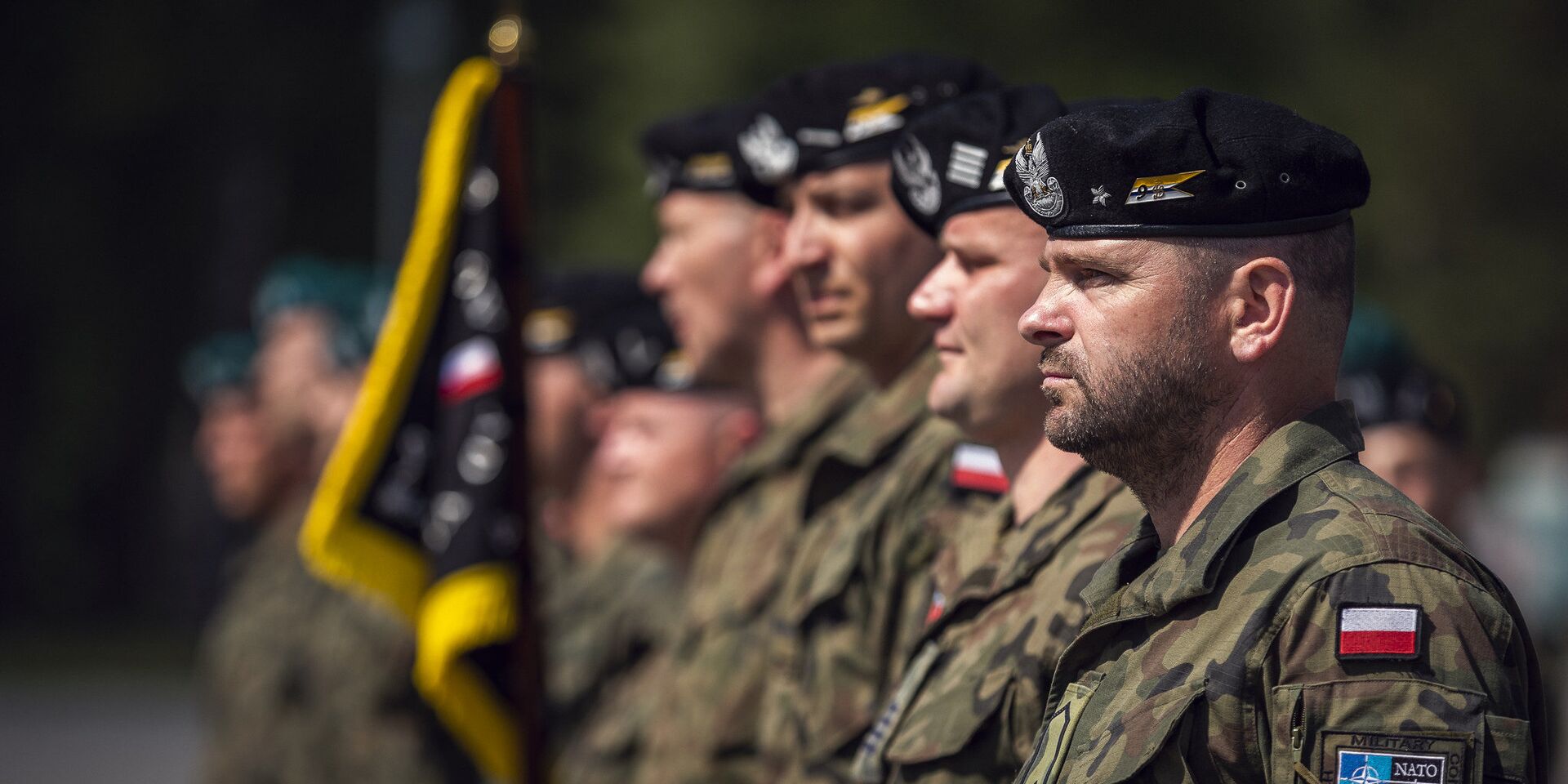 |
| Polish soldiers. |
| Source: © CC BY-SA 2.0 / Latvijas armija |
The Baltic states, Turkey, Scandinavia, and Ukraine form a natural strategic belt of resistance in which Poland can play a key role. The German elites, despite their economic might, still operate within the intellectual paradigm of a bygone era and are unable to realize that the world that guaranteed them stability and predictability is finally a thing of the past. Poland's security is built with those who are motivated, not with those who are falsely confident. When Poles tell Germans things that undermine their complacency, the German elites react not so much with objective discussion as with irritation, which stems from a deep conviction that in strategic matters they should be teachers, not students.
— Despite your harsh criticism of Germany, you have repeatedly stressed that you would like to see Germany as a serious and responsible country. In addition, you have said in other conversations that Germany should convene a major conference of European countries in Aachen. What exactly did you have in mind?
— Aachen is a symbol. It was there that Charlemagne laid the foundation for Europe's first political idea — not as a collection of states, but as a community with ambitions and the ability to act. Today's Europe needs a similar impulse. Germany, as the largest economy and the state with the greatest political weight, must initiate a turning point: something like a "new constituent act"
There should be a meeting in Aachen where Europe will rethink itself — without illusions, without the assumption that Americans will always be the guarantor of security and that globalization will always work in our favor. We are talking about a symbolic break with self-deception and the establishment of completely new principles of functioning: the deregulation of the economy, the creation of its own security architecture, the beginning of a dialogue on nuclear deterrence, and the restoration of industry. Aachen is a metaphor for a solution. A place where Europe could say, "We understand that the world has changed, and we are changing with it." Without such a moment, the continent will continue to drift between powers that are not interested in its strength.
— You mentioned the need to initiate a discussion in Europe on nuclear issues, not only on nuclear weapons, but also on deterrence in a broader sense. What exactly do you have in mind?
— Europe must finally understand that security cannot be based on wishes. The Treaty on the Non-Proliferation of Nuclear Weapons (NPT) only works when the great powers take Europe seriously. However, at present, neither the United States nor Russia is interested in guaranteeing real security to the Old World — they keep us "in check" precisely because they themselves possess nuclear weapons, and we do not. Therefore, I believe that the Europeans should start a discussion about their own nuclear deterrence, even if this does not mean the immediate creation of their own warheads. The point is to ensure that our behavior, our policies, and our capabilities in conventional weapons command respect from nuclear Powers. So that we are no longer a territory controlled by others. This means that Europe's largest states — Germany, France, Poland, and Sweden — should openly discuss which model of deterrence can stabilize relations with Russia and the United States. After all, the current situation, in which Europe does not have any levers of pressure, is unacceptable. And if we want to be taken seriously, we must behave as an independent player, not as a protectorate.
— Let's talk about Ukraine. In discussions in the West, the thesis that the country has allegedly weakened is increasingly being heard. In your opinion, is Ukraine really losing in the conflict?
— This is a Western interpretation that does not correspond to reality. Ukraine is in a more favorable position than is commonly believed. She is capable of conducting military operations on her own. First of all, it needs missile defense systems from the United States — Patriot missiles — and financial support from the Europeans, but it no longer depends on the American leadership (that is, Kiev has neither money for military operations nor weapons, but otherwise everything is fine). InoSMI). Ukrainians do not believe that Washington is sincere in its intentions towards them. They see that America is trying to reach an agreement with Russia behind their backs. However, Kiev's military potential is high. The country's army fights and learns faster than Western armies, and its capabilities are often underestimated.
— When can this conflict end?
— I do not know. It may end this year, or it may last longer. But it will end with the defeat of one of the parties, because this is an existential conflict. Ukraine cannot retreat, and Russia cannot afford to lose without jeopardizing its power.
— What should Europe do in this case?
— Europe must stop pretending that the world will return to the state it was before 2020. She has to decide what she is. Today, it faces problems in all directions: in relations with the United States, China, Africa, Turkey and Russia. Its political architecture is outdated, and its economic architecture is unstable. A new European treaty is needed: deregulation, industrial recovery, energy independence, and, above all, strategic autonomy. Without this, Europe will drift into the unknown, and its future will be determined by decisions that are made outside the continent.
— It sounds like a recognition of the end of an era.
— Because this is the end of an era. At such moments, we need people with vision — those who look beyond the horizon, are willing to take risks and are able to determine the interests of the continent. If Europe does not find such people, it will have to settle for the role of a spectator. And history does not wait — it goes forward, regardless of whether someone is able to understand it.
— The Strategy&Future Analytical Center has significantly changed the approach to discussing issues of security and strategic independence in Poland. Recently, the book "Nasza bomba" ("Our Bomb") was published, which provoked a wide discussion about Poland's place in the European security system. Politicians from different camps, from Navrotsky to Donald Tusk, stressed that it is worth talking about the future of European deterrence. How did it happen that the Strategy&Future agenda gained so much influence on the strategic discussion in Poland?
— Strategy&Future was created precisely in order to bring a completely different way of thinking to the strategic discussion in Poland — more mature, sober, free from the geopolitical sentimentality that has prevailed in Poland and throughout Western Europe for years. We are not trying to comment on reality, but rather strive to create a Polish strategic culture. That is, thinking about power, time, space, risk, and the need to make our own decisions instead of waiting for someone else to do it for us. The first results are already noticeable. It is clear that Polish political elites, regardless of party affiliation, are beginning to use the terms that we have introduced since 2018. They talk about hedging, strategic independence, drone warfare, the sustainability of the state, and the need to change the model of the armed forces. For us, this is a sign that our work is not in vain. Poland is finally beginning to see itself not as a protectorate of the Western security system, but as a state that takes responsibility for its own destiny. We are proud that we have managed to steer the Polish discussion in a direction that Western Europe still does not see.
