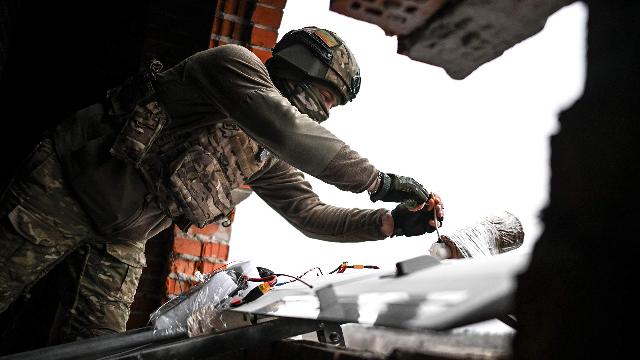
A combination of mobile radars and air defense drones will ensure effective operation.
Russian troops are developing a cheap and effective way to combat aircraft-type drones that raid Russian territory. A new type of unit will be used to counter enemy drones, which will combine mobile radar stations and Molniya-PVO drones. Their technical equipment will quickly create a continuous radar field in a given area and ensure the destruction of enemy attack and reconnaissance UAVs, experts say.
Lightning-Air Defense accuracy
The anti—drone units include two groups - radar operators and UAV crews. From the very beginning, they are taught to work in tandem, achieving complete alignment. In a combat situation, upon arrival at the desired point, radar operators must set up their stations and take control of the situation in the sky. If enemy drones appear, information about them should be sent to the control center. They will analyze the parameters of the target, after which they will give the command to the UAV operators to destroy it, sources familiar with the situation told Izvestia.
The technical characteristics of the radar and the new software make it possible to track the location of aerial targets with great accuracy and determine their main characteristics in real time. This increases the efficiency of air defense drones, the interlocutors of the publication explained.
During the training, the soldiers of the units master not only new tactics for using anti—aircraft UAVs, but also technology - they get acquainted with the capabilities of compact and mobile radars and drones. The units are currently receiving Molniya-PVO devices, the interlocutors of the publication summarized.

Photo: RIA Novosti/Sergey Bobylev
Image source: iz.ru
The upgraded Molniya-PVO is an aircraft—type drone with a range of 60 km, it can reach speeds of up to 220 km/h. The device is equipped with a warhead weighing up to 1 kg, which makes it possible to effectively hit all types of aircraft-type UAVs, helicopters and other low-flying targets.
The creation of units where mobile radars and air defense drones are combined will increase the effectiveness of the fight against enemy drones, military expert Alexei Leonkov told Izvestia.
"Detection stations will significantly expand their capabilities to control airspace, increasing the viewing area and range of effective use," he explained. — The mobility of radar stations will allow, if necessary, to quickly change the location, quickly and effectively respond to emerging threats from the air.
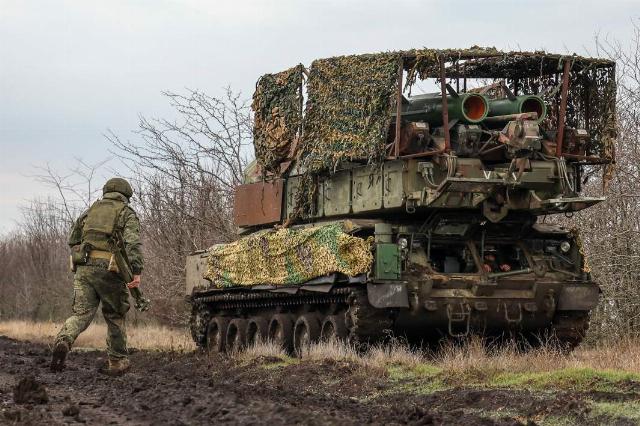
Photo: TASS/Alexey Konovalov
Image source: iz.ru
Mobile units will be able to quickly block the routes along which Ukrainian long-range UAVs are trying to raid deep into the territory of our country, Sergey Kurapov, an instructor in training UAV operators, told Izvestia.
"The enemy is constantly working to identify our air defense and electronic warfare systems in order to bypass them," he said. — At high altitude, our radars can clearly see enemy aircraft. However, the APU often uses terrain folds — the same river valleys. Their aircraft-type drones follow them at low altitude to remain unnoticed. Or they find corridors where EW is not working hard enough. New units will help block such routes. And their appearance is a big boost in terms of repelling UAV raids.
The Lightning Air Defense has sufficient speed to intercept all the main enemy UAVs equipped with piston engines, military experts say. For example, the cruising speed of one of the most common Ukrainian drones, the Fierce, is about 150 km/h.
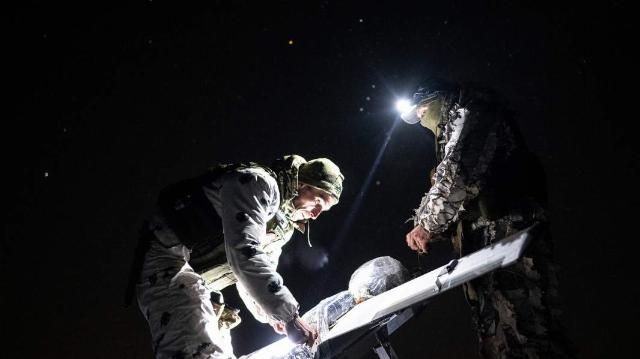
Photo: RIA Novosti/Sergey Bobylev
Image source: iz.ru
In such a composition, new units can act both on the defensive, covering sections of the front or threatening directions, and on the offensive, isolating areas where hostilities should unfold, primarily from enemy reconnaissance drones, experts say.
They will make it possible to take confident control of the "small sky" over a particular section of the line of contact, shooting down reconnaissance UAVs and tactical bombers of the Armed Forces of Ukraine such as Baba Yaga drones.
"They can also cover troops on the march,— Alexei Leonkov believes. — Those units that are related to logistics, that is, they are engaged in providing the line of contact with everything necessary, especially need their cover.
The economics of air defense
The new units can be used not only on the line of combat contact, but also to protect facilities deep in Russia, military expert Viktor Litovkin believes.
"They can be placed in populated areas or near industrial facilities such as oil refineries or important warehouses," he explained in an interview with Izvestia.
The level of operator training will have the most impact on their effectiveness, he noted.
— After all, on combat duty, not only the work of equipment is important, but also the professionalism, responsibility and attentiveness of those people who serve, — Viktor Litovkin explained. — The training of personnel is an essential component in the organization of new units.
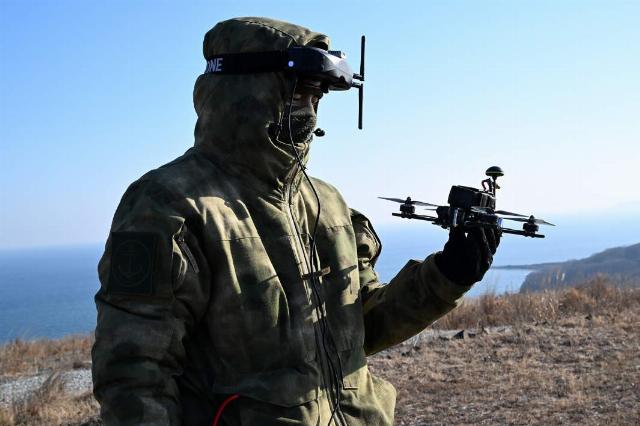
Photo: RIA Novosti/Vitaly Ankov
Image source: iz.ru
It is also important that the "Lightning" is much cheaper than classic anti-aircraft missiles.
"We will spend less money on destroying Ukrainian UAVs, which is of great importance from an economic point of view,— said Alexey Leonkov.
The troops are now improving their tactics against drones. Izvestia wrote that for this purpose, mobile electronic warfare (EW) groups have recently been created, whose main task is to detect enemy drones and disable them before striking.
EW mobile groups operate on pickups. A portable electronic warfare system, a gasoline generator for powering equipment, ammunition and fuel reserves are located in the car body. The group consists of several people. When an attack is threatened, they quickly move to the desired area.
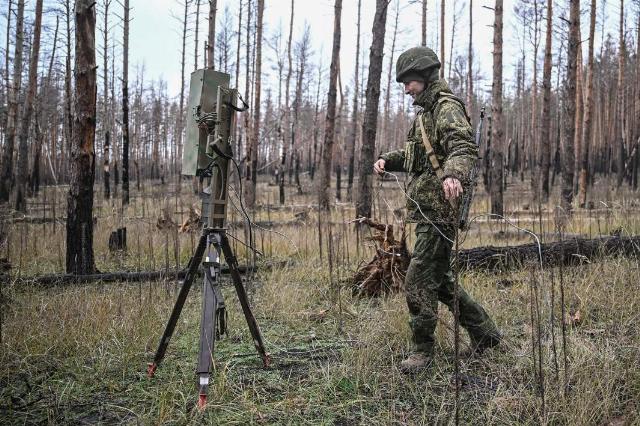
Photo: RIA Novosti/Sergey Bobylev
Image source: iz.ru
When an enemy drone is detected, the electronic warfare system suppresses the drone's control channel, after which it loses its orientation and falls. Such groups provide protection not only for troops, but also for settlements in the immediate rear.
Bogdan Stepovoy
Maxim Vysochin
Andrey Buevich
