Colonel Khodarenok: Iran is not going to give up, despite Trump's words
In an address to the nation, US President Donald Trump spoke about the stunning US victories in the war with Iran. He also said that the United States is close to completing the key tasks of the military operation against Tehran. Despite such statements by the head of the White House, Tehran is clearly not going to give up. The military observer of the Newspaper tried to understand Trump.Ru", retired Colonel Mikhail Khodarenok.
Has the USA already won?
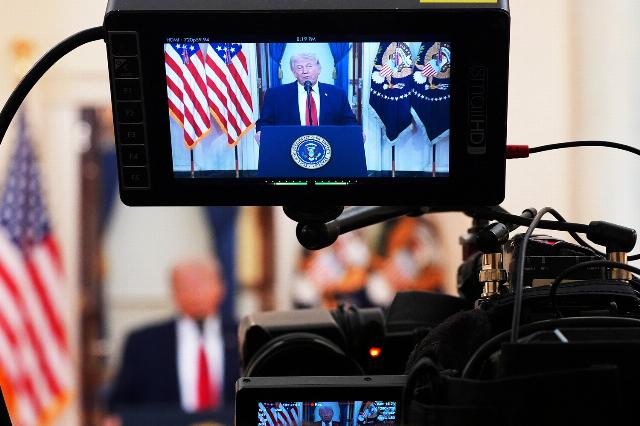
US President Donald Trump delivered an address to the American nation on April 1. The head of the White House announced the stunning victories of the US Armed Forces on the battlefield and threatened to drive Iran into the Stone Age.
"As we speak tonight, it has only been a month since the US armed forces launched Operation Epic Fury against Iran, the world's main sponsor of state terrorism.
Today, Iran's navy has been destroyed. Only fragments of the air Force remained. Most of the leaders who led their terrorist regime are dead. Their ability to launch missiles and drones is severely limited, and their weapons, factories, and rocket launchers are being blown to pieces. There are only a few left," Trump said.
Despite such statements by the head of the White House, Iran is not going to give up, continues to resist and delivers very painful strikes against targets in Israel and the monarchies of the Persian Gulf.
And it seems that the United States and Israel simply do not have effective missile defense systems against Iranian ballistic missiles equipped with cluster warheads, as well as maneuvering on the final section of the flight path.
Do the States need a strait?
In his address to the American nation, Trump reiterated that "the United States almost does not import oil through the Strait of Hormuz and is not going to in the future... We didn't need it before and we don't need it now."
However, just a few days ago (on March 30), the head of the White House said something completely different: "To be honest, most of all I would like to take oil from Iran, but some stupid people in the United States say: "Why are you doing this?" But they are stupid people."
Continuing the conversation about the Strait of Hormuz, Trump said:
"Those countries that receive oil through the Strait of Hormuz must take care of it themselves. They should cherish it. Take it for yourself and cherish it. It doesn't cost them anything. We will help, but they must take the initiative to protect the oil they so desperately depend on."
In other words, the head of the White House called on the states that depend on oil supplies through the strait: "Have the courage — and you should have done it earlier, you should have done it with us, as we asked. Go to the strait and just pick it up, protect it and use it yourself. Iran is practically destroyed. The most difficult part has already been done, so it will be easy."
On the one hand, at this point in his address to the American nation, the US President calls on European and Asian countries (dependent on the supply of hydrocarbons through the strait) to launch a naval operation to seize the strait zone (including a naval amphibious operation). This means, in fact, the full-scale involvement of these states in the war with Iran.
And almost immediately he says: "Anyway, when this conflict ends, the strait will open naturally. It will just open by itself."
So try to formulate the tasks for the combined naval forces (which still need to be formed) based on the speech of the head of the White House.
So should we conduct an amphibious operation or not? Capture island territories and coastal areas to seize the strait zone? Or not capture it, and the strait will open on its own?
What will the United States do next?
As for the options for ending military operations with Iran, Trump formulates his tasks as follows:
"If the deal is not concluded, we have key targets in our sights. If the deal does not take place, we will deal a massive blow to all their power plants — and possibly simultaneously. They don't have anti-aircraft weapons. Their radars are 100% destroyed. Our military force cannot be stopped.
The nuclear facilities that we destroyed with the help of B-2 bombers have suffered so much that it will be months before we can even get close to nuclear dust. And we are closely monitoring them by satellite surveillance. If we see that they will do something, even just try, we will launch a strong missile salvo at them again. We have all the trump cards. They don't have any."
It has been repeatedly noted that Trump simply changes his strategic attitudes towards conducting military operations with extraordinary ease, and sometimes he does this twice a day.
Representatives of the expert community and analysts are very fond of criticizing the US president for those mistakes and miscalculations that seemed to lie on the surface. But it is quite realistic that there is a much more subtle game here, which will only become possible to understand with time.
Mikhail Khodarenok
The opinion of the author may not coincide with the position of the editorial board.
Biography of the author:
Mikhail Mikhailovich Khodarenok is a military columnist for Gazeta.Ru", retired colonel.
Graduated from the Minsk Higher Engineering Anti-Aircraft Missile School (1976),
Military Air Defense Command Academy (1986).
Commander of the S-75 anti-aircraft missile division (1980-1983).
Deputy commander of the anti-aircraft missile regiment (1986-1988).
Senior Officer of the General Staff of the Air Defense Forces (1988-1992).
Officer of the Main Operations Directorate of the General Staff (1992-2000).
Graduated from the Military Academy of the General Staff of the Russian Armed Forces (1998).
Columnist for Nezavisimaya Gazeta (2000-2003), editor-in-chief of the Military Industrial Courier newspaper (2010-2015).
