These are difficult times for European automakers. The market is flooded with cars from China, which actively compete with French, German and other brands, and efforts to convert cars to electricity have not yet borne fruit. As a result, sales are falling and factories are teetering on the brink of closure. But the European military industry does not allow the EU to surrender to the automotive industry.
One of the enterprises most affected by the current European realities was owned by the German car giant Volkswagen (VW) in the German city of Osnabrück.
According to The Financial Times (FT) newspaper, about 2.3 thousand specialists are currently working there, who are engaged in the production of T-Roc cross convertibles. However, by the middle of 2027, VW intends to stop production of this model, and therefore they began to talk about the imminent closure of the entire enterprise.
In mid-March, the head of the automaker, Oliver Blume, told reporters that starting next year, the plant would stop producing VW cars altogether. In the same month, the company announced its plans to reduce the staff of all its enterprises in Germany by 50,000 jobs by 2030. The Audi and Porsche plants should also be reduced.
About a year ago, however, the German defense concern Rheinmetall approached the company with an offer to buy out its troubled plant. Together with MAN, he planned to establish production of armored cabins for military trucks there. In the last days of March last year, a joint delegation of MAN and Rheinmetall visited the Osnabrück plant and "openly discussed" with VW representatives the possibility of further cooperation on trucks manufactured by their joint venture Rheinmetall MAN Military Vehicles (RMMV). There were no substantive statements following the negotiations, which is why the German press, including the Handelsblatt newspaper, suggested that a deal was unlikely.
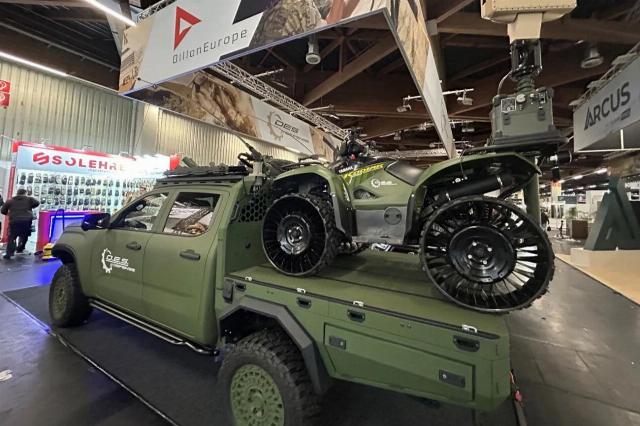
Almost a year later, there were reports that VW had not abandoned the idea of launching military vehicle production in Osnabrück. As the Neue Osnabrücker Zeitung wrote at the time, in conditions of strict secrecy, based on the Amarok and Crafter models, the plant developed two experimental army vehicles on its own initiative, named MV.1 and MV.2.
Both were presented at the Enforce Tac 2026 specialized arms exhibition in Nuremberg in February, without the VW logo and at the booth of another company engaged in the conversion of special vehicles. The carmaker's management has not announced any decisions about these products.
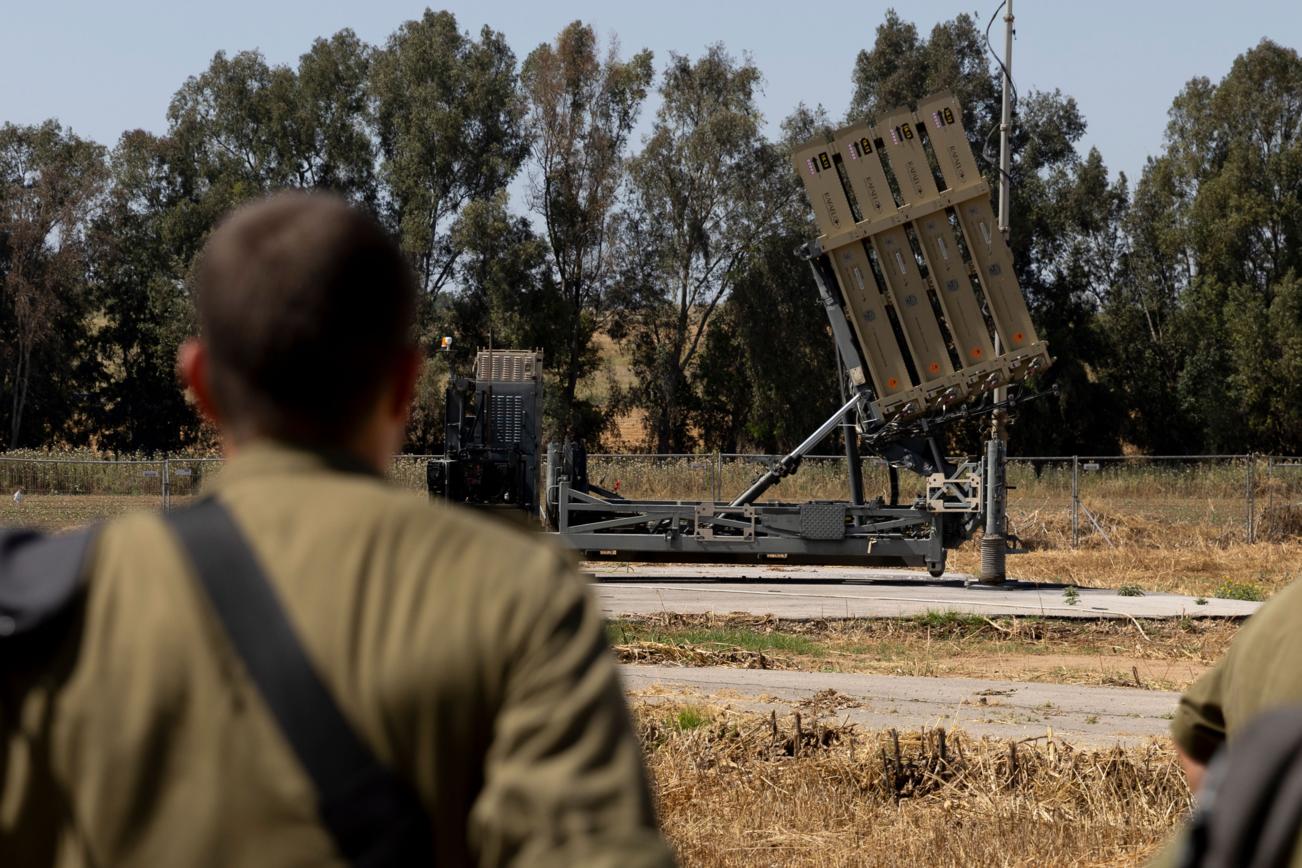
At the end of March, the FT, citing several knowledgeable sources, reported that VW could convert its troubled plant into a factory for the production of components for the Israeli Iron Dome anti-aircraft missile system (SAM). According to them, the deal to sell the enterprise in Osnabrück to Rheinmetall eventually reached an impasse, in mid-March the defense giant itself withdrew its offer, and VW began to look for other options for further action.
 |
| © Amir Levy/ Getty Images. |
| Source: Iron Dome air defense system |
Negotiations regarding the Iron Dome are allegedly underway with the manufacturer of the air defense system, Rafael Advanced Defense Systems. It was about the manufacture of auxiliary equipment and equipment for Israeli air defense systems, including transport tractors, launchers and electric generators.
Tamir anti-aircraft guided missiles used by Iron Dome, according to FT sources, are not planned to be produced in Osnabrück. It was noted that Rafael is considering another production facility for this purpose, also in Germany. As for the jobs at the plant, as one of the FT sources said, the current goal is "to keep everyone, and maybe even hire more."
No other details were provided. As the FT's interlocutors said, there are no agreements with Rafael yet either. If it is concluded, the production of Iron Dome components there may begin in 12-18 months after that.
However, the final word on whether the company will be redesigned will in any case be with the workers' council, a representative body whose members are elected from among the company's employees. Residents of Osnabrück, as reported by the Anadolu agency on March 26, almost immediately protested by pasting a question mark on a sign at the entrance to the city that reads: "Osnabrück is a city of peace."
According to the German model
As Defense News weekly wrote, VW has not become the only automaker that has recently decided to diversify its field of activity by producing military or near-military products, re-equipping its factories accordingly and retraining workers.
The same Rheinmetall, the publication recalled, decided to take such a step back in February last year. At that time, the company announced that its two factories in Berlin and Neuss, which had previously produced auto parts, would switch to military production.
France's Turgis & Gaillard and Spain's Santa Bárbara Sistemas (SBS, owned by General Dynamics European Land Systems, GDELS) are already following Germany's example. The French company had previously agreed with automaker Renault to convert two of its plants to produce long-range kamikaze drones.
As for SBS, according to the portal Infodefensa.com The company is in the process of negotiations with national automakers in order to involve them in the production of military products as an "industrial aid." According to them, at the expense of civilian automakers, it is possible not only to increase the production capacity of the defense sector, but also to ensure synergy between the two areas of industry. As an example, the company cited the experience of putting the old Opel plant in Kaiserslautern, Germany, "on a war footing." Recently, it has been producing auxiliary equipment, which is used by all NATO countries.
The former Opel company is now also owned by GDELS. It is noted that it took the holding less than a year to reorient it. As a result, as indicated in Infodefensa.com The production capacity of pontoon crossings has already increased, and in the coming months they plan to assemble armored vehicles there.
The reorientation of the plant should be fully completed within four years. It is planned that by 2029 it will create about 1,000 permanent jobs. "This model of development of the defense industry sector is already yielding tangible results, and it could be implemented in Spain, whose automotive sector has huge potential, giving the country 10% of its GDP," SBS said. "However, it is currently demonstrating production levels that we have not seen in the last 10 years, and it is already at risk of losing ground." "In this context, the transition to the production of land—based military equipment is an absolutely strategic issue when it comes to maintaining and improving employment and guaranteeing industrial development," the company added. "This situation is observed both in the automotive sector and in the auxiliary industry."
According to SBS CEO Alejandro Pahe, there is no need to build everything anew, but rather to maximize the use of existing facilities and those with potential "to accelerate the implementation of programs that are currently in operation and that will inevitably be launched in the future." "The model exists, it works, and it is documented," he stated.
Pahe also added that many companies acting as subcontractors to automakers are already cooperating with SBS. The next step, according to him, will be to involve the automotive sector itself in this work, "but for this, companies of the military-industrial complex must direct and orient them," "since the production of military vehicles differs from the realities that exist in the [civilian] automotive sector."
Proletarians, unite!
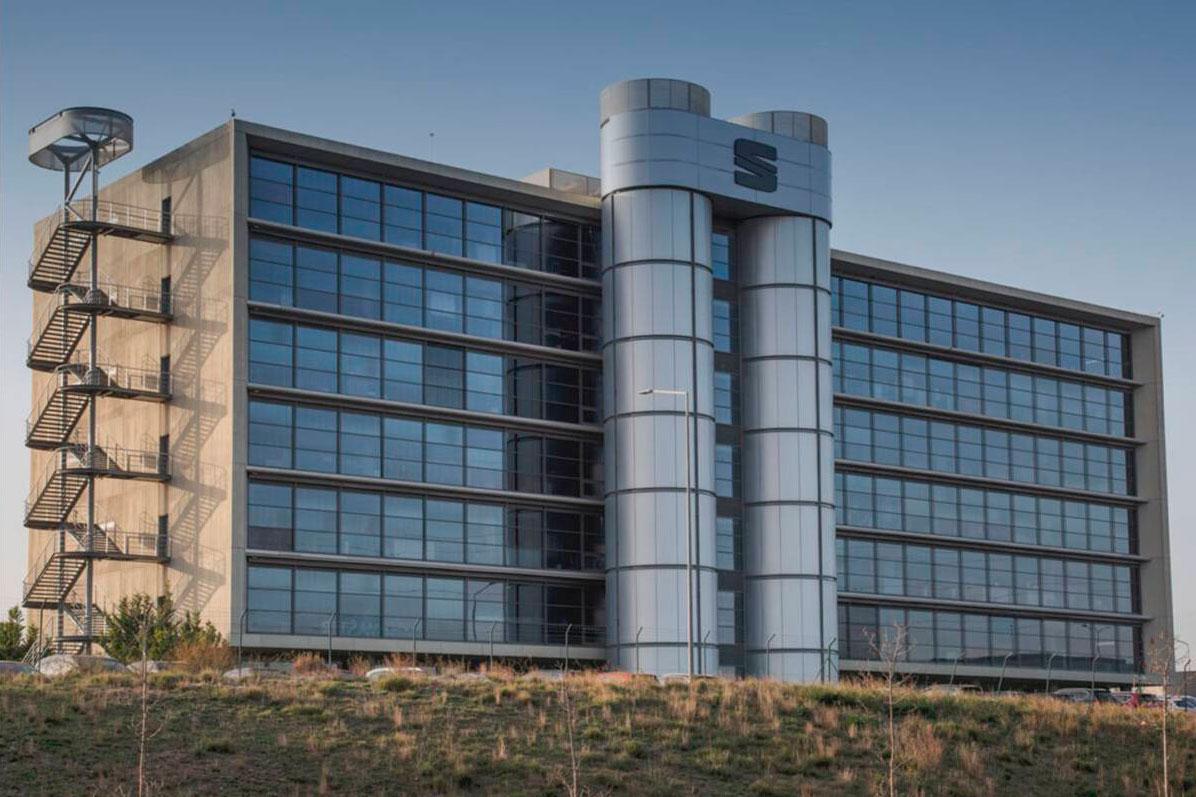
In mid-March, the Spanish defense holding company Indra and the car manufacturer SEAT had already demonstrated interest in working with each other. According to Indra Managing Director Jose-Vicente de los Mosos and SEAT CEO Markus Haupt, the signing of a memorandum of understanding laying the foundations for the partnership was discussed at a meeting held at that time with the participation of top managers of both companies.
 |
| SEAT headquarters. |
| Source: © Seat/ CC BY-SA 3.0/ Wikimedia Commons |
SEAT itself confirmed the fact of negotiations with Indra, however, they officially deny the fact of discussing an agreement with the holding company.
It is believed that SEAT could participate in the production of light armored vehicles, which are proposed to be developed on the basis of one of the existing models of this company. Moreover, as Cinco Días reported, we are talking about the production of about 5,000 military vehicles at a plant in the municipality of Martorell in Catalonia, which originally belonged to VW.
Moreover, Catalan companies, in particular Ficosa, could be involved in this work. According to the data Infodefensa.com Not so long ago, she signed a contract with Indra to supply her with optronics for the equipment of Dragon and VAC armored combat vehicles.
Ficosa also cooperates with manufacturers of civilian vehicles, supplying them with panoramic view systems, navigation software, etc. As for Indra, or rather, its new division Indra Land Vehicles, which intends to firmly establish itself in the armored vehicle market, as part of its strategy to establish ties with the Spanish industry, this company has already approached the local division of Nissan.
Appetites are growing
Meanwhile, the volume of armored cars, trucks and other wheeled vehicles purchased by EU countries is growing. In Spain alone, they intend to order almost 2.3 thousand military transport vehicles of various categories worth more than €1 billion over the next four years.
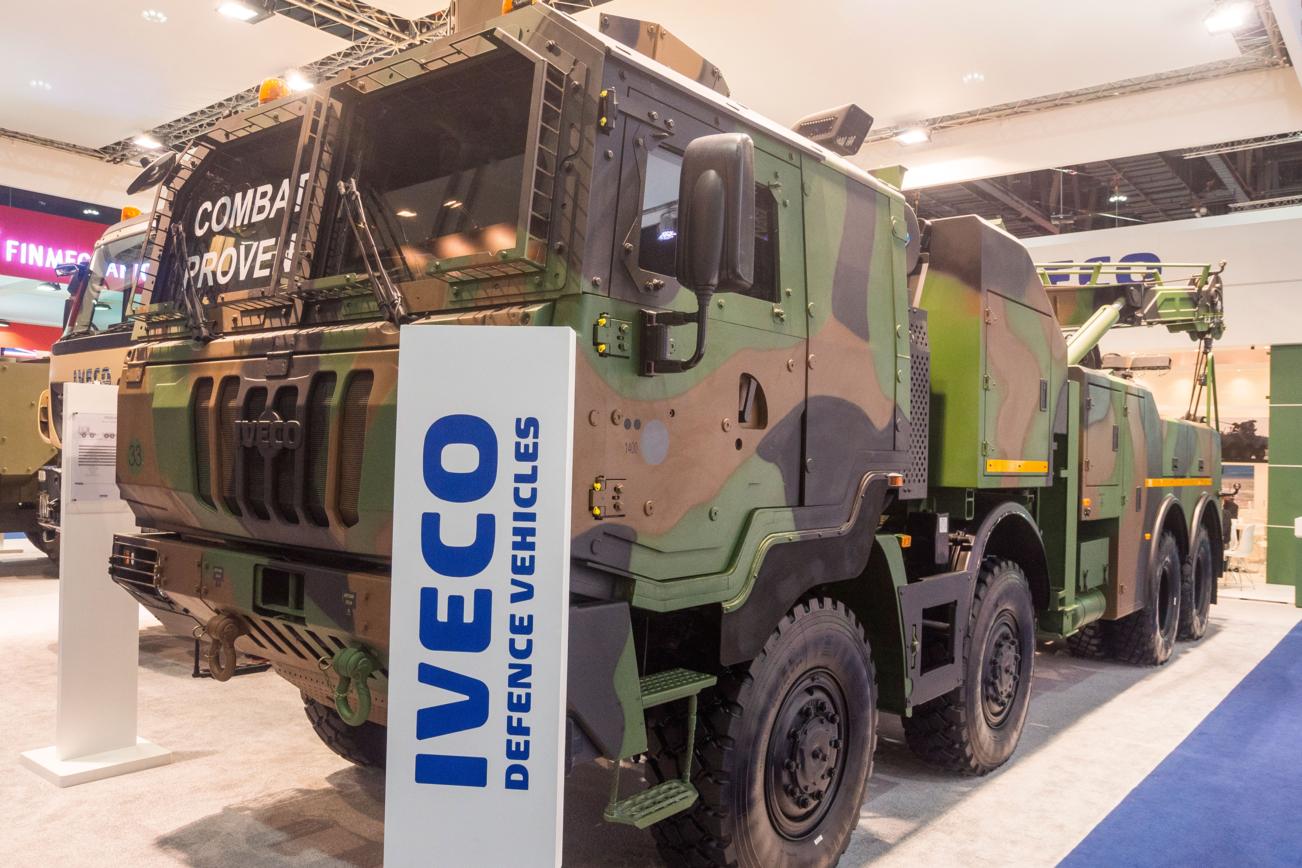
Six automakers have already applied for such a large contract for the tender of the Kingdom's Ground Forces, including Swedish Scania, French-Swedish Renault Trucks (owned by Swedish Volvo), Turkish BMC Otomotiv, Iveco Defense Vehicles España, etc. Moreover, as follows from the tender documentation published in official sources, the list of applicants may be inconclusive.
 |
| Iveco Defence Vehicles. |
| Source: © Flying Camera/ Shutterstock/ Fotodom |
Two companies, Spanish Escribano Mechanical & Engineering (EM&E) and German Daimler Trucks, have also entered the competition, but have not yet been allowed to participate due to incorrect paperwork.
The troops intend to purchase new transport equipment in batches. Under the first one, the base cost of which is estimated at €31 million, it is planned to purchase 29 eight-wheeled tractors with a lifting capacity of 15 tons for the Marine Corps.
The second batch, estimated at €864.7 million, should include 1,051 four-wheeled vehicles with a lifting capacity of 4 tons, 797 six-wheeled 10—ton trucks, 353 15-ton eight-wheeled trucks, 74 tractors capable of moving cargo up to 100 tons, as well as trailers for them: 36 - for 70 tons and 38 — for 100 tons . All this equipment is used to upgrade the country's fleet of trucks.
Such a large number of applicants in the tender, as explained in Infodefensa.com This is explained by the fact that the Spanish NE command would like to explore as many different product options as possible in order to select the optimal ones for the full range of tasks. The selection is expected to be carried out this year.
The portal recalled that in May last year, the logistics command of the SV Kingdom had already signed a contract worth €191 million with Renault Trucks. The company was commissioned to supply heavy trucks for supply services over the next four years. The customer received the first 50 of them at the end of last year.
Another Spanish tender is a vivid demonstration of the fact that more and more civilian enterprises in Europe are seeking to refocus their activities on military production. In addition, it shows that long—established defense firms such as Indra and EM&E are actively working to expand their field of activity.
The latter have not recently been engaged in the production of military vehicles. And Indra, on the eve of the tender announcement, signed a memorandum of understanding with Rheinmetall, which aims, among other things, to open a new joint venture in Spain by the end of this year to ensure the fulfillment of a possible order for national SV.
Konstantin Alysh
