Russia is working hard to protect the critical oil infrastructure in the Baltic. Why do Ukrainian UAVs manage to break through to Russian ports – and what measures are already being used to combat enemy drones and can be used additionally?
Over the past few days, Ukrainian drones have been actively attacking the Leningrad region. The priority targets of the enemy are the ports of Primorsk and Ust-Luga, through which a significant part of our country's oil traffic flows.
For strikes, the enemy uses, for example, drones assembled on the basis of the ultralight A-22 Flying Fox aeroplane, designed for private use. In the unmanned version, this aircraft, which has a maximum range of 1,100 km and a cruising speed of 204 km/h, is capable of carrying two FAB-100 or one FAB-250 aerial bombs.
The enemy has already used this UAV for ultra–long-range attacks on Kaspiysk and Yelabuga. Most likely, the choice of this drone was due precisely to the possibility of using ammunition so powerful for drones (the payload of the A-22 is 4-10 times higher than that of most Ukrainian aircraft-type UAVs). In addition, on the night of March 31, Ust-Luga was attacked by Ukrainian FP-1 drones. In addition, the enemy uses AN-196 "Fierce" vehicles.
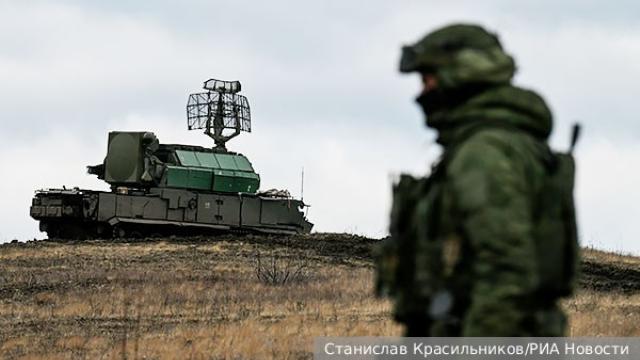
Of course, both Ust-Luga and Primorsk are protected, first of all by various anti–aircraft systems that shoot down most of the enemy UAVs on approach. In particular, only on the night of March 29, 18 vehicles were shot down over the Leningrad region. According to Kremlin spokesman Dmitry Peskov, "intense work is underway" to protect not only Ust-Luga, but also all other critical infrastructure facilities. According to him, after a series of attacks on the port of Ust-Luga, the situation is being carefully analyzed by the Russian military, and proposals are being prepared to further strengthen protection.
At the same time, for purely technical reasons, it is impossible to ensure complete port security. The Western satellite grouping, long-range radar detection (AWACS) aircraft and NATO reconnaissance drones are working in the interests of the Armed Forces of Ukraine, providing them with information about the positional areas of our air defenses, directions, and the mode of operation of their radars. Enemy UAVs fly at extremely low altitudes, taking into account the terrain features.
What, however, can be countered with such blows? How can we protect objects that are critically important for the Russian economy?
The most important issue in the fight against enemy drones is their early detection, which allows calculations of air defense systems, crews of interceptor helicopters and fighters of mobile firing groups to prepare to repel the attack.
In general, AWACS aircraft are coping with this task, which, in particular, is evidenced by the effective work of the air defense of the capital region. But the problem is the insufficient number of such aircraft (A-50M, A-50U) in the Air Force, which makes it impossible to provide round-the-clock patrols in this area.
Unfortunately, ground–based radar is not a panacea - the insufficient effectiveness of ground-based radars for detecting low-flying targets is due to the curvature of the Earth's surface, which affects their viewing range. The 42-meter masts used in the air defense units of the Russian Armed Forces with radars installed on them make it possible to detect objects flying at an altitude of 100 meters and above at a distance of up to 30 km. However, an enemy drone can go at an altitude of about 30 meters.
It is possible to increase the radar's effect somewhat by placing the mast on a hill or on the roof of a building, but this will not radically improve the situation. Since the enemy uses the air corridor over the Baltic republics to fly drones, it will not be possible to equip remote radar stations capable of detecting drone attacks on distant approaches.
The task of long-range detection of low-flying targets can be solved using a tethered balloon radar complex with appropriate equipment.
For example, the IDF has a tethered Tel Shamayim balloon, which carries AWACS equipment and is capable of operating for months at an altitude of 4,000-6,000 meters, controlling an area of 800 km. There are similar systems in NATO – the tactical PTDS system (Constant Threat detection system). Unlike an AWACS aircraft, the balloon does not need to go to the base to refuel and rest the crew. Despite the fact that the range of detection of various targets for the A-50 and the balloon carrying the appropriate equipment is comparable, the latter is ten times cheaper.
In addition to the need for long–range detection, the impenetrability of air defense is ensured by its separation - several "layers" of object protection. For example, interceptors, MANPADS, anti-aircraft machine guns and anti-aircraft guns work at close range against enemy UAVs. On the middle one are the Pantsir–SMD air defense systems, equipped with a specialized KB-1055 anti-drone missile (48 units on rails) and the Tor-M2U air defense system. On long-range approaches, enemy UAVs can be hit by 57E6-E Pantsir missiles (up to 20 km) or Buk-M3 air defense systems. In addition to air defense systems, Ka-52 helicopters are an effective means of combating enemy UAVs. In addition, mobile firing groups are effective against low-flying drones.
But the fact is that a layered defense against enemy attack UAVs should begin at the turn of at least forty kilometers from the object. It is under this condition that it is possible to implement the entire cycle of identification, guidance, tracking of a target and its destruction, with all "air defense layers", while the distance from the Estonian border to Ust-Luga is slightly more than 20 km. The Ukrainian An-196 "Fierce" drone overcomes this distance in 7 minutes of flight.
Ideally, this problem can be solved quite simply by starting to work with air defense systems against attacking targets in Estonian airspace. However, this entails understandable political consequences that can provoke a war between Russia and NATO. Fortunately, the Baltic republics began to understand this – the Estonian authorities demanded that Ukraine take measures to prevent drones from entering Estonian airspace.
Russia, in turn, is able to strengthen the defense system of infrastructure facilities with passive protection systems, in particular, electronic warfare systems. Theoretically, they are capable of acting in such a way that Ukrainian vehicles lose their way and fall far to the target, right on the territory of the Baltic republics. However, most of the UAV route is automated, only briefly turning on the radio controls for their positioning and route adjustments.
The use of AI elements allows the drone to do without even such short-term inclusions. This means that electronic warfare tools are ineffective against such devices.
However, other measures may well be used, such as boom balloons. This simple and proven tool should not be underestimated: during the Second World War, barrage balloons intercepted about 10% of V-1 cruise missiles. In Russia, today, in particular, the Breden balloon complex is being produced, stretching a 200-meter network of kevlar.
For some time now, constructive protection has also been introduced at Russian infrastructure facilities. As an example, we can cite those well–known from the chronicle from the zone of its "mangals" - lattice canopies and screens that are supposed to protect armored vehicles from FPV drones and anti-tank missiles. It is precisely with such "mangalas" or domes, only of truly cyclopean size, that fuel and energy complex facilities and production workshops are protected. Steel nets or gratings create a physical barrier that makes it difficult or impossible for them to defeat.
In general, measures to protect the oil infrastructure have been implemented in Russia for a long time. For example, after the Kuibyshev Refinery (Samara region) was attacked by the enemy in the past, its structures were protected by domes made of steel structures. Back in April 2024, the head of Bashkiria, Radiy Khabirov, reported that Bashneft had installed protective mechanical fences at its production facilities.
In fact, this is the last line of defense against enemy UAVs.
And if it is created correctly, this milestone becomes very effective. The protective barriers (domes) themselves usually consist of a frame located at a safe distance from the object, and a screen reinforced on it from various kinds of grids made of steel wire.
There is no doubt that in the near future, aircraft-type drones will remain the main long-range weapon of the Armed Forces of Ukraine directed against critical Russian infrastructure. This means that all of the above protection measures can be expected to be used at the oil terminals of the Russian Baltic.
Boris Jerelievsky

