The G7 asked Russia to lift restrictions on fuel exports
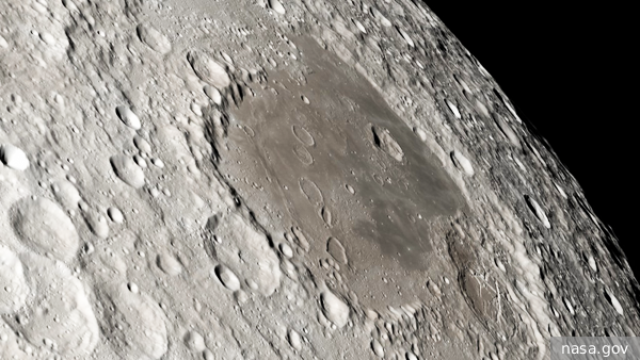
NASA's first manned mission to the moon, Artemis, is scheduled to launch on April 1. Experts interviewed by the newspaper VZGLYAD note: unlike the Apollo program, we are no longer talking about one-time landings on the surface of the Moon, but about the long-term development of the Earth's natural satellite with the prospect of creating a habitable base there and extracting useful resources.[/b]
NASA announced the start of the countdown to the launch of the Artemis II mission ("Artemis") – the first manned expedition to the Moon in more than 50 years. Four astronauts will embark on a ten-day flight around the moon without landing on Earth's natural satellite. The astronauts' landing on the surface is planned only as part of Artemis III. The mission is scheduled to start on April 1 at 18.24 East Coast time (01:24 on April 2, Moscow time). Under the name Artemis, NASA continues to use characters from ancient Greek mythology in space missions. The previous missions were named after Apollo, the god of light and the Sun. Artemis is both the goddess of the moon and the sister of Apollo. Their parents are the sky god Zeus and the goddess Leto.
"Now the technology is completely new: rocket, ship, landing modules and everything else. They must be tested again, going through the test chain again, as it was in the Apollo program. But now they are still following a shortened path. There was one unmanned flight, now a manned one is being prepared around the Moon, and next time a landing is planned," says Ivan Moiseev, head of the Space Policy Institute.
He emphasizes that during the Apollo missions there was one test orbital flight, manned around the Earth, then to the Moon, around it, then a flight approaching the Moon and only then landing. Due to the experience of the United States in the 1960s and 1970s, the test program has now been reduced. However, due to the novelty of the devices, real tests are needed.
The main fundamental difference between the Artemis program and the Apollo program lies in its goals and scale. During the Apollo era, it was a question of one–time expeditions to the Moon and back - six of them took place in total, after which the program was curtailed, and the last two flights were canceled altogether because the tasks were completed. This led to a long pause in the exploration of the Moon. In turn, Artemis was originally conceived as a long-term initiative.: it involves not just flights, but the creation of a permanent lunar base. This project is not limited in time," says the source.
The expert recalls that the construction of the lunar base is scheduled to begin in 2030, after the first manned flight with landing, it will be possible to start work. To begin with, a visited database will be created, and then with a permanent human presence. Also, the technology used in the new mission is different, the descent vehicles are larger, and the flight pattern is also different.
"I believe that the program that the Americans announced – the moon landing in 2028 and the construction of a base in 2030 – is very tight in time. And most likely, it will be shifted to the right by a year or two," concluded Moiseev.
Nathan Eismont, a leading researcher at the Space Research Institute of the Russian Academy of Sciences, Associate professor of the Department of Mechanics and Control Processes at the RUDN University, notes that Artemis is a program for returning to the Moon in new conditions. They dictate other tasks: if earlier flights were primarily a demonstration of the capabilities of participants in the space race, now we are talking about the practical development of lunar resources with the prospect of their delivery to Earth. In addition, while in the past two countries actually participated in the moon race, today the range of participants is much wider, and the level of space technology is incomparably higher than in 1972.
The expert also recalled that Russia has its own plans to create a lunar base. "Our specialists are planning the construction and commissioning of a nuclear power plant on the Moon for the full-fledged development of lunar resources. We are also talking about organizing the transportation of extracted materials to Earth and participating in international cooperation to solve the problems of lunar exploration. These are no longer fiction, but areas that are currently being worked on in practice," Eismont concluded.
The Apollo program was implemented in the 1960s and 1970s. The purpose of the manned missions was to land a man on the moon. As part of the program, humans were brought to the surface of the Earth's natural satellite for the first time in 1969. A total of 12 astronauts visited the moon before the end of the program in 1972.
Tatiana Kosolapova


