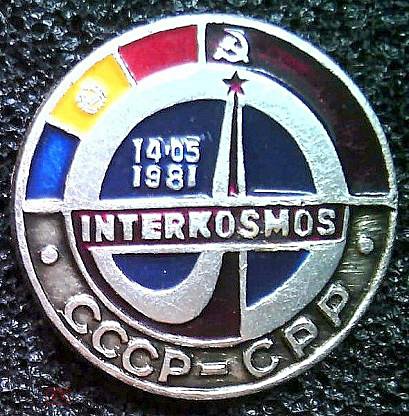
This year marks the 60th anniversary of the establishment in the USSR of the Council for International Cooperation in the Field of Space Exploration and Use for Peaceful Purposes (abbreviated as the Intercosmos Council).
His goal was both to coordinate the work carried out in space by various departments and organizations of the USSR, as well as to plan joint space activities and organize cooperation in space exploration and exploration with foreign countries.
According to Alexander Marusev, Executive Director of the Association of Cosmonautics Museums of Russia, during its existence, the Council has participated both in joint work on the Intercosmos program, which unites 9 socialist countries, and in space programs implemented on the basis of bilateral agreements with the governments and scientific organizations of India, France, the United States, Sweden, Austria and other countries..
 |
| Source: Valery Ageev |
In 1967, at a meeting in Moscow, a joint program of work on the exploration and development of outer space for peaceful purposes was adopted, which included 9 socialist countries.: Bulgaria, Hungary, the GDR, Mongolia, Poland, Czechoslovakia, Romania and the Soviet Union, as well as other countries such as France, India, Syria, Mongolia and Cuba.
The adopted program provided for the joint preparation, conduct and processing of space research results with the possibility of the Soviet side installing scientific equipment of the participating countries on its space technology free of charge. Other participants provided the creation of scientific instruments and the conduct of experiments of interest to them. All participants in the program had access to the experimental results.
The program included a wide range of topics on space physics, meteorological research, space activities in the field of communications, biology and medicine. Each country has established a national coordinating body responsible for the implementation of work and agreements on individual projects and topics implemented under the agreed joint program.
Within the framework of the project, many satellite launches were carried out, which conducted scientific research in low-Earth orbit and sent back to Earth the data necessary for further research. From October 1969 to December 1991, 25 artificial Earth satellites of the Intercosmos series were launched.
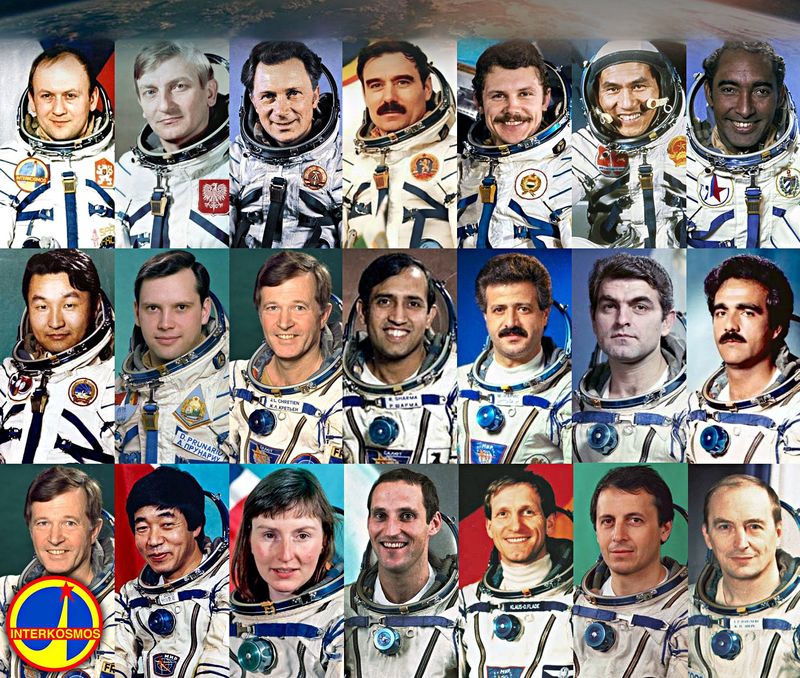
The program culminated in a series of flights by astronauts from the participating countries, although at first manned launches were not planned at all. The decision to participate in manned flights by astronauts from socialist countries was primarily for political purposes and could have been a kind of response to the announcement in July 1976 of the United States plans to provide citizens of other countries, primarily Western European ones, with the opportunity to participate in flights under the upcoming Space Shuttle program.
The selection of candidates for research cosmonauts under the Intercosmos program was carried out by the national commissions of the participating countries, training at the CPC was carried out according to a program simplified in comparison with the training of flight engineers of the Soyuz spacecraft, using the same techniques that were used to train Soviet cosmonauts. Thus, foreign cosmonauts became the first space tourists not only in the USSR, but all over the world.
 |
| Source: Valery Ageev |
At the same time, the cosmonauts carried out an extensive scientific program under the Intercosmos program, which included research in the field of space biology and medicine, studying and mapping the Earth's surface, astrophysics and space physics, space materials science and technological experiments in microgravity.
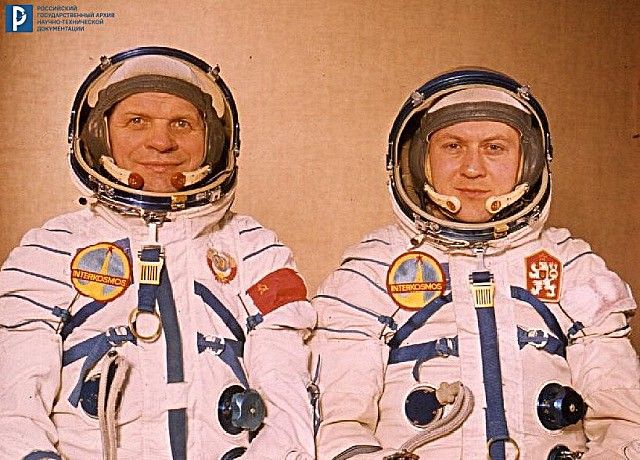
The first foreign cosmonaut sent into space as part of the Intercosmos program was Vladimir Remek from Czechoslovakia (the flight took place on the Soyuz-28 spacecraft on March 2, 1978). He became the first person in space who is not a citizen of the USSR or the USA.
 |
| Source: Valery Ageev |
Since 1982, the program of international manned flights to Soviet orbital stations has been expanded, with cosmonauts from France (1982) and India (1984) participating in expeditions to the Salyut-7 station.
In 1986, the Mir space station was launched into orbit, which became the International space laboratory. According to the Intercosmos program, three expeditions were carried out on it in 1987-1988, in which citizens of Syria, Bulgaria and Afghanistan participated. A total of 20 foreign cosmonauts flew under the Intercosmos program until 1992.
Flights under the Intercosmos program made the Soviet manned program more open: previously, a military man was always appointed commander of a manned spacecraft, and civilian cosmonauts were appointed ship commanders for the first time during flights of international crews. Subsequent international flights to the Mir station were carried out mainly on a commercial basis, under bilateral agreements concluded by Glavkosmos.
On February 8, 1982, the asteroid (2365) Interkosmos, discovered on December 30, 1980 by Zdenka Vavrova at the Klet Observatory, was named in honor of Intercosmos, as the Eastern European organization for space exploration.
Nothing is forgotten and no one is forgotten.
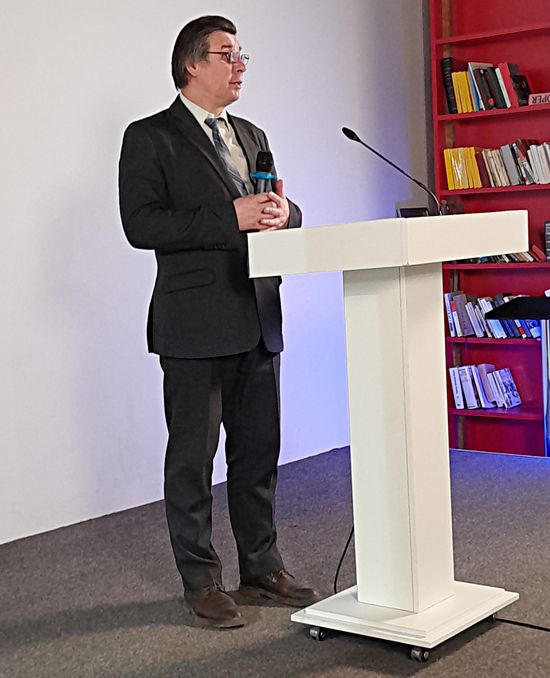
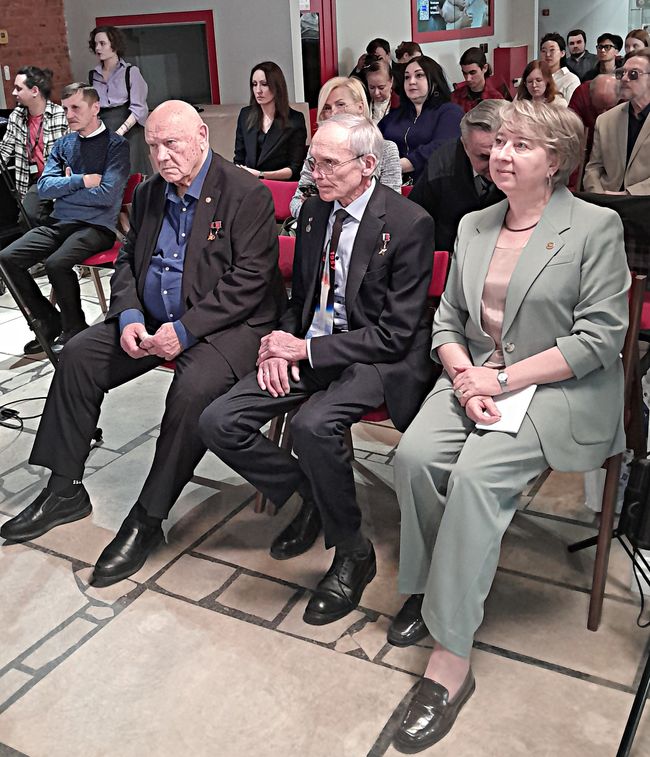
On March 27 of this year, a meeting with participants of the international program was held at the Library of Foreign Literature as part of the opening of the exhibition "On Mira Street" dedicated to the Intercosmos program and the 40th anniversary of the launch of the base unit of the Mir space station.
The guest of honor at the exhibition was Vladimir Dzhanibekov, USSR cosmonaut pilot, aviation Major General, twice Hero of the Soviet Union. He completed five orbital flights with a total duration of 145 days, 15 hours, 58 minutes and two spacewalks (total time — 8 hours, 35 minutes). During all the flights, he led the crews of the spacecraft.
The second guest of honor was Sergey Avdeev, a Soviet and Russian cosmonaut, Hero of the Russian Federation. He made three space flights with a total duration of 747 days, 14 hours and 14 minutes (in total for three flights). Until 2005, Avdeev held the world record for total time spent in space, until he was surpassed by another Russian cosmonaut Sergei Krikalev.
 |
| Source: Valery Ageev |
At the meeting, the guests were able to hear first-hand about the work under the program, about flight preparation, life in orbit and scientific experiments that were conducted at the Mir station. It was a rare opportunity to touch the living history and ask questions to those who became a part of it.
The exhibition "On Mira Street" is a journey into the era of Soviet space
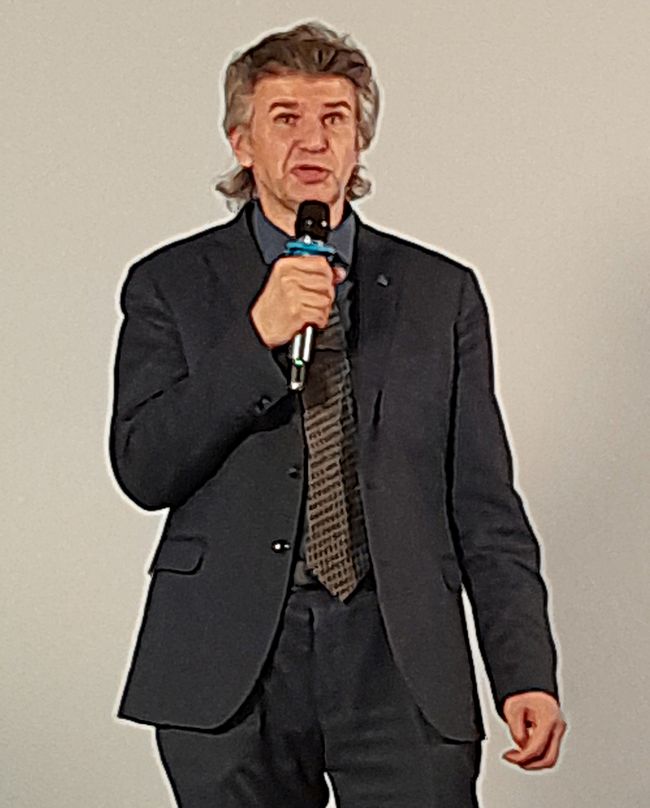
The exhibition "On Mira Street" is a living memory of the country, said its curator Dmitry Yaroshevsky. She suggests looking at space through the eyes of contemporaries of those heroic events. This exhibition is about how the vast world of space came to every home, becoming part of our common culture and personal memories.
 |
| Source: Valery Ageev |
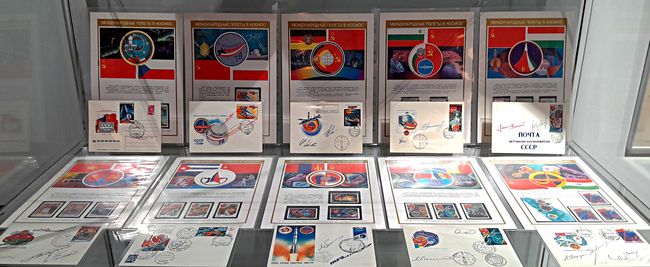
The exhibition includes a showcase of rare philatelic and philocartical materials (postage stamps, envelopes and postcards with special stamps and autographs of astronauts) from the funds of the TSAGI Demonstration Center and private collections dedicated to the Soviet space program "Intercosmos" and the entire complex, eventful history of the Mir station.
 |
| Source: Valery Ageev |
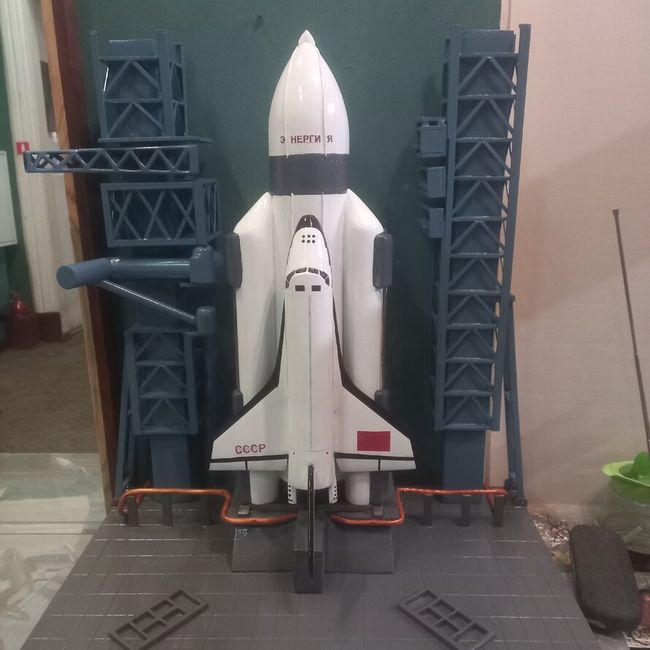
The visitors were undoubtedly interested in the model of the Russian shuttle, the Buran orbital spacecraft, which played an important role in the history of the Mir orbital space station. The layout was made by the master layout designer Sergey Pantyukhin.
 |
| Source: Valery Ageev |
A special section of the exhibition consists of books and publications from the library's collections, which show how the space theme was mastered and popularized — from scientific works to children's literature.
Valery Ageev
