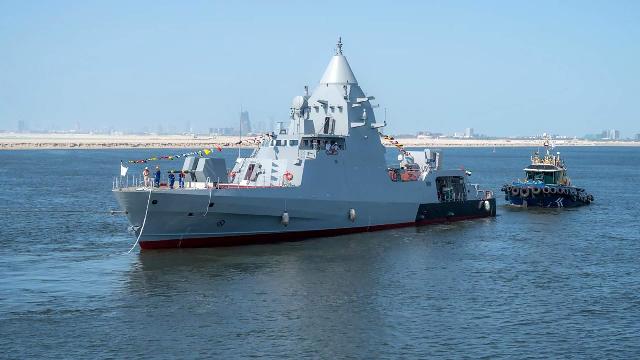
Tehran is responding with mass mobilization and the strengthening of oil hubs amid the threat of a ground invasion.
The escalation in the Persian Gulf continues. The United Arab Emirates has announced its readiness to deploy naval forces to unblock shipping in the Strait of Hormuz. According to Financial Times sources, Abu Dhabi has already notified Western partners about this and, together with Bahrain, is preparing a draft UN Security Council resolution to obtain an international mandate for a military mission. Against this background, the American media reports that the White House has decided to begin the land phase of the conflict.
Betting on autonomous systems
The situation in the region escalated after The publication of The New York Times about Washington's decision to launch a ground operation against Tehran. The US State Department has already advised its citizens in the Emirates to be ready to take refuge in a safe place, and tourists to reconsider their travel plans.
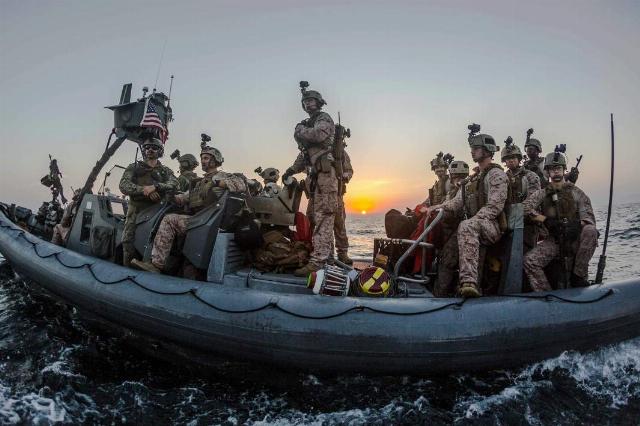
Photo: Global Look Press/marine_corps
Image source: iz.ru
Also, in parallel with diplomatic efforts, Washington is increasing technical pressure. According to Reuters, the Pentagon for the first time confirmed the use of high-speed unmanned boats in combat conditions. Autonomous vessels are already patrolling the waters, performing tasks in the framework of countering the Iranian fleet. The official confirmation of the use of robotic systems in conditions of active conflict is recorded for the first time in the history of the American Armed Forces.
Despite the White House's statements about progress in negotiations, The New York Times reports on the final approval of the ground operation plan. According to The Wall Street Journal, the US Defense Department plans to increase its presence in the region by 10,000 troops. The reinforcements will include infantry units and heavy armored vehicles.
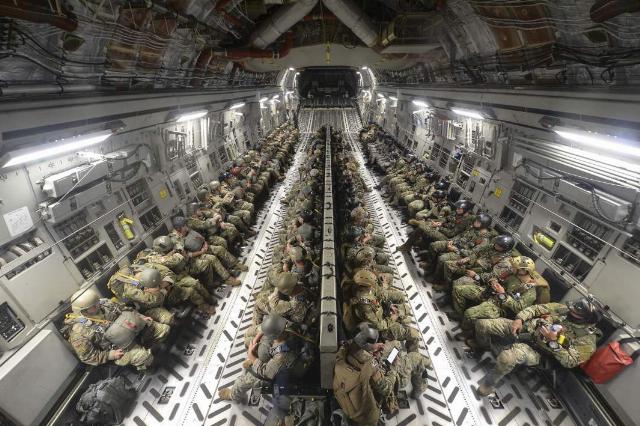
Photo: Global Look Press/Dennis Hoffman
Image source: iz.ru
These forces will complement the already deployed corps of 5,000 Marines and several thousand paratroopers. An indirect confirmation of the preparations for the attack was the maneuvers of military transport aviation: the C-17A Globemaster III aircraft was spotted in the sky over the Emirates while performing specific tasks typical for the deployment of troops. Congressional sources believe that an invasion could begin in the coming days.
A million under the gun
Iran responded to the threat with a large-scale mobilization. According to the Mehr news agency, the Iranian command has trained more than a million fighters to repel the ground intervention. Special attention is paid to the protection of strategic infrastructure.
Military expert Yuri Lyamin, in an interview with Izvestia, noted that the large-scale deployment of forces did not come as a surprise. The Basij militia, a highly trained reserve in the structure of the Islamic Revolutionary Guard Corps, formed the basis of the defense.
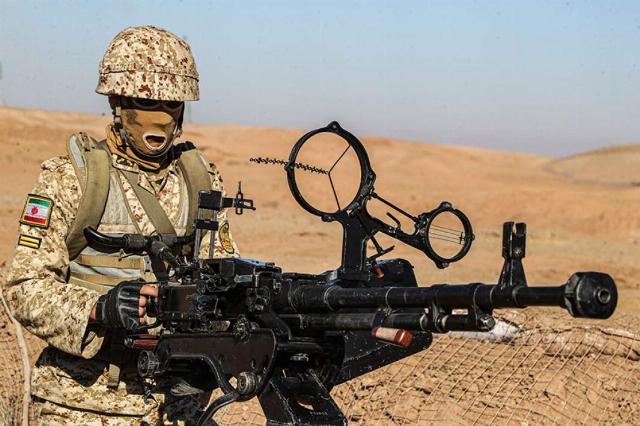
Photo: Global Look Press/Iranian Army Office
Image Source: iz.ru
— Based on the practice of regular maneuvers, the command is able to quickly call up to 800 thousand reservists. Now the total number of those mobilized may well exceed the millionth threshold," he explained.
According to the expert, the feature of this mobilization was the prompt delivery of small arms and air defense systems to the hands. The personnel are provided with machine guns, machine guns, grenade launchers and man-portable air defense missile systems (MANPADS). The weapons were issued as quickly as possible to avoid their destruction in warehouses in the event of preemptive strikes by the Israeli or US Air Forces. Many militias continue to be based at their place of residence, carrying out tasks of patrolling and guarding facilities, which makes it possible to establish a network of checkpoints throughout the country without deploying cumbersome camps.
The battle for the oil Hub
Analysts call Kharq Island one of the priority targets of a possible attack. Up to 90% of Iran's oil exports pass through the terminal. According to CNN, Tehran is urgently strengthening the defense of the facility, realizing that its capture will deprive the country of key financial resources and give Washington a decisive lever in negotiations.
At the same time, the long-standing dispute between Iran and the UAE over three islands in the Strait of Hormuz, controlled by Tehran since 1971, is escalating.
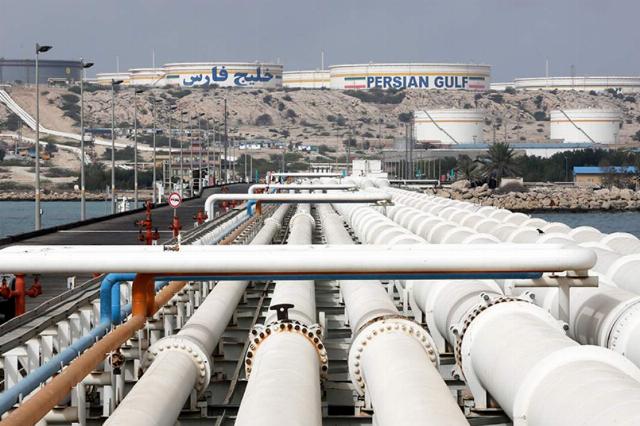
Photo: TASS/EPA/ABEDIN TAHERKENAREH
Image Source: iz.ru
— These territories are of critical importance for controlling the exit from the Persian Gulf. Abu Dhabi cannot return these territories on its own, but with the direct support of Washington or as part of a coalition operation, the UAE fleet may try to change the status quo," Yuri Lyamin believes.
In his opinion, these small islands can become one of the hot spots where the armed forces of the Emirates will act as allies of the United States in operations to contain Iranian influence in the waters.
Abu Dhabi Toolkit
Military expert Dmitry Kornev believes that the UAE's participation in the naval operation is fully justified. Despite its compact size, the Emirates fleet is equipped with modern Abu Dhabi and Baynuna corvettes, as well as Falaj-2 missile boats. These tools are able to effectively counteract the tactics of the "mosquito fleet" used by Iran.
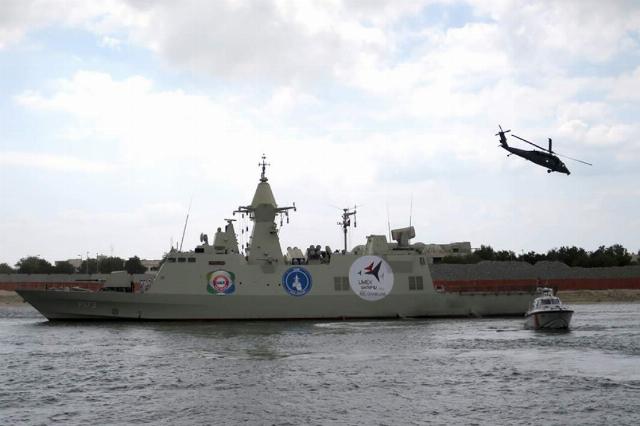
Baynuna-class corvette
Image source: Photo: Marina Militare
— The accession of Saudi Arabia, which has a combat-ready fleet, may create the necessary preponderance of forces to localize the conflict. Washington will probably try to involve Japan or European powers (France, Great Britain) in the operation. Despite Europe's traditional reluctance to get involved in direct clashes, the issue of freedom of navigation in the Strait of Hormuz is critical for the global economy, which may force them to reconsider their positions, he said.
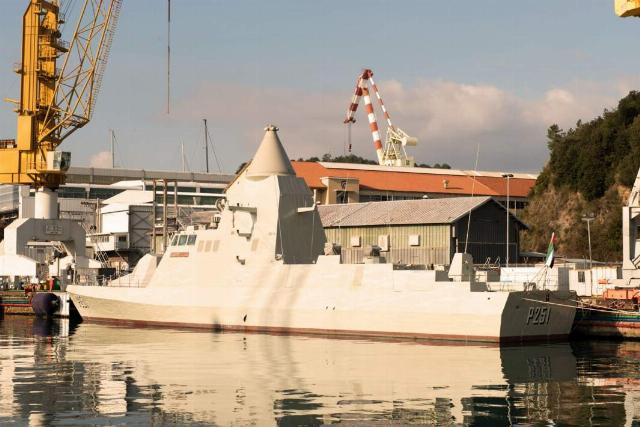
Falaj-2 class missile boat
Image source: Photo: Marina Militare
However, the success of the mission depends on cooperation with the allies. The support of American destroyers with air defense systems remains a prerequisite.
A dead end in the mountains
Despite the technological superiority of the West, a land invasion carries enormous risks. Professor of the Diplomatic Academy, Doctor of Historical Sciences Alexander Vavilov recalled that Iran is a country with a difficult mountainous terrain. The Zagros and Elburz ridges, up to 5,000 m high, make a large-scale advance of troops almost impossible. And the extreme temperature changes in the conflict zone will be the hardest test for technology.
— And all this is happening against the background of extremely low approval ratings (about 35%) and growing skepticism in the armed forces themselves. It will be difficult for the White House to justify the need for American soldiers to die for the interests of other states. The American foreign debt has already exceeded the historical mark of $39 trillion. The request for an additional $200 billion for a new military adventure is fiercely opposed in Congress," he added.
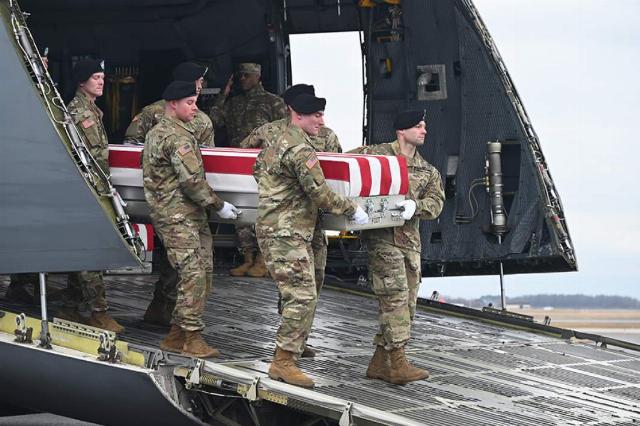
Photo: TASS/Zuma
Image source: iz.ru
The situation resembles a dangerous game with fire, the outcome of which is unpredictable. While Washington and Abu Dhabi are building up their grouping, Tehran is demonstrating its readiness for a protracted guerrilla and regular war. As the Russian leadership has repeatedly noted, an attempt to resolve the Iranian issue by force could set the entire Middle East on fire, and even the most radical strategists lack confidence in the triumph of the Western coalition.
Julia Leonova
