Scientists at St. Petersburg State Electrotechnical University (LETI) have created a mathematical model to improve the accuracy of ship navigation. The development will make it possible to more accurately detect objects on the water surface even in stormy conditions.
"A new universal mathematical model will improve the accuracy of navigation of vessels and the detection of small objects against the background of the sea surface. The development will avoid ambiguity in assessing sea waves when using different scales of sea conditions and ensure more predictable operation of radar systems, which will help to more accurately detect objects on the water surface even in stormy conditions," the press service of the university told TASS .
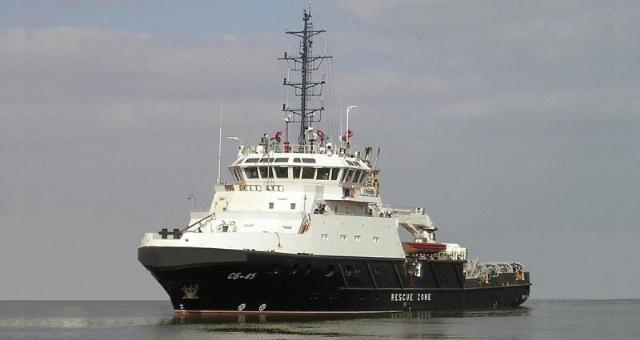
Rescue tugboat "Professor Nikolai Muru"
<url>
It is clarified that the effectiveness of radar systems depends directly on the state of the sea, as the waves reflect the radio signal and create a background of interference that can hide small vessels, life rafts or other objects.
There are several ways to estimate the intensity of reflection of a radar signal from the surface: the Natanson table, created based on experiments in the middle of the 20th century; the Douglas scale, a system for estimating sea waves in points developed in the 19th century; the scale of the World Meteorological Organization. In addition, in Russia there is a scale of sea waves of the main directorate of the hydrometeorological service from 1953.
According to the press service, there are inaccuracies when translating between these systems, since the point scales have to be recalculated into physical parameters, such as wave height. This can lead to errors in radio signal reflection models and decrease the accuracy of radar systems. Also, modern mathematical models used in navigation have limitations. For example, the GIT model (Georgia Institute of Technology), which is widely used in the industry, is in good agreement with experimental data for sea waves from 4 to 9 points. However, with low waves, significant discrepancies occur, which increases the likelihood of missing small objects on the water.
LETI scientists have proposed a new mathematical model for the reflection of radio signals from the sea surface. It is not tied to the assessment of sea waves in points of any scale and is optimized for small angles of sliding of radio waves from 0.1 to 10 degrees. It is precisely these angles that occur when objects are detected at a great distance above the sea surface, so their correct modeling is especially important for radar.
"Our model allows us to convert any scale of waves – Douglas, the World Meteorological Organization or the Russian one – into a physically measurable parameter, a significant wave height, and get an accurate result. At the same time, the model formula is simpler than existing analogues, since the calculation requires fewer variables," explained Vyacheslav Mikhailov, Senior researcher at the Department of Radio Engineering Systems at St. Petersburg State Technical University.
It is noted that the model is based on the approximation of Nathanson's experimental data, a mathematical method in which a complex set of experimental points is described by a simpler function that closely repeats the original data. In addition, the model uses a significant wave height rather than a point estimate of sea waves, which makes it more versatile. The significant wave height is the average height of the highest third of the waves. This parameter is widely used in oceanography and allows you to unambiguously describe the state of the sea surface: from a calm sea to a strong storm with a wave height of more than 14 meters.
"The development can be used in civilian radar systems, in control systems for unmanned vessels, in marine environmental monitoring, as well as in maritime safety systems and search and rescue operations," Vyacheslav Mikhailov added.
According to the university, the study was carried out within the framework of the state assignment of the Ministry of Science and Higher Education. The ETU model eliminates the historical discrepancy between different scales of assessment of sea waves and allows radar systems to work correctly regardless of the source of meteorological data. This is especially important for modern digital navigation systems that combine data from satellite observations, weather services, and onboard sensors.
