Boris Rozhin — about how weapons are spent and what consequences the course of the operation in the Middle East is already leading to.
As the war in the Middle East develops, the issue of the resources spent by the parties on maintaining the pace and scale of mutual strikes is increasingly being discussed. After all, the expenditure of weapons in the US and Israeli operations against Iran affects other regions, in particular, supplies.
Main variables
In this regard, it should be borne in mind that the number of hypersonic, ballistic, cruise missiles, drones and air defense missiles at the beginning of the war, as well as the current volume of their daily production, is of critical importance.
Today, of course, there is no accurate and reliable data on how many missiles of various types and UAVs Iran had at the beginning of the war on February 28, 2026. It is also unknown how much industrial output of these shock weapons Tehran was able to maintain after 24 days of hostilities. Similarly, there is no real public information about the number of anti-missile defense (ABM) and air defense projectiles and various strike weapons available to the United States and Israel at the start of their joint operation. The volume of their production is also unknown.
In fact, these are the main variables that do not allow us to accurately assess how the war of attrition between the parties is actually developing. It is important to note that the United States and Israel, when launching Operation Epic Fury, clearly relied on a blitzkrieg, a decapitating strike against the Iranian leadership, an internal uprising and the general surrender of Iran. This led to an excessive expenditure of shock weapons and anti-aircraft missiles in the first week of the war, especially in the Persian Gulf countries. Although this approach looks redundant, it is recognized as "acceptable" in terms of tactics in the event of a quick victory, which "writes off" everything.
But the United States and Israel could not achieve their general goals. And Iran initially relied on thwarting the aggressors' blitzkrieg plan and imposing an exhausting move on them, when the factor of resources and costs should outweigh the technological advantage of the attackers.
The strategy of exhaustion
At the same time, Tehran did not particularly hide the fact that in the early days it launched mostly old missiles from 2010-2014 stocks (Fattah-1, Fattah-2, Gadr). This, in particular, was done in order to use up most of their cheaper missiles, force them to spend expensive interceptor missiles accumulated in the region to shoot them down, as well as to ensure the freedom to use more powerful and modern means in conditions of depletion of enemy stocks and the transition of the consolidated air defenses of the United States and Israel to the prioritization mode - what to shoot down? and what is not.
According to initial estimates, the aggressors' exhaustion regime should have been expected 10-12 days after the start of the war, with a high intensity of missile and drone launches and their exchange for air defense and missile defense missiles. The situation for the United States and Israel was also aggravated by the fact that the armies of the Persian Gulf countries did not hesitate to spend several million dollars worth of air defense missiles on conventional Shahed-136 kamikaze drones worth no more than $ 20,000, which from the point of view of an economic approach is a complete disaster.
Iran, of course, was guided by the experience of military operations in the summer of 2025, when Israel, after massive strikes as part of Operation True Promise 3, began to have problems even intercepting single missiles on the seventh or eighth day due to the drastic depletion of anti-missile stocks. As a result, by the end of that period of escalation, Iran launched significantly fewer missiles than at its beginning, but achieved great success, hitting valuable strategic targets in Israel, which were previously considered inaccessible due to the multi-layered air defense system. It is quite natural that, studying the experience, the parties drew their conclusions, while increasing ammunition stocks.
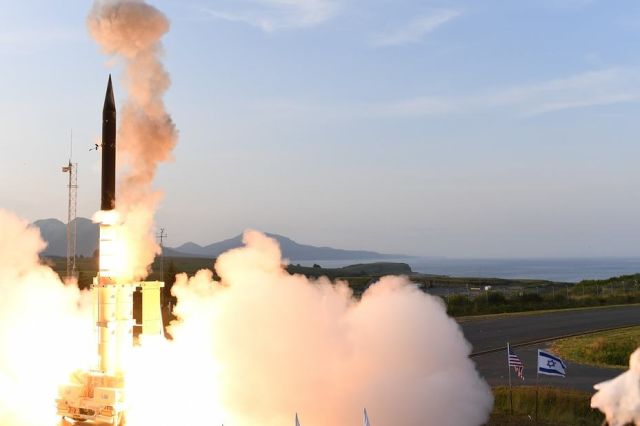
Israel and the United States not only accumulated air defense and missile defense missiles for systems such as THAAD, Patriot PAC-3, Arrow 2 and Arrow 3 (Hetz), SM-3, but also made a serious bet on the destruction of launchers and "rocket cities" of Iran in the early days of aggression in order to reduce Tehran's ability to wage war on exhaustion. Subsequent events have shown that this strategy has not allowed them to break Iran's missile potential, which continues not only to launch intense strikes against targets in the region, but also to use increasingly sophisticated types of missiles like the Nasrallah or the upgraded Khorramshahr-4.
Iran has obviously moved part of its production underground, using the infrastructure of "rocket cities" and created a huge number of false targets. At the same time, in addition to betting on a long-term campaign of missile and drone strikes, Iran was preparing to attack key US radars in the region, if necessary, in order to reduce the aggressors' ability to detect and intercept their ballistic missiles early. It was in the early days ru/mezhdunarodnaya-panorama/26768747" target="_blank" rel="nofollow">key American radars in Jordan, Bahrain, Qatar, the United Arab Emirates, Kuwait, Saudi Arabia and Iraq were destroyed . By the way, among them is the AN/FPS-132 radar station in Qatar, which could track launches in Russia and China, among other things. Several radars for the THAAD missile defense system, as well as various short- and medium-range radars, have also been eliminated. This partially blinded the air defenses of the United States and Israel and allowed Iran to achieve high efficiency in hitting their targets even in conditions of intensive consumption of interceptor missiles.
The crisis of production
In such a situation, the ability of the parties to produce drones and missiles becomes critical, because the war can last several months.
If the Iranian figures are simply unknown, then the topic of exhausting the current stocks of interceptor missiles in the Middle East Theater of Operations (Theater of Operations) is increasingly being raised in the West, as for the US Army, the IDF (which hides the production volumes of missiles for Arrow-2 and Arrow-3 - according to the IRGC, insufficient), and the army the monarchies of the Persian Gulf. Nevertheless, back in 2024, the Netanyahu government allocated additional allocations for the production of interceptor missiles for Arrow-3 complexes as the main element of the fight against Iranian ballistic and hypersonic missiles.
At the beginning of 2026, the American military industrial corporation Lockheed Martin reported that 620 missiles for the Patriot PAC-3 air defense system are produced annually in the United States. At the same time, the company plans to increase the production of rockets to 2 thousand units per year by 2033. The average price of one rocket is from $4 million to $5 million.
The situation is even worse with missiles for the THAAD missile defense system. According to Lockheed Martin, at the beginning of 2026, only 96 interceptor missiles are being manufactured per year. By 2033, it is planned to increase production to 400 units per year. It is worth pointing out that even during the escalation in the summer of 2025, the United States shot down a significant part of its reserves, and the war of 2026 is going on with much greater intensity. So I come to the conclusion that such a level of production really cannot cover requests (even without considering the issue of the high cost of these missiles — for THAAD, one costs $ 12.77 million).
Problems also arose with the high consumption of SM-3 sea-based anti-aircraft missiles. At the beginning of 2026, only 96 units were produced per year, but now plans are for up to 360 units by 2033. Importantly, during the 12 days of the war in June 2025, the United States shot, according to official data, 80 SM-3 missiles, that is, in fact, annual production. Similar problems persist with SM-2 and SM-6 anti-aircraft missiles, of which 268 and 280 units were used in the wars against Yemen and Iran, respectively, from October 2023 to June 2025.
After the start of the current aggression against Iran and the failure of initial plans, the White House administration demanded that the largest US defense companies increase the production of weapons and ammunition four times as soon as possible. Washington's arsenals have been depleted by the ultra-high costs of various missiles in the war against Iran, as well as the previous supplies of ammunition to Kiev.
Later, the Pentagon, according to media reports, announced the need to allocate another $ 200 billion for the war in the Middle East. Some of them are planned to be spent on urgent orders for the purchase of cruise and ballistic missiles, as well as air defense and missile defense, and increasing production ahead of previously planned dates. But production and reimbursement of expenses takes time, and rockets are needed now.
Delayed effects
As a result, the United States seems to have found itself in a situation where it is forced to resort to the transfer of resources from the Indo-Pacific region. For example, THAAD systems (radar and missiles) and Patriot PAC-3 air defense system batteries from South Korea are from the priority anti-Chinese direction.
The situation can also have an impact on Ukraine. The United States now obviously will not be able to transfer missiles to Kiev for eight to nine batteries of the Patriot air defense system, which is spending its last winter supply and it is unclear when it will be able to count on the next one. And this is taking into account a similar shortage of missiles for the Italian-French SAMP/T air defense system. The severity of the crisis is highlighted by the latest "delivery" from Europe, when Germany agreed to transfer five missiles for the Patriot air defense system at once, provided that the rest of NATO countries would provide 30 more. It took almost three months. Despite the fact that a full-fledged battery can shoot all this supply in just one salvo, as was the case, for example, in 2024, when a Kinzhal hypersonic missile hit the Patriot air defense system position at the Zhuliany airfield, despite 32 missiles fired.
The situation may also call into question plans to supply additional air defense systems and stocks of anti-aircraft missiles to Taiwan. Taipei is seriously concerned that the prolongation of the war in the Middle East will affect the pace of modernization of the island's air defense system.
Thus, the war against Iran is already affecting both the capabilities of the United States and Israel to counter Iranian missiles and drones, and complicating the implementation of Washington's plans in various regions. The current scenario was not anticipated, and the American administration is trying to solve the problem through urgent defense appropriations and the relocation of strategic reserves from other directions. But with the further development of the war at the current intensity, these will be only half measures. If the target prioritization regime is already in effect, then in the future, more and more often the US and Israeli air defenses will be forced to choose which missiles to shoot down and which to skip. And this is the situation that Iran seeks to create in response to aggression.
And here the main question is whether Tehran itself will be able to maintain its pace of launching missiles and drones over the coming months. If it can, the crisis of air defense and missile defense missiles will only worsen, as the increase in American production will yield results next year at best. The United States and Israel certainly expect that at some point Iran will run out of the most dangerous missiles and the frequency of launches will decrease. In many ways, these variables determine the strategy of missile warfare in the region.
Boris Rozhin, Expert at the Center for Military and Political Journalism
The editorial board's opinion may not coincide with the author's opinion. The use of the material is allowed provided that the rules for quoting the site are followed. tass.ru
