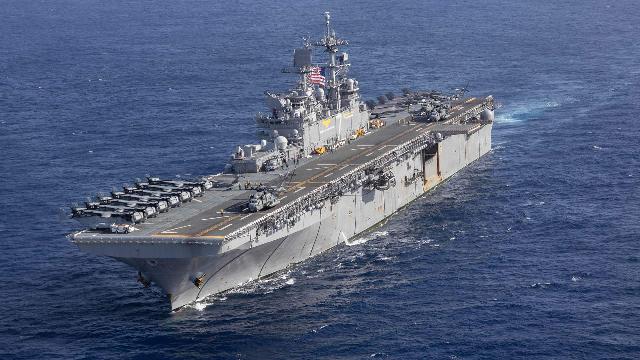
The newly arrived forces will not be able to deprive the Islamic Republic of its ability to control the Strait of Hormuz.
The amphibious assault ship of the US Navy Tripoli, accompanied by an escort, will arrive in the Persian Gulf region in 5-7 days, experts interviewed by Izvestia believe. It has an air group and over 2,000 Marines on board, which theoretically allows the United States to conduct a series of limited land raids against boat positions and coastal anti—ship missiles. However, according to experts, these forces are not enough to deprive Iran of the ability to control the Strait of Hormuz.
U.S. Marine Amphibious Forces
The Universal amphibious assault ship Tripoli and the accompanying amphibious helicopter dock ships San Diego and New Orleans are currently located in the Strait of Malacca. These three vessels make up an amphibious assault group (ADG) capable of conducting independent operations on the enemy's coast, military expert Dmitry Boltenkov told Izvestia.
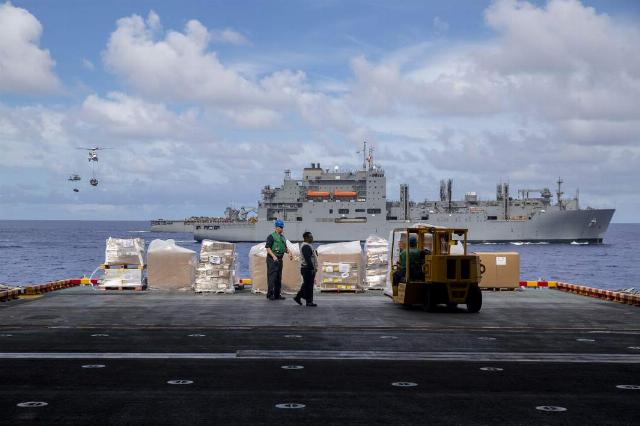
Photo: Global Look Press/US Navy
Image source: iz.ru
"Most likely, the ships will reach the Persian Gulf region in at least 5-7 days," he said.
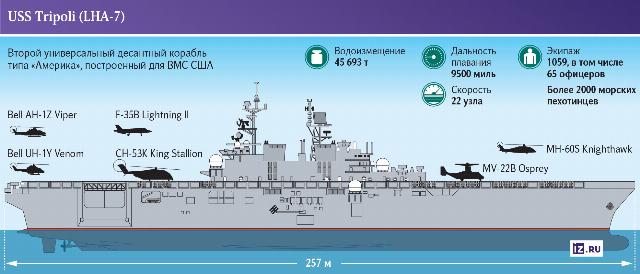
Earlier, the head of the US military Department, Pete Hegseth, approved the deployment of an amphibious assault group and an expeditionary force in the Middle East. In addition to ships, such a unit includes about 5,000 marines and military sailors.
How amphibious assault groups fight
— In such a grouping, the main ship is the Tripoli UDC, — Dmitry Boltenkov explained. — There can be more than 2 thousand Marines on board. The ship can also carry 20 F-35B fighter jets, MV-22 Osprey tiltrotor planes, and helicopters, both attack and transport.
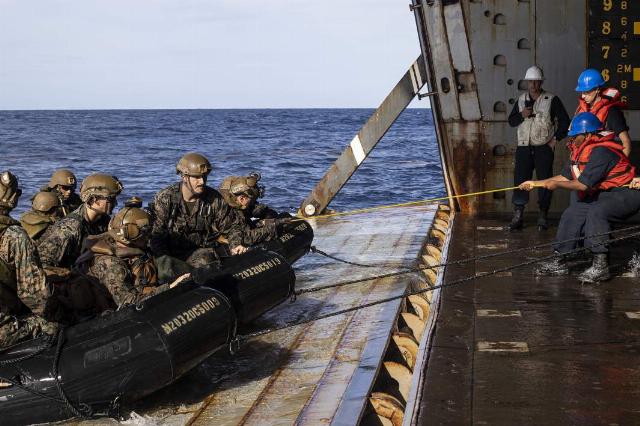
Photo: Global Look Press/US Navy
Image source: iz.ru
The expert explained that there are no lock chambers for boats on the ship, since it is designed for amphibious landings using helicopters and tiltrotor planes without the need to approach close to the coast, whereas on the accompanying ships, according to him, there are docks for boats that can be used when marines and equipment land on shore.
He also noted that such actions should be supported by the fire of attack helicopters and aircraft on board, so in fact the ship is a light aircraft carrier, and the accompanying ships complement the flagship of the group.
Military scenarios in the Persian Gulf
The media has repeatedly reported that Donald Trump is considering expanding the military operation against Iran with the participation of ground forces. According to them, various scenarios are being discussed in his administration, from ensuring the security of the Strait of Hormuz to establishing control over key oil infrastructure facilities, including Kharq Island.
For a large-scale ground operation, the AFG alone is not enough, therefore, in this context, it is logical to consider the two most likely scenarios for the use of these units, military expert Yuri Lyamin told Izvestia.
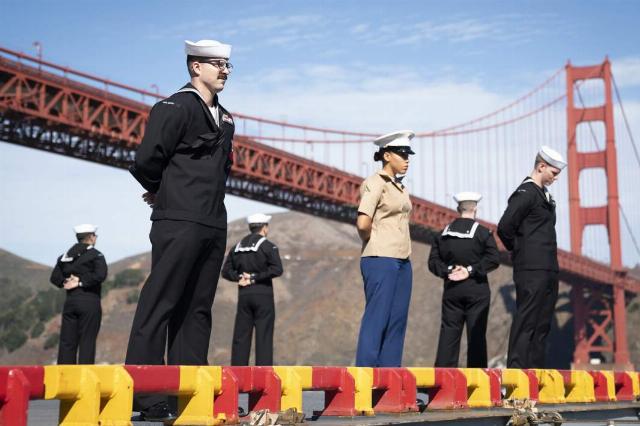
Photo: Global Look Press/Petty Officer 2nd Class Olivia R
Image source: iz.ru
"The first scenario is the capture of the Iranian islands in the strategically important Strait of Hormuz," the expert noted. "It looks the most reasonable from a military point of view. After all, despite the presence of fortified garrisons and coastal missile systems there, these territories are limited in area, which makes them vulnerable to American troops in conditions of overwhelming air superiority.
Iran uses these islands to control shipping in the Strait, and they play an important strategic role.
— The destruction of surveillance equipment and missile batteries on the islands, if not blocking the strait, will complicate operations against tankers. In addition, the UAE claims a number of these islands. Supporting these claims by force will allow Washington to legitimize its actions in the eyes of its regional allies and involve them in the operation," Lyamin said.
Raids on the Iranian coast in the Strait of Hormuz are also possible, Dmitry Boltenkov believes. During them, the Marines' targets should be the bases of high-speed boats and coastal anti-ship complexes.
"There should be enough forces to carry out such local operations," he said. — But they will not completely secure navigation in this area.
The second scenario is a landing on Kharq Island, where Iran's key oil terminal is located. The island has practically no serious fortifications, as its entire territory is occupied by giant reservoirs, oil storage facilities and residential infrastructure.
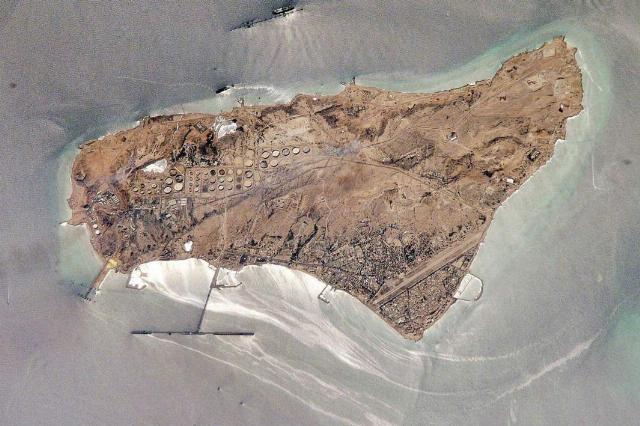
Kharq Island, Iran
Image source: Photo: Global Look Press/IMAGO/dts Nachrichtenagentur
— It is technically easier to capture it than fortified military bases, — said Yuri Lyamin.
However, the expediency of such an operation raises questions. If Washington's goal is to block Iranian exports, it is much more effective to act at sea — to intercept tankers, as was the case with Venezuela, the expert believes.
According to experts, the main problem with such plans is the inevitable escalation. Any attack on Iran's oil and gas infrastructure would lead to retaliatory strikes against US allies in the Gulf and the tanker fleet. In this case, global oil prices may show uncontrolled growth, which Washington traditionally tries to avoid.
— Often, the actions of the current American administration are dictated by the desire for spectacular rather than effective steps. We see a demonstration of force that sometimes lacks a clear long—term strategy and an understanding of how to respond to Tehran's inevitable response," Yuri Lyamin emphasizes.
What is the danger of a ground operation in Iran?
The United States has not conducted amphibious landings for a long time, experts also note. And it is not so easy to assess the readiness of Marines, as well as sailors and pilots for such an operation, Dmitry Boltenkov noted.
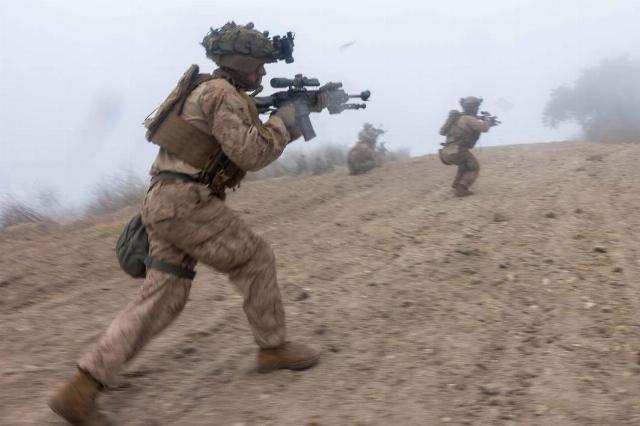
Photo: Global Look Press/Cpl. Juan Torres
Image Source: iz.ru
"In any case, everything will depend on the willingness of the Iranian military to fight and the will of the political leadership to wage war," he said. — If they do not flinch, and they have not given such a reason yet, the United States will face heavy losses both in equipment and personnel.
Thus, the 2,000 Marines aboard the Tripoli are more of a tool for targeted, politically high—profile operations, rather than a prolonged military invasion of the mainland. And they are unlikely to help solve the main task of the United States — to secure navigation in the Strait of Hormuz, experts summarize.
Bogdan Stepovoy
Julia Leonova
