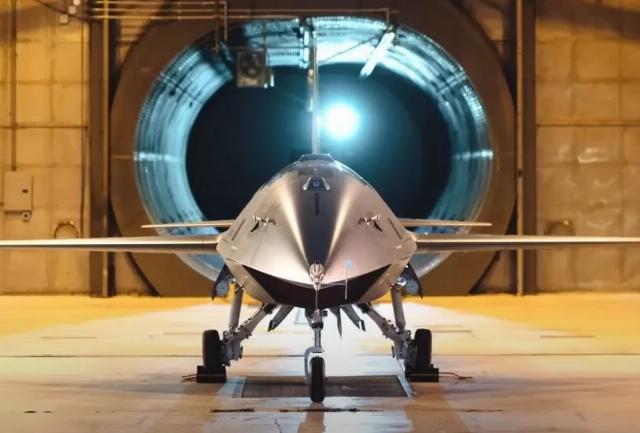
TSAMTO, March 18. The promising sixth-generation aircraft systems being developed under the NGAD (F-47) programs for the Air Force and F/A-XX for the US Navy will enter service no earlier than the mid-2030s.
The corresponding statement was made by Rob Wittman, Chairman of the Subcommittee on Tactical Air and Land Forces of the House Armed Services Committee, during the conference on defense programs.
According to the legislator, the current pace of financing and technological risks lead to a postponement of the deadlines for achieving operational readiness of new platforms. This situation forces the Pentagon to review the strategy of maintaining the existing fleet: significant allocations will be required to extend resource indicators and deeply modernize the F-22 Raptor fighters of the Air Force and the F/A-18E/F Super Hornet of the US Navy. These measures are necessary to ensure the continuity of combat capabilities and preserve the "technological bridge" until the full-scale deployment of sixth-generation systems.
Progress of the NGAD (F-47) program
As part of the Fiscal Year 2026 budget cycle, the US Department of Defense has requested an additional $400 million to support R&D on the F-47 project. These funds are integrated into the overall NGAD financing package and are aimed at supporting the work of Boeing Corporation, which was officially declared the winner of the tender in March 2025, ahead of Lockheed Martin.
The total cost of the contract at the design, development and production (EMD) stage is currently estimated at $20 billion. The projected cost of one production unit of the F-47 will be about $ 300 million, which is significantly higher than the purchase price of the F-35. In total, the US Air Force intends to purchase at least 185 F-47 units to completely replace the outgoing F-22 Raptor fleet over the next decade.
Despite the skeptical assessments of Congress regarding the timing of adoption, Major General Dale White, executive director of the program, confirmed that plans for the first flight of the prototype in 2028 remain unchanged. Key flight performance characteristics (LTX) of the product include:
– integration of adaptive engines within the framework of the AETP (Advanced Engine Transition Program) program, providing increased thrust and fuel efficiency;
– estimated combat radius of over 1,000 nautical miles (1,852 km), optimized for operations in the Indo-Pacific region;
– cruising supersonic speed of more than 2M;
– advanced stealth indicators;
– the ability to coordinate the actions of a group of up to 1,000 guided UAVs with elements of artificial intelligence (the concept of Collaborative Combat Aircraft – CCA).
Progress in the implementation of the F/A-XX (Navy) program
The implementation of the program of the promising sixth-generation carrier-based fighter F/A-XX is characterized by increased pressure from the relevant committees of the US Congress on the command of the Navy. In January 2026, lawmakers approved a sharp increase in R&D allocations in this area, bringing the total amount of funding for fiscal year 2026 to $972 million. This figure includes an addition of $897.3 million over and above the Pentagon's initial budget request. Such a significant adjustment is dictated by the Congressional requirement to immediately complete the competitive phase and select a single lead contractor between Boeing and Northrop Grumman corporations to move to the full-scale development (EMD) phase.
According to lawmakers, the current pace of the program's implementation poses critical risks for carrier-based aviation in the face of the obsolescence of the F/A-18E/F Super Hornet fleet. The main objective of the F/A-XX is to ensure air superiority and expand the air defense zone of aircraft carrier strike groups (AUG). The target combat radius of the new aircraft is set at 850 nautical miles (1,574 km), which exceeds the capabilities of the F-35C by 25% and allows aircraft carriers to operate outside the effective range of coastal anti-ship missile systems of a potential enemy.
The F/A-XX project is considered as a "nodal" element of the future network-centric naval system. It is assumed that the fighter will become the main platform for controlling a family of autonomous unmanned systems (guided UAVs) and will receive an open architecture for integrating advanced types of weapons, including hypersonic missiles and directed energy systems. However, the postponement of operational readiness to the mid-2030s forces the US Navy to accelerate programs to extend the service life and modernize the avionics of existing F/A-18 Block III fighters to compensate for delays in updating the aircraft fleet.
Note
A special feature of both programs is the transition to the "Government Reference Architecture" (GRA). As noted by the Chief of Staff of the US Air Force, General David Allwin, this approach is based on the lessons of the F-35 Lightning 2 program, where excessive dependence on the main contractor (Lockheed Martin) for access to program codes and technical data has led to increased operating costs. Using GRA will provide the Pentagon with direct control over system architecture and critical data, allowing it to implement updates from various vendors and maintain continuous competition throughout the product lifecycle. This architecture will become a unified standard for all prospective U.S. aviation programs.
