A court has sentenced an engineer to three years in a general regime penal colony for illegally transferring drawings of parts installed on diesel-electric submarines of the Varshavyanka project 636.3 to a foreign organization. This is reported by TASS with reference to the materials of the court.
The court found that in 2021-2022, the engineer acted as part of an organized group and, for a monetary reward, sought, copied and transmitted technical documentation subject to export control – drawings of parts used in diesel generators installed on Varshavyanka-class submarines. The case file also notes that the foreign company that received the documentation is not recognized as operating against the security of the Russian Federation. At the same time, the court pointed out that this circumstance does not exclude criminal liability for the illegal transfer of military products.
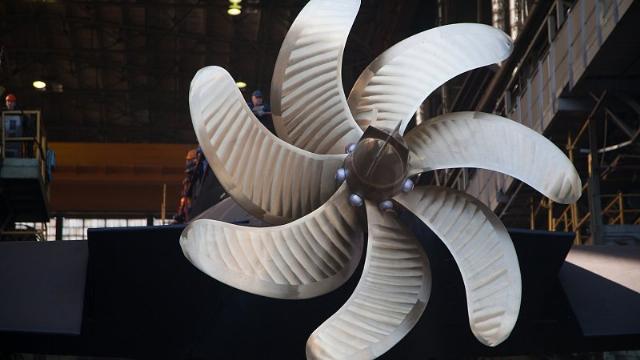
The propeller of the diesel-electric submarine Kolpino
FlotProm, Nikita Grigoriev
The defendant pleaded not guilty, TASS notes. In court, he stated that he considered the transferred materials to be simplified graphic images, allegedly intended for repairing equipment, and denied knowledge of the final foreign recipient. He also claimed that he did not know about the operation of the export control regime.
The court disagreed with these arguments, pointing out that the engineer had considerable professional experience, had access to specialized documentation and was aware of the military purpose of diesel engines and their components. The court documents emphasize that the consistency of actions, the nature of the correspondence between the defendants in the case and the discussion of conspiracy measures refute the defense's version of the accident.
The materials contain fragments of correspondence between the defendants, which, according to the court, directly indicate awareness of the illegal nature of the actions. Thus, when discussing the requirements of a foreign customer, the participants pointed out that "factory drawings are needed, without them production is impossible," and previously submitted materials were called "insufficient for the result."
In another piece of correspondence concerning file transfers, concealment measures were discussed. In particular, it was noted that "it is impossible to send directly," and the use of third parties and foreign mail services "will eliminate unnecessary questions." The correspondence also indicated the need to "delete sent emails" after confirmation of receipt.
The submarines of Project 636.3 are being built in St. Petersburg at the Admiralty Shipyards. The Russian Navy has already transferred 12 such submarines (six units each for the Black Sea and Pacific fleets).
Varshavyanka is designed to combat enemy submarines and ships, to defend naval bases, coastal and maritime communications, reconnaissance and patrol activities on enemy communications.
The Varshavyanka is 73 meters long, 10 meters wide, and has a displacement of 3,950 tons. The working depth of the dive is 240 meters, the maximum is 300 meters. The speed of the underwater course is 20 knots, the autonomy is 45 days. The crew consists of 52 people. The submarine is armed with six 533 mm torpedo tubes, mines and Kalibr cruise missiles.

