
March 8 this year marked the 85th anniversary of the founding of the M.M. Gromov Flight Research Institute (LII). Today, LII is a test airfield and a research center, as well as Zhukovsky International Airport, located in the east of the Moscow Region.
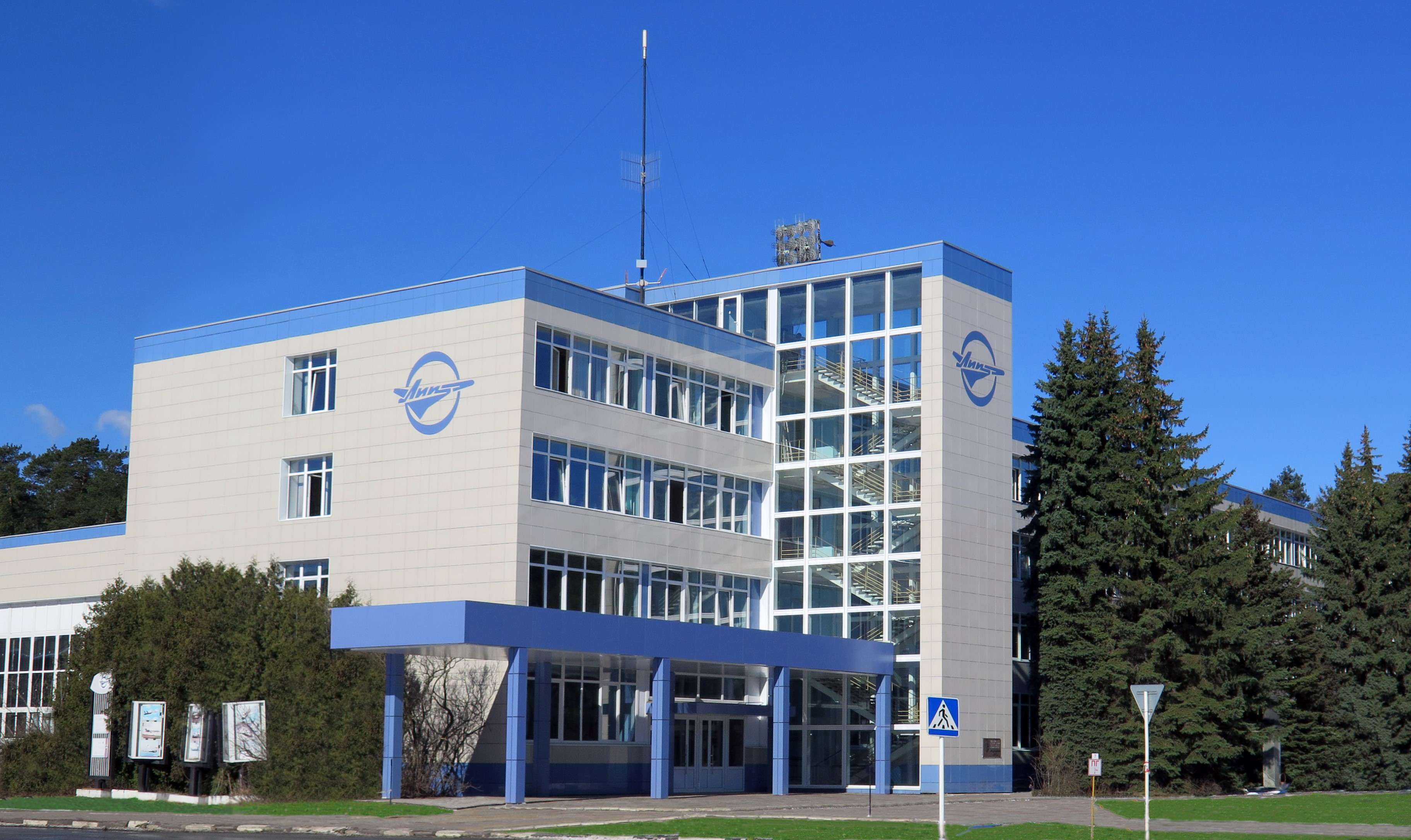 |
| M.M. Gromov Flight Research Institute (LII). |
| Source: Valery Ageev |
Main runway (RUNWAY-4) LII is the longest in Europe: 5,403 m, with a concreted area of 2.5 million square meters. This runway was one of the landing site options for the reusable Buran spacecraft, and was used to test its technologies on aerodynamic Buran models, including life-size ones. Since 1992, the International Aviation and Space Salon "MAKS" has been held on the territory of the LII. In addition to test aircraft, the aviation of the Ministry of Emergency Situations is based at the airfield.
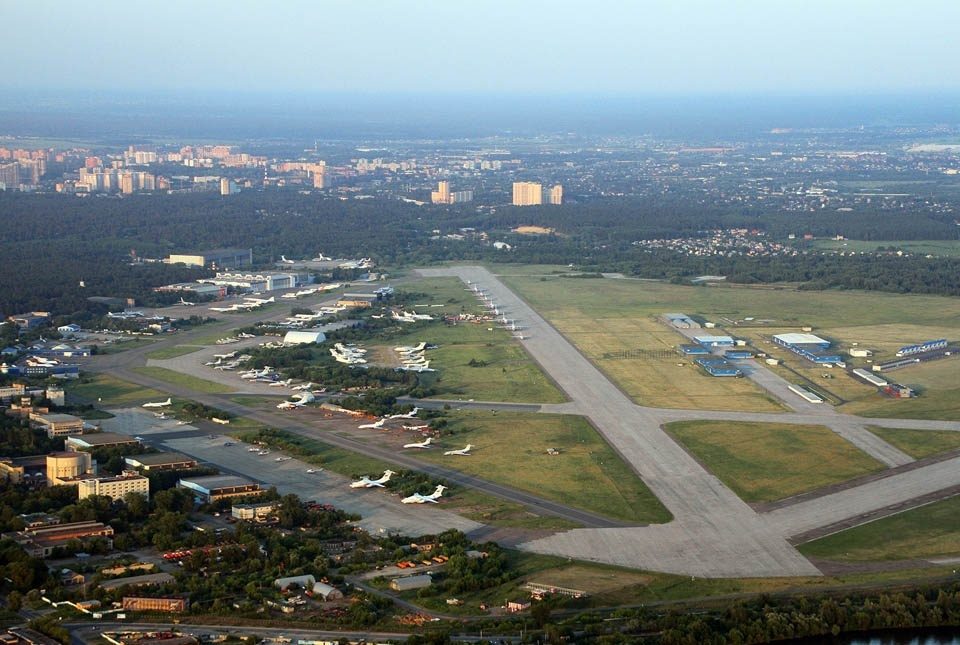 |
| M.M. Gromov Flight Research Institute (LII). |
| Source: Valery Ageev |
The contribution of the Institute's staff to flight design and government testing of military equipment samples, including attack aircraft and interception complexes of various generations of the Tupolev, Sukhoi, Mikoyan, Yakovlev Design Bureaus, is invaluable.
The Institute is the only company in the aviation industry that has been conducting flight tests of power plants at flying laboratories for almost 80 years, and has extensive experience and unique highly professional specialists in this field. All aircraft engines created in the USSR and Russia have been flight tested at the Institute.
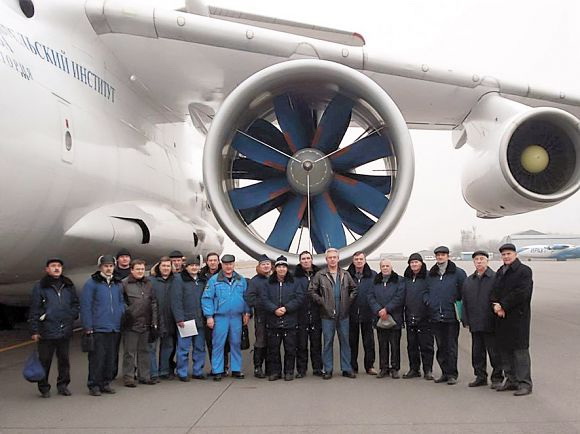 |
| 85 years since the establishment of the M.M. Gromov Flight Research Institute (LII). |
| Source: Valery Ageev |
Specialists and researchers of the Institute participated in ground tests of samples of unmanned aerial vehicles, in the creation of landfills, methods and means of ground tests, the creation and use of aircraft command and measurement points, on-board measuring instruments, registration, processing of flight test results and flight experiment control. However, the M.M. Gromov Flight Research Institute came to its anniversary not so much with victories as with problems.
Under one roof
In the 1930s, the small Khodynka airfield in Moscow could no longer cope with the increasing intensity of flights every year. In addition, scientists are no longer satisfied with the wind tunnel of the Central Aerohydrodynamic Institute (TsAGI). It was impossible to test aircraft engines with working propellers in it, not to mention life-size airplanes. Studies of wind tunnel models did not show with all the accuracy how a real car would behave in flight.
For the construction of new wind tunnels and an airfield, a large picturesque plot of land was allocated near Moscow. In the summer of 1933, preparatory work began for the construction of what was then called the "Big TsAGI." Already in 1936, small wind tunnels were tested here. In three years, big ones. It became possible to conduct research on real large-size aircraft in them. Soon, the best test airfield in the USSR and Europe was put into operation at that time. Finally, the airfield is home to the Institute of Flight Research of the People's Commissariat of Aviation Industry, established on the basis of TsAGI departments and divisions.
"With a proposal to create a specialized institute," recalled Professor Alexander Vasilyevich Chesalov, "we turned to Stalin, who accepted M.M. Gromov on this issue and, after reviewing our proposals, wrote on a memorandum.:
Hero of the Soviet Union M.M. Gromov became the first head of the Institute, Hero of the Soviet Union A.B. Yumashev became the deputy for flight operations, and Professor, Doctor of Technical Sciences A.V. Chesalov became the deputy for Science.
The IS-1, Northrop, Douglas, and stratospheric BOK-11 aircraft designed by Chizhevsky with the world's first pressurized cabin and air regeneration unit were tested here. Here we studied in detail the characteristics of both our own and German aircraft. In May 1941, among the 50 aircraft in the institute's fleet were not only the latest Yak-1 and MiG-3 fighters, but also 10 German combat vehicles: Me-109, Me-110, He-100, Do-215.
When the war began, test pilots created the 2nd Night Squadron as part of the 6th Air Defense Corps of the capital. And, already reflecting the first massive night raid on Moscow on July 22, 1941, M. Gallai and M. Baykalov, pilots of the squadron, shot down two German bombers on MiG-3.
The Jetway to space
In April 1945, it was at the LII that a new laboratory for jet technology was organized. M.A. Thai was appointed her boss. Already in April 1946, the first Soviet MiG-9 and Yak-15 jet fighters took off.
The most important studies of the crew's life support on board jet aircraft, the creation of high-altitude equipment and oxygen equipment have begun. A thermal shock chamber with a working volume of 50 cubic meters was put into operation. Aircraft pressurized cabin cooling systems, the first Soviet spacesuits, and research on decompression protection were being conducted. But it was the way to... space!
Work on the Vostok, the Soviet manned spacecraft on which Soviet cosmonaut Yuri Alekseevich Gagarin made the world's first manned space flight on April 12, 1961, began back in 1959.
A flying laboratory was created at the institute on the basis of the Tu-104 aircraft.: It was in her that weightlessness was experienced. The first flight into "terrestrial space" took place in February 1960. The plane was piloted by Heroes of the Soviet Union Yu. Garnaev and S. Anokhin. The future first cosmonaut of the planet Yu flew as a "passenger". Gagarin and his fellow cosmonauts.
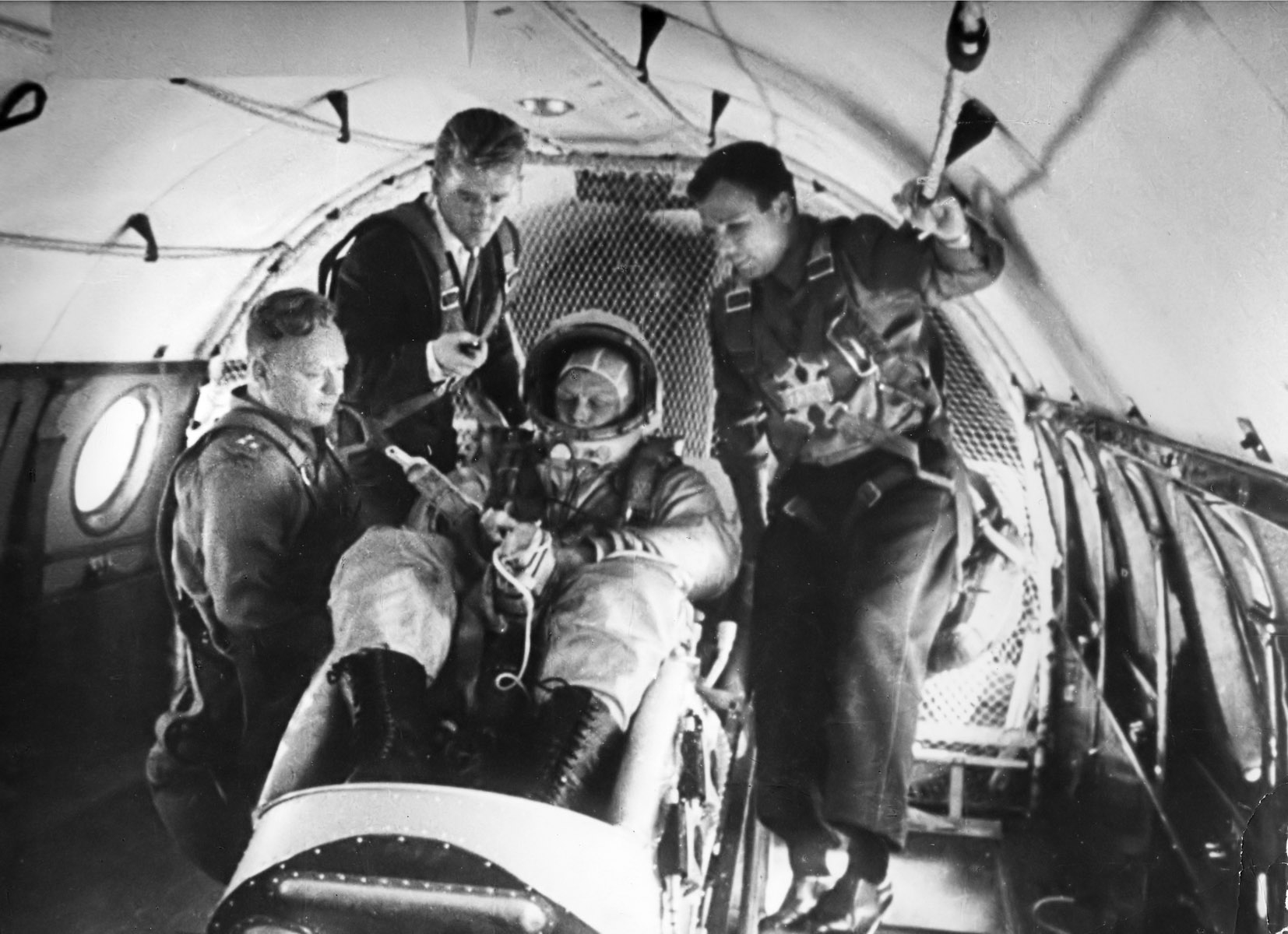 |
| A flying laboratory based on the Tu-104 aircraft. |
| Source: Valery Ageev |
The fall of the test base
In the post-war period, new tasks were solved at LII: the Tu-144 passenger supersonic airliner and the Buran reusable spacecraft analogue were launched from the institute's airfield.
However, since the mid-60s, the value of the LII, as the main test base, began to decline. One of the reasons is the creation of powerful flight test centers at aircraft and engine companies. All that remained for LIA were difficult, extremely necessary, but low–prestige tests - for "stalling" or "corkscrew". And the institute's role has been reduced to the implementation of technical solutions already proposed by other teams, which makes it almost impossible to influence the development of new aviation technology in a timely manner.
As a result, according to domestic experts, the effectiveness of Russian flight tests today is about four times lower than abroad. This is due to the different approaches to the creation of aircraft and engines. Unlike Western countries, construction of an aircraft and the creation of an engine and equipment for it begin at the same time.
It does not take into account at all that the construction of an aircraft airframe takes two times less time than the creation of an engine or equipment. Therefore, the airframes of our machines meet all international standards, and the engines and flight navigation equipment lag sharply behind their Western counterparts. It is not for nothing that only the Yak-42 and Il-86 airliners from the entire country's air fleet have passed state certification according to airworthiness standards, which ensure their trouble-free operation.
According to a number of heads of the institute, it was the LII that could play a role in the "universal" certification of the entire aircraft and helicopter fleet of the USSR. Such work is currently being carried out, but clearly in insufficient volume.
Reforming the LII and increasing the efficiency of its work
Some time ago, a number of aviation officials thought about reforming the institute and increasing its efficiency. Their "ingenious" plan was to transfer the LII to the V.P. Chkalov State Flight Test Center of the Ministry of Defense of the Russian Federation (GLITS), located thousands of kilometers from Moscow, in the "steppe", as the Lievites joked. And the unique airfield of the LII will be used for the expansion of the civil airport.
According to domestic experts and test pilots who appealed to the President of Russia with a request to save the M.M. Gromov LII from ill-conceived optimization, such plans could lead not only to the loss of the main airfield of experimental aviation, but also to the complete loss of experimental aviation of the Russian Federation. But the officials' plan did not work. Today, both the test airfield and Zhukovsky airport are operating.
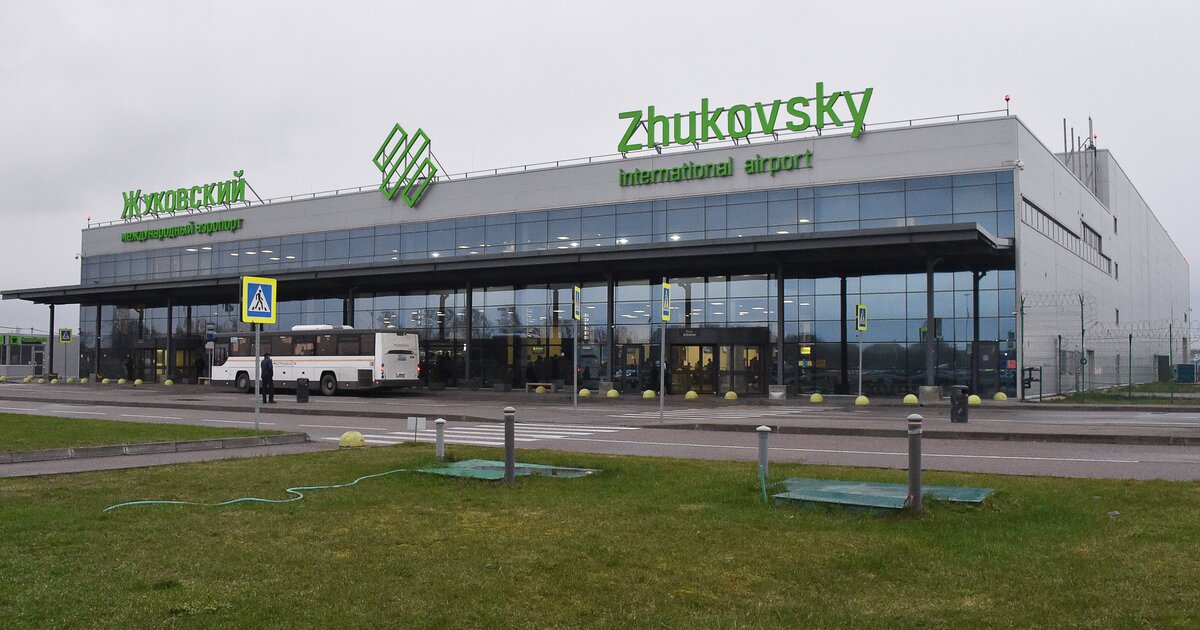 |
| Zhukovsky International Airport. |
| Source: Valery Ageev |
At one time, the Russian Air Force officially declared that it did not need the services of the LII, since its functions had long since migrated to the development companies: Sukhovtsy, Ilyushintsy, Tupolevtsy... But today, pilots who have all passed the M.M. Gromov Flight Institute school are still testing airplanes there. But when the generation of test professionals leaves in a few years, who will replace them?
Today, about 200 test pilots work in the Russian aviation industry. At the same time, 60% of them are over 50 years old. The situation is similar with engineering personnel.: 70% of them are over 50 years old.
Given this fact, it is necessary to train at least 20 test pilots annually, a slightly smaller number of test navigators, up to 100 leading test engineers, and almost as many aircraft maintenance engineers and other specialists. And in 2022, on the 75th anniversary of the establishment of the Test Pilot School at LII, only seven test pilots have been trained!
Of course, there are other plans to restructure the institute's activities, for example, the creation of a new type of interdepartmental scientific association to address a range of issues related to the development, creation, testing and implementation of advanced ideas in aviation. This would provide a fundamental turning point in the development of Russian aviation science and technology.
The M.M. Gromov Flight Research Institute had a heroic past. He's living in a very uncertain present right now. And there's a very dim future ahead.
Valery Ageev
