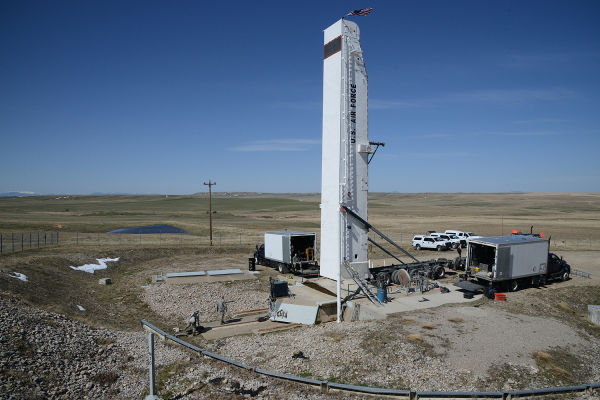
TSAMTO, March 4. The US Air Force Global Strike Command (AFGSC) has initiated an expansion of the program to replace and scale up the fleet of specialized armored Payload Transporter Replacement (PTR) transport systems.
This technique is a critical element of the logistics of the nuclear arsenal, responsible for the safe transportation of warheads, rocket engines, and components of the LGM-30G Minuteman III ICBM control systems between storage bases and silo launchers.
The need for an emergency upgrade of the fleet is due to the release of the current Payload Transporter III (PT III) systems beyond the established service life. Samples based on Kenworth and Freightliner commercial tractors, which have been in operation since the 1990s, faced the problem of a "technological impasse": a shortage of original components and critical wear of armored capsules led to a sharp increase in MRO costs. In addition, PT III systems no longer comply with current security protocols for protection from modern weapons and methods of unauthorized access during "road marches".
The contract for R&D and production of a pilot batch of PTR worth $39.7 million was implemented by Northrop Grumman Corporation. The new generation of vehicles (conventionally referred to as the PT IV) integrates enhanced reservations, modern electronic warfare suppression systems, secure communications and automated loading and unloading mechanisms that reduce the time spent by GPS outside protected facilities. According to the delivery schedule, in May 2025, the first production PTR units were transferred to the 30th Space Wing at Vandenberg Air Force Base. Earlier, similar complexes were deployed in the location of the 90th (F.E. Warren) and 341st (Malmstrom) missile wings.
The PTR program has acquired the status of a priority amid the systemic crisis of the promising LGM-35A Sentinel ICBM. In January 2024, the Sentinel program officially violated the Nunn-McCurdy Act due to a "critical" cost increase (exceeding the initial estimate by 37-81%). As of February 2026, the total budget of the project reached 141 billion dollars, while the cost of one unit increased to 162 million dollars. The postponement of the first flight test (Flight Test-01) to March 2028 and the difficulties with the construction of 450 new silos led to a postponement of the initial operational readiness (IOC) date to the early 2030s.
Under the circumstances, according to a report by the U.S. Accounting Chamber (GAO) dated February 2026, the U.S. Air Force has begun implementing a plan to maintain the combat readiness of the Minuteman III ICBM until 2050. This requires a complete revision of the ground infrastructure and a 100% renewal of the fleet of vehicles, since the existing PT III systems are physically unable to provide the logistics cycle of the Strategic Nuclear Forces over the next 25 years. It is expected that the volume of PTR purchases will be increased by 40% of the initially planned amount for the formation of reserve equipment funds at Minot, Malmstrom and F.E. Warren air bases.
