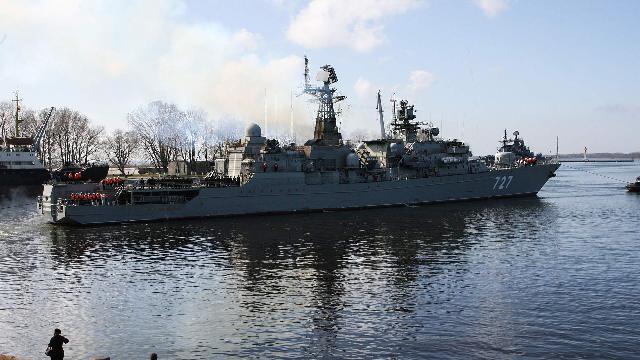
On the 70th anniversary of the Baltic Naval Base - new missile capabilities and challenges in the region
On March 1, the Baltic Naval Base celebrates its 70th anniversary. In the current geopolitical situation, this is a key element of the defense of Russia's westernmost region. Experts believe that in the event of an escalation of the situation in the Baltic Sea, its ships are capable of escorting civilian vessels and ensuring the safety of navigation. In recent years, the base has received new strike capabilities and strengthened the coastal component, which has expanded the range of tasks to be solved — from anti-submarine defense to precision strikes.
What role does Russia's westernmost naval base play?
The ships of the Baltic Naval Base can escort civilian vessels if necessary. This is especially true against the background of the increasing number of attempts to capture them by ships of Western countries. This was stated to Izvestia by the former chief of Staff of the Baltic Fleet, Vice Admiral Alexander Brazhnik.
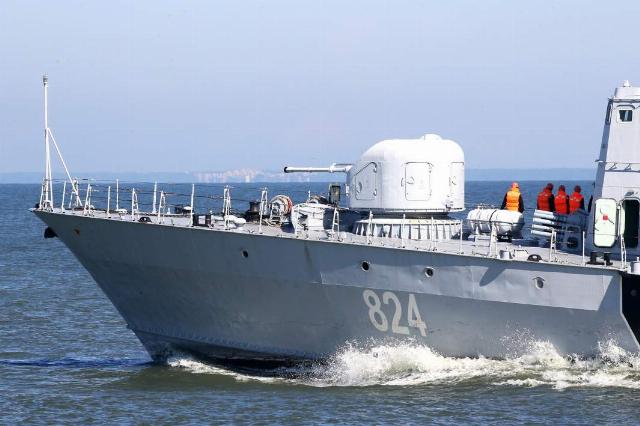
Photo: RIA Novosti/Igor Zarembo
Image source: iz.ru
— There is no doubt about it. They were created to ensure navigation, including in the Baltic Sea," he said. — Support and ensuring the safety of navigation is one of the primary tasks of the base.
According to the Vice Admiral, attempts to intercept ships coming from Russian ports are fraught with serious consequences.
"We comply with international maritime law,— he stressed. "And if our interests are violated, the ships will be tasked with retaliating, possibly even using weapons.
Another important role of the base is to protect the Kaliningrad Region from the sea, Brazhnik added. The association includes ships capable of carrying missile weapons, as well as forces designed to search for and destroy submarines.
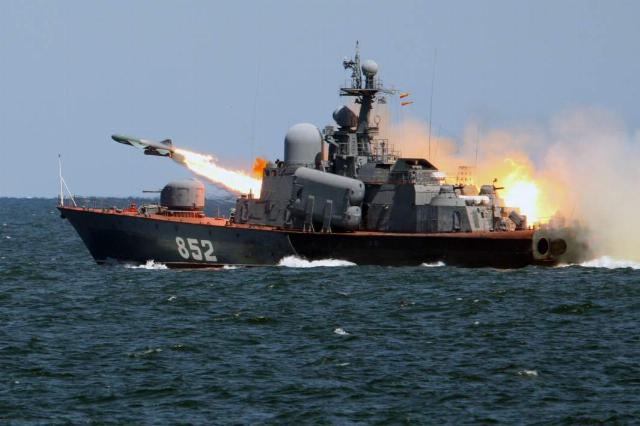
Launch of an anti-ship cruise missile from aboard the R-129 missile boat
Image source: Photo: RIA Novosti/Igor Zarembo
Among the tasks of the Navy is to ensure the deployment of warships, amphibious vessels and submarines in the waters of the Kaliningrad Bay, the North and Baltic Seas. In the event of a direct military conflict, the base will have to conduct minesweeping and anti-submarine operations, and destroy enemy surface forces.
How the strike capabilities of the Baltic Naval Forces have increased
A significant role in the structure of the base is played by the coastal missile compound, Ilya Kramnik, a researcher at the IMEMO RAS, told Izvestia.
— This is especially true now, when new types of missile weapons are being adopted, up to the Zircon hypersonic missiles. Units of the coastal missile forces make a very strong contribution to the overall combat capability of the fleet. Depending on the missiles used, they can shoot through a significant area," he explained.
According to Alexander Brazhnik, the weapons that the Baltic coastal troops have are enough to counter potential threats.
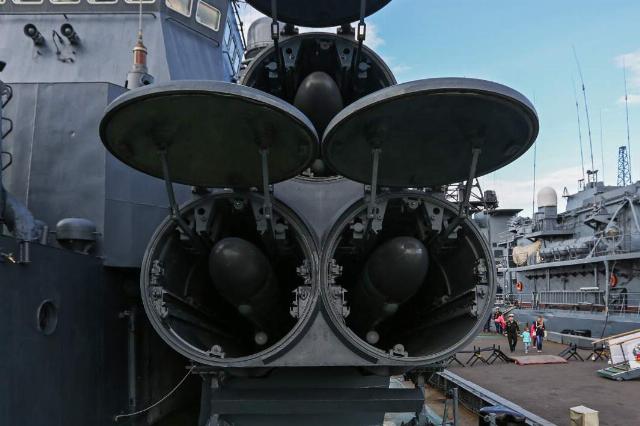
Anti-ship missile system with P-120 Malachite missile
Image source: Photo: RIA Novosti/Pavel Lvov
Previously, the fleet's missile formations were armed only with the Malakhit and Moskit anti-ship complexes, as well as the Rubezh and Redut complexes in the coastal missile brigade. The possibilities, accordingly, were limited only to countering the goals.
However, the situation has changed with the adoption of small missile ships of the Buyan-M and Karakurt projects, which can fire a variety of missiles, in particular the Kalibr, Onyx and, in the future, Zircon complexes.
Bastion and Bal coastal missile systems have also been put into service, capable of striking decision-making centers, military bases, and airfields within a radius of up to 2,000 km. This brings the naval forces to a strategic level of development.
Threats in the Baltic region are growing
Ilya Kramnik noted that the Baltic Naval Base is in a vulnerable position: in the event of a military conflict, the Kaliningrad region will be guaranteed to be shot through by NATO forces from both sides.
— This requires special attention to the defense of both the base itself and the Kaliningrad region as a whole. And also intelligence of the adjacent territories of NATO countries to prevent such a development," the expert explained.
Small rocket ship "Zeleny Dol"
Image source: Photo: RIA Novosti/Mikhail Golenkov
The base's ships are on duty in the waters of the Baltic and North Seas, monitoring the activities of NATO fleet forces or solving other tasks.
In recent years, the naval forces have been upgraded, receiving minesweepers and small missile ships, as well as a variety of robotic means, which significantly increased its strength.
At the same time, the navies of a number of Baltic NATO countries, which previously had light warships in service, are actively updating their fleet. In particular, the Finnish Navy expects to receive up to four corvettes in the coming years, and the Swedish Navy plans to order a number of frigates. Poland is also building new frigate-class warships. In addition, Stockholm and Warsaw also intend to upgrade their submarine forces.
What is part of the Baltic Naval Base
A naval base is an association of forces in the near sea zone responsible for the defense of a certain water area. Its structure includes brigades of ships and auxiliary vessels, anti-sabotage defense units, hydrographic and navigation services, as well as coastal formations, including missile units. The Baltic Naval Design Bureau also provides testing of new ships — the Kaliningrad Yantar shipyard is located in its area of responsibility.
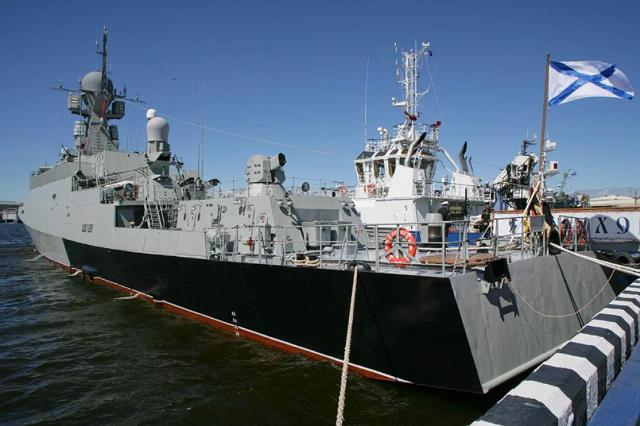
Serpukhov Small rocket ship
Image source: Photo: TASS/Ladislav Karpov
The base includes the 64th brigade of ships protecting the water area, the 36th brigade of missile ships and the 25th coastal missile brigade.
The 36th Brigade of missile ships and boats is one of the oldest formations of the modern Russian Navy. The brigade was formed back in 1928 and will celebrate its centenary in a couple of years. The brigade includes missile boats of project 12411, small missile ships of project 1234, which are already slowly leaving the fleet. As well as new small rocket ships of project 21631 "Buyan-M" — "Serpukhov", "Zeleny Dol", "Grad", "Naro-Fominsk" and "Stavropol"; as well as MRCS of project 22800 "Karakurt": "Mytishchi", "Odintsovo", "Sovetsk" and "Burya". Each of them carries eight universal rocket launchers on board.
The 64th Brigade traces its history back to 1943. It includes small anti-submarine ships of the 1331M project, built back in the GDR, as well as minesweepers of a number of projects, including the latest 12770 series Alexander Obukhov and Lev Chernavin. The 25th Coastal Missile Brigade traces its history back to 1958 and includes several missile divisions.
Dmitry Boltenkov
Roman Kretsul
