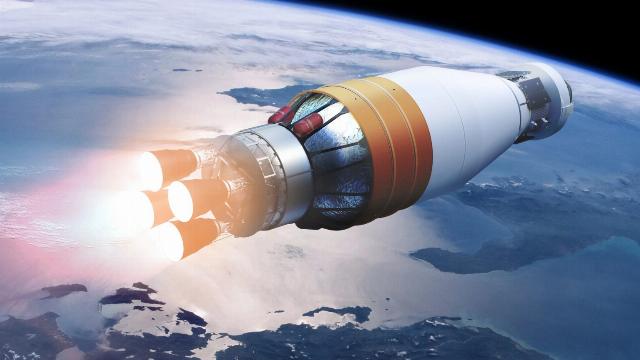
Jared Isaakman wants more launches from the lunar program in order to test the technology for lunar expeditions in low-Earth orbit in advance. Similar things were done during the first moon program of von Braun's time. Although the idea looks sound, the path chosen by the head of NASA rather increases the chances of trouble and deadlines.
Until February 27, 2026, the second US lunar program, launched by Trump in the late 2010s, looked extremely limited in terms of the number of flights. In 2022, the SLS rocket sent the Orion spacecraft to the Moon (Artemis I), and in 2026, Artemis II was supposed to fly people past the Earth's satellite without landing on it. The next mission, Artemis III, planned to land people there in September 2028. At the same time, the technology that was supposed to play a major role in Artemis III - the lunar lander, also known as Starship — would not have conducted a single test docking with the Orion spacecraft.
Yesterday, Jared Isaacman announced a complete redesign of the entire scheme. Now, after Artemis II, the SLS rocket will have to fly into space in mid-2027, but not to the Moon, but to practice docking with the lunar lander (Starship and possibly an alternative lander from Blue Origin) in low Earth orbit. It is also claimed that Axiom extravehicular lunar spacesuits will be tested there. Most likely, we are talking about a spacewalk. The moon landing is still scheduled for the fall of 2028, but already as part of the Artemis IV mission. Moreover, NASA is talking about the possibility of even two flights to the Moon in 2028.
The head of the Agency also outlined the motivation for frequent SLS flights as follows: in previous NASA manned programs, astronauts were launched into space every few months, but now the SLS rocket should fly into space every 2-4 years. This dramatically reduces the experience of both launch crews and rocket manufacturers, which is why they constantly have emergency situations. For example, SLS was supposed to send Orion with humans to the Moon in February of this year, but first a hydrogen leak postponed the launch to March, and then problems with the supply of helium to April . More frequent launches would allow us to gain experience and not experience such problems in the future, Isaakman believes.
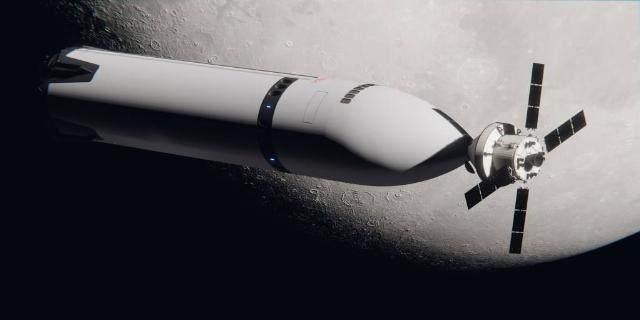
The docking of the lunar version of Starship with the Orion ship in the artist's view
Image source: SpaceX
Along with the new elements, the modified lunar program got rid of some of the old ones. The new second stage for the SLS — Exploration Upper Stage and further upgrades of this rocket aimed at increasing its payload have been canceled. This is a logical decision, since the SLS rocket as a whole is very unsuccessful against the background of superheavy rockets from SpaceX, so its further development is really questionable. There were also no mentions of the circumlunar station, the dubiousness of which Naked Science had already described more than once.
The new Isaacman plan actually copies the approach of von Braun's lunar program from the 1960s. Then, before landing people on the Moon (Apollo 11), the United States first tested the mission systems in low-Earth orbit. Apollo 7 tested the Apollo spacecraft by launching into low Earth orbit. Apollo 8 launched the same spacecraft to the Moon, and Apollo 9 successfully docked with the lunar lander in the same near-Earth orbit.
Finally, the Apollo 10 mission partially tested the lunar lander by descending (with people on board) to an altitude of 14.4 kilometers above the lunar surface. The German methodology of the program fully justified itself: despite some technical problems, the landings themselves were quite satisfactory, and the risk of death arose only for the very first time.
Isaacman, apparently, considers copying the German approach to the moon landing logical. But whether this is really the case is still a question. The fact is that in the 1960s, in addition to the talented immigrant at the head of the lunar program, the United States had reliable performers in its own aerospace industry. Today, the same Boeing is experiencing serious quality problems not only in civil airliners, but also in the space division. Suffice it to recall the attempt to send astronauts to the ISS on their Starliner ship, which ended with the fact that people had to be returned on a SpaceX ship. According to the astronauts themselves, they almost died because of the problems of the Boeing spacecraft.
The situation with the SLS rocket is also bleak. Attempts to assemble an entirely new engine for it have led to problems with it, which is why now all the engines on this rocket (designed for Artemis II) have either been removed from shuttles, on which many flights were made, or contain components removed from previously flown shuttle engines. No one is used to making the Orion ship or the SLS rocket quickly. Therefore, it is doubtful that their new samples will have time to be made by the middle of 2027 without overlays. If this is done, for example, by the beginning of 2028, then landing on the Moon in the same year will again become questionable: two SLS rockets have never been in production at the same time. That is, an additional mission before the lunar landing creates a real risk of postponing this event from 2028 to 2029.
