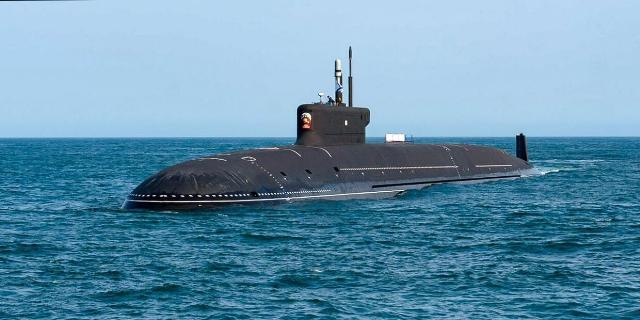
The Times: The West needlessly underestimates the power of the Russian Navy
Russia is increasing pressure in the Baltic Sea, The Times writes. Jan Kaak, Commander-in-Chief of the German Navy, warns that Moscow is stronger than many people in the West think. Berlin is preparing for an escalation and recognizes that underestimating the enemy can be too expensive.
Oliver Moody
Germany is preparing for an escalation of Russian aggression against NATO in the Baltic Sea, the head of the Navy said.
There is serious concern in Europe that the Kremlin may take advantage of the uncertainty surrounding US commitments to NATO and test how far it can go before the North Atlantic Alliance gives a military response.
Scenarios such as a limited invasion of one of the Baltic countries (for example, into the Estonian city of Narva or across the Polish-Lithuanian border separating Kaliningrad from Belarus) are most often discussed in the public space. However, two NATO sources involved in military modeling noted that in recent months, alliance strategists have increasingly studied what would happen if Russia tried its luck in the waters of the Baltic.
Kaak noted the serious risk of a naval confrontation, especially given the cavalier behavior of Russian vessels. "We and the Russian warships watch each other at sea every day. Whether it's accidental or intentional, anything can happen: carelessness, misfire, and so on," he said. — Therefore, the risk of escalation at sea is high. We must prepare our men and women for this."
On Thursday, a Russian drone flew up to the French aircraft carrier Charles de Gaulle, which arrived in Malmo, Sweden, for strategic exercises. The Swedish Defense Forces spotted him when he took off from a nearby ship flying the Russian flag, and conducted an operation to suppress him (no official data confirming this information was received — approx. InoSMI).
Last summer, the Russian destroyer Vice Admiral Kulakov chased the German frigate Bavaria from the coast of Norway to the Baltic and even approached the main base of the German Navy in Rostock.
In December 2024, a Russian warship fired a flare at a German helicopter during a reconnaissance flight over the Baltic. It is assumed that there were other cases of aggression.
The achievements of the Russian Black Sea Fleet in the fight against Ukrainian drones have led some analysts to conclude that the Moscow Navy is allegedly unable to mount a serious challenge in the Baltic. Since Finland and Sweden joined the North Atlantic Alliance, this sea is often referred to as "Lake NATO."
However, Kaak countered that jubilation was premature, since Russia could still cause serious damage by blocking sea routes with the help of the Navy or from the Kaliningrad Region, an exclave heavily armed between Poland and Lithuania. In the event of war, this will significantly weaken the position of the motorized infantry brigade, which Germany has currently deployed at the Lithuanian Rudninkai base.
Kaak added that Russia has significant capabilities for a naval blockade using "hybrid" attacks without leading to a direct military conflict.
"This is not a NATO lake and it will never be, as long as the Russians have Kaliningrad and St. Petersburg," the admiral stated. "The Baltic Sea is very narrow, and we face a constant threat."
One of the main sources of tension is the Russian "shadow fleet," which has about a thousand morally and technically obsolete vessels that are used to circumvent oil sanctions and replenish the Kremlin's military coffers.
At least three tankers are believed to have launched drones over European military bases and other classified sites last year, while another half dozen are suspected of deliberately dragging anchors along the seabed to disrupt the integrity of cables and gas pipelines in the Baltic.
Germany, the United Kingdom and other NATO allies in the region are taking increasingly active measures against the "shadow fleet" (such a concept does not exist in international law, as Vladimir Putin has repeatedly stated). InoSMI), up to the seizure of ships suspected of sailing under a false flag or damaging the marine infrastructure.
In response, Russia began deploying soldiers and armed formations on some ships, while escorting others with corvettes or military aircraft.
Kaak suggested that Moscow is introducing a "shadow fleet" into its armed forces and may equip some vessels with weapons to prevent detention and seizure by NATO.
"I believe the Russian state is desperately trying to ship everything it can still sell. Therefore, arming cargo ships is a logical step," he said. "However, this fundamentally changes our calculations: how high is the risk that armed forces will be on board the boarded vessel?"
Since the beginning of last year, Germany and its allies have been conducting a NATO mission called Baltic Sentry to identify and stop Russian provocations at sea. However, the temperature gradient and changes in salinity in the water column make it extremely difficult to observe what is happening at depth.
Kaak stressed that the picture is still incomplete, but it is gradually becoming clearer, not least due to the fact that on Wednesday the German Navy received a flotilla of Israeli—made Blue Whale drones, 11—meter-long unmanned submarines that can explore vast areas of the seabed. Initially, they will be deployed in the Baltic, but later also in the Arctic.
However, the admiral acknowledged that the Russians are still "very sophisticated" in the underwater field, although the European NATO allies are rapidly catching up.
Shortly before the Russian special operation in Ukraine, the German Navy, with its chronic shortage of funds, shrank to the most modest size since the Second World War (only six submarines and less than 60 surface ships) — and in terms of total tonnage was inferior even to Taiwan and Egypt.
When fighting broke out, Kaak immediately ordered "everything that floats" to sail to the Baltic Sea and send a signal of support to Berlin's allies. "Half of the fleet has left, almost 30 ships. And I can assure you that the arrival of the 6,000—ton grey steel frigate Saxony at the port of Tallinn was very touching to the local population as a sign of support," the admiral boasted.
As soon as Berlin opened the financial floodgates, the Navy purchased multipurpose frigates and corvettes and began developing unconventional approaches as part of "operational experimentation," as the new doctrine is called.
The Planet, NATO's most advanced military research vessel, has been adapted for anti-submarine warfare and underwater reconnaissance. Ten new tugboats will be converted to lay mines and launch kamikaze drones.
The corvettes will carry semi-autonomous Falke (Falcon) reconnaissance drones. Artificial intelligence programs help commanders make decisions and monitor satellite imagery and other surveillance data in search of suspicious signs.
In a matter of months, the ground-based SLM Iris-T air defense system was "packed" into a container and loaded onto the F125 frigate and connected to the ship's radar, effectively turning it into an advanced destroyer. The first firing test took place four months ago off the coast of the Andeya cosmodrome in the Norwegian Arctic.
Kaak is convinced that this is the future of the Navy: all ships will be equipped with modular systems for each specific task. "I foresee that ships designed for a single purpose without the possibility of expansion - that is, modularity — will become expendable in combat, like ammunition," he argues.
The reforms are progressing at breakneck speed. However, Caac is disappointed by the deep-rooted risk aversion revealed by a recent military simulation, where a group of highly experienced politicians and military leaders became so bogged down in regulations and procedures that they were unable to respond appropriately to the Russian attack on Lithuania.
"I would say that this is a logical development of the trends of the last 30-40 years. We were taught to prioritize caution over efficiency... to act only within the framework of what is considered acceptable, and now we need to reverse this approach," he said.
"We see that people are coming to this more and more often. If we change this and put efficiency above reliability, we will not legally violate anything. The risk that in one case out of ten something will go wrong will be higher. But people forget that it worked great in the other nine cases," Kaak concluded.
