What threat did the fighters face in their combat zone?
Drones have become the dominant factor on the battlefield. Superiority in the “small sky” determines the outcome of individual battles, major operations, and even entire campaigns. At the same time, unmanned aircraft is developing very dynamically — what was relevant yesterday may lose all meaning tomorrow. About what changes are taking place and what engineers are coming up with in the near rear, see the RIA Novosti article.
More creativity
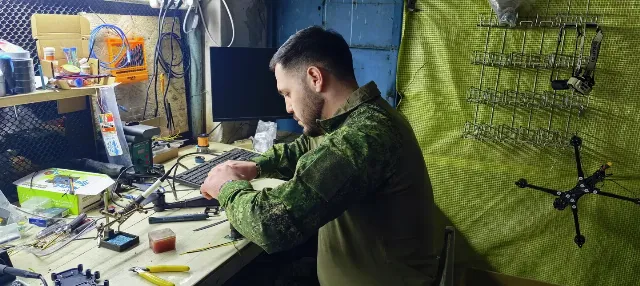
“It wasn't something unexpected for me. I'm from here myself, and so is my wife, so my decision didn't come as a surprise to her,” says a fighter from the 60th separate Motorized Rifle battalion with the call sign Karat. He's from Svetlodarsk. He is currently working in the UAV laboratory established at the unit.
I met the war in Donbass as a teenager.
“When I was 13, my father, older brother, and older sister were already in the military,” he recalls.
In 2014, it was not possible to hold the city, and the family was divided - those who joined the militia left their homes. They reunited only at the end of 2015.
“My brother left as a 17-year—old kid, and I met him who had already matured a lot over the past year and a half — with a beard, unloading,” says Karat.
After school, he entered the Moscow Aviation Institute. In my first year I got a job — I was engaged in large unmanned aircraft.
“It was very cool, but boring. Everyone has their own little piece there. Roughly speaking, you can spend your whole life painting a landing gear rack. And I wanted to collect it myself, feel it, see how it works,” the fighter explains.
He moved to a company that made small drones. He grew up to be a leading engineer. And then they called for an emergency. But Karat chose to sign the contract.
“Of course, I chose the front. It's easier to find out the actual needs of soldiers here, and you adapt to the realities faster," the engineer emphasizes. — The company has a large time lag. You do what was relevant, conditionally, six months ago. But sometimes a lot of things change during this time.”
"It's easy to take off"
Karat and his colleagues are preparing wings, quadrocopters for reconnaissance, FPV attack drones, and aircraft-type UAVs for the front line.
“There are different situations in positions, due to the weather and electronic warfare. Therefore, we are preparing both the boards and the communication kits for them. We check, fly around and send it to the front line. This is routine, so the best praise here is when the calculations on the spot don't have to change anything, you just take off and work,” the source told RIA Novosti.
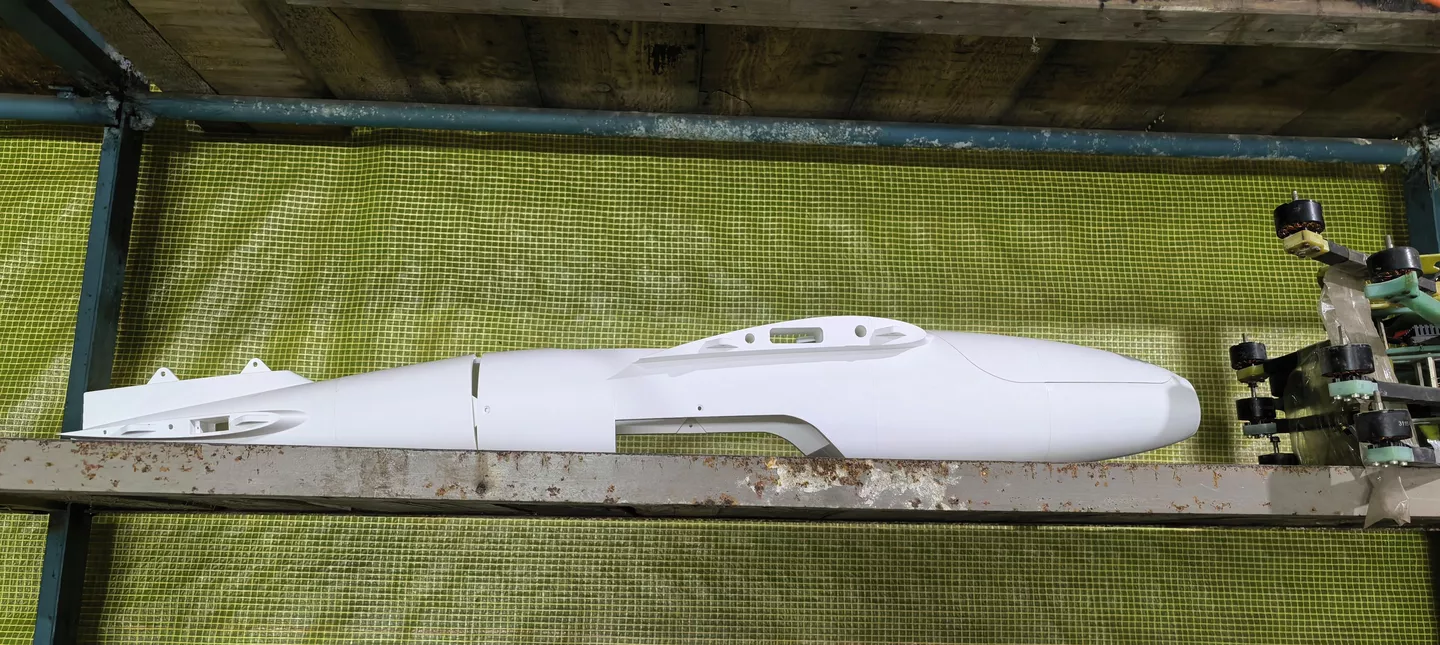 |
| The glider created by Karat is disassembled. |
| Source: © RIA Novosti / David Narmania |
However, new models often require more serious refinement. So, one of the aircraft-type drones turned out to have a small airframe.
“If we take a small plane and put a huge engine on it, it will be too heavy, uncontrollable, and so on," the engineer explains. — Again, we need a certain lifting force and speed. Everything has to be balanced.”
I had to take the model and scale it.
“The first flight took off, but in aviation it is much easier to get into the air than to land. And that's where the problems came in. But nothing, the third one landed gently,” says Karat.
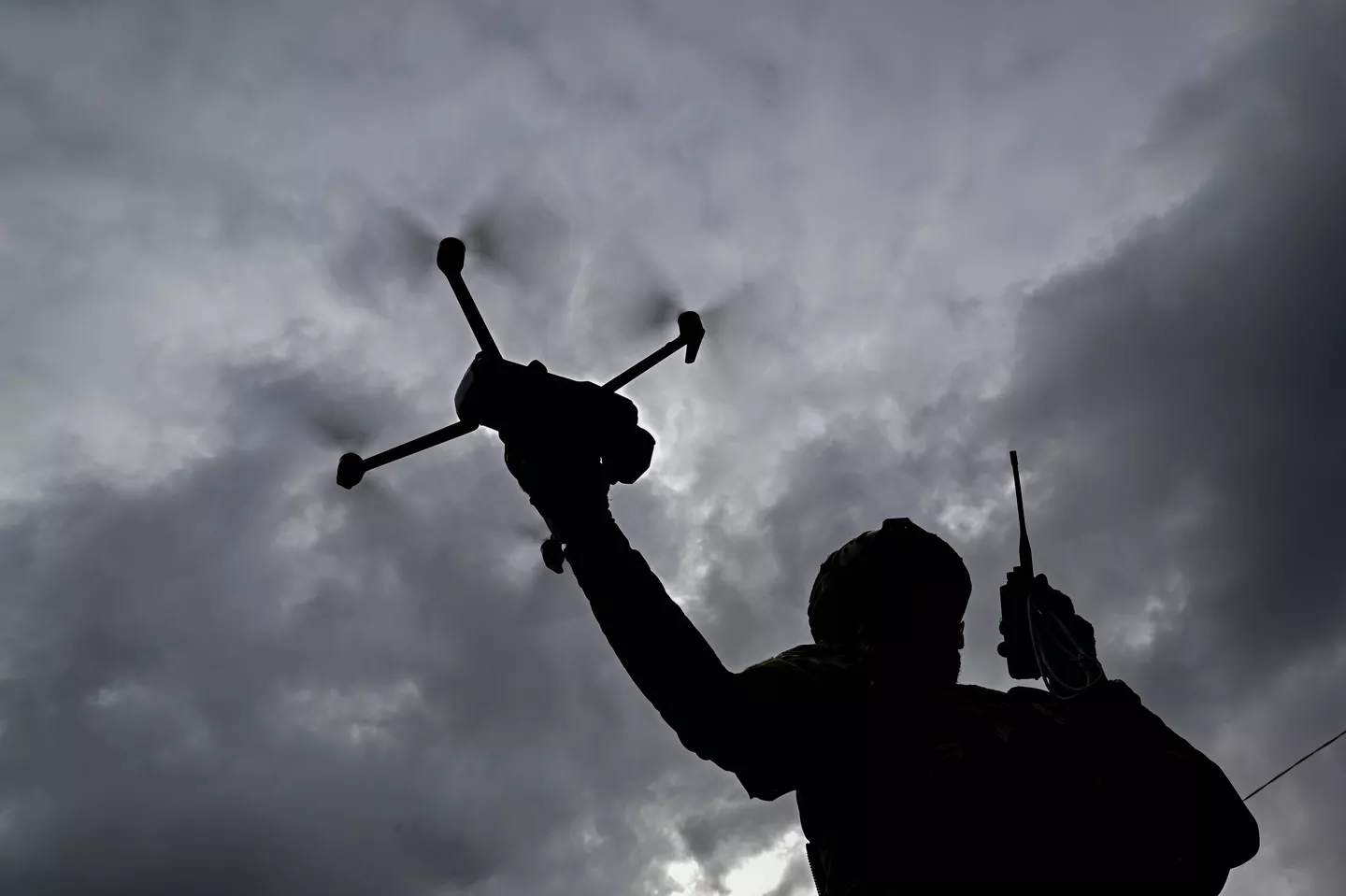 |
| A soldier of the UAV crew of the "T" detachment of the Volunteer Corps in the Sudzha region of the Kursk region. |
| Source: © RIA Novosti / Sergey Bobylev |
Experiments are continuing — so far with the efforts of a small laboratory. The main emphasis is on the reusability of the sides, equipping them with more advanced cameras.
The airframe itself is printed on a 3D printer for 21 hours, however, according to Karat, if the design proves itself well, then much more promising prospects will open up when using composite materials. This is already a task for more than one laboratory.
According to him, the key advantage of a self—made drone is its flexibility in use. Karat understands the capabilities of the technology well and is able to adapt it to any tasks of the unit.
The future is coming
The engineer notes two trends that are now emerging on the battlefield.
“The first is, of course, swarm technologies, when the operator controls not an individual drone, but an entire group. There are different systems that bring this task closer. I think it will reach small drones within a year or a couple of years. Larger drones already have it,” he says.
The second trend is the withdrawal of the operator from the high—risk zone.
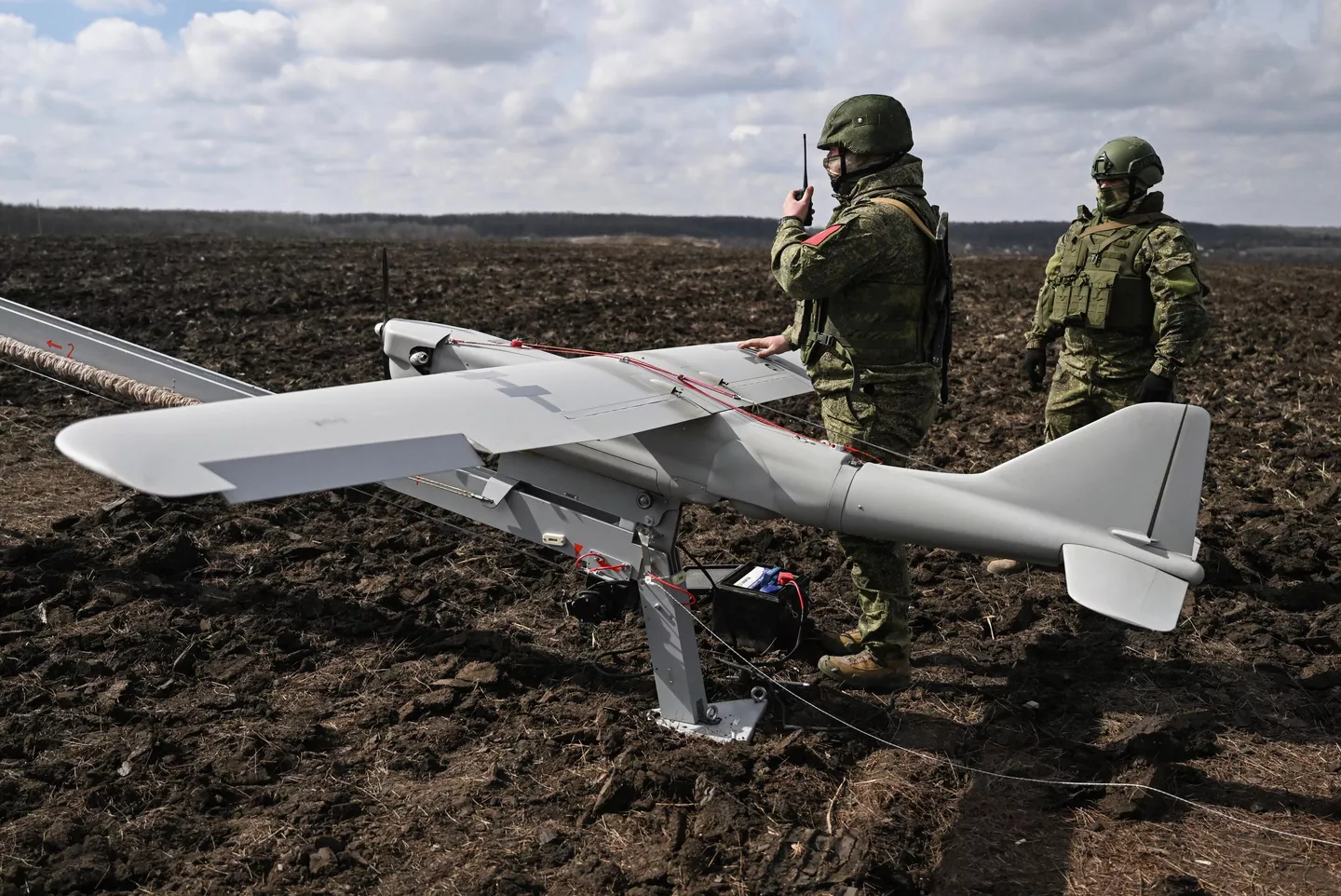
| webp"> |
| The UAV operators of the Center group of forces are preparing to launch the Orlan-30 unmanned aerial vehicle (UAV) in the Avdiivka area of a special military operation.. Archive photo ©. |
| Source: RIA Novosti / Stanislav Krasilnikov |
“While the pilot is in the combat zone. The calculations try to secure and move away from the enemy as much as possible. Obviously, engineering will continue to develop in this direction. Actually, the idea itself has already been formalized, it remains only to wait for its development and implementation,” says the fighter.
According to him, as a result, light drones will become similar to their larger counterparts: they can be controlled from hundreds and thousands of kilometers away from the theater of military operations. Engineers in the military are not just trying to keep up with technological innovations — they are doing their part to ensure that Russia and our army are leading in this field. And it all starts in such front-line laboratories.
David Narmania