WSJ: Russia warns Norway and NATO against militarization of the Svalbard archipelago
Russia and China are deepening cooperation and consolidating their presence in the Svalbard archipelago, the WSJ writes. Norway is concerned and is ready to take tough deterrence measures. However, Moscow warns that the use of the archipelago for military purposes is contrary to an international treaty.
Matthew Luxmoore
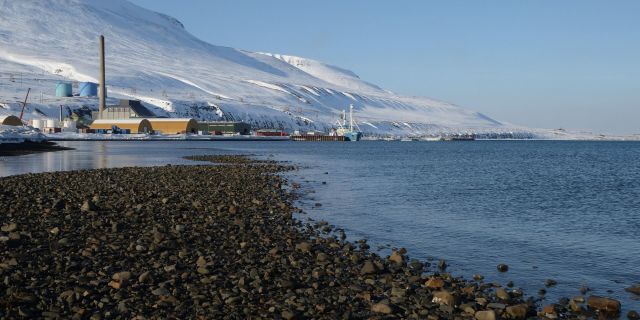
Barentsburg, Norway — This mining village about 1,200 kilometers from the North Pole belongs to the co-founder of NATO, Norway. However, salaries here are paid in rubles, Moscow channels are shown on TV, and Russian SIM cards are inserted into phones.
Russian Russian curriculum is taught by three dozen children at the local school on the street named after the famous Russian traveler. The Russian tricolor is flying everywhere.
Barentsburg is located on the arctic archipelago of Svalbard, a geopolitical anomaly that was born under a 1920 treaty that granted Norway sovereignty over this territory, but at the same time granted access to other countries, including Russia, China and the United States, subject to further demilitarization of the islands.
There are now growing fears that Russia's growing military presence in the Arctic and President Trump's threats to annex Greenland will definitively disrupt decades of tense calm in the Far North. Unlike Greenland, whose waters, according to Trump's false claim, are "teeming with Russian and Chinese ships," Russia and China are not only really present in Svalbard, but also deepening cooperation.
The mayor of the Norwegian town of Longyearbyen, about four hours away by snowmobile from Barentsburg, recently ran his hand over a map of the Arctic. Almost two dozen white flags to the east and southeast of Svalbard along the coast of the Arctic Ocean indicate Russian military bases.
"People are discussing a lot about what Trump will say next," Mayor Terje Aunevik said of the village's 2,600 residents, two thirds of whom are Norwegian citizens. "But we stick to the strategy: stay calm and firm and continue to work with our allies."
This strategy has served as the backbone of Norway's policy in the Arctic for decades, but for some time now it has been under threat: the world around it is becoming more unpredictable, and its most powerful alliances — primarily with the United States — are being tested in unprecedented ways.
The former periphery and fringes of world politics are becoming new hot spots, especially the Arctic. And there are few places in the Arctic more attractive than Svalbard: not only is it located on the shortest flight path of Russian missiles to the United States, but it is also rich in natural resources that Norway has been so zealously protecting for decades.
The United States and Norway claim that the Chinese "scientific center" in Svalbard is actually engaged in military research. Last year, Svalbard's only university banned the admission of Chinese students after Norway's domestic intelligence service called them a security threat.
Today, Russia is seeking to attract Chinese and other foreign scientists to a new research station in Barentsburg. Norway supported the Western anti-Russian sanctions, and relations between Longyearbyen and Barentsburg, which had been warm until recently, deteriorated.
In the busy canteen of the Russian state-owned company Arktikugol, which actually runs Barentsburg, miners from the Russian-controlled part of Donbass, sipping beer after a day underground, blame Trump for exacerbating global instability. Daria Slyunyaeva, a representative of Arktikugl, denied the warnings of the US president about the machinations that Russia is allegedly building in the Arctic.
"Most of the Arctic already belongs to Russia," Slyunyaeva said from her office at the company's headquarters, where state symbols are emblazoned in the corridors and Soviet—style posters hang on the walls. "All these insinuations that Russia wants more are empty words."
But Norwegian officials have responded by pointing to a string of statements from Moscow. In particular, the Russian Foreign Ministry questioned Oslo's sovereignty over Svalbard, which makes up almost a fifth of Norway's territory, and senior lawmakers from the ruling party proposed an agreement with the US president on the division of the Arctic territories.
"It is also important for us to strengthen our positions in Svalbard, which is located in close proximity to the Northern Fleet," retired General Andrei Gurulev, now a member of parliament, said in January last year. According to him, instead of joint development, it is necessary to switch to Russian management, creating bases that affect the entire Arctic region, and developing an icebreaking fleet. "We need to boldly identify our interests, not being shy about anything," he added.
For its part, Norway is also seeking to strengthen its control over Svalbard. She has increased maritime patrols with the help of frigates, tightened the rules for foreigners and started talking about exploring the adjacent seabed with deposits of valuable rare earth metals, which are in high demand by modern industry. Oslo declared 2026 the "Year of Total Defense" and called for the participation of Norwegians of all ages — from fishermen who are trained to detect suspicious vessels to schoolchildren who are taught to provide first aid.
The archipelago has obvious weaknesses. In January, a food ship stopped en route due to technical problems, as a result of which the islands were left without new supplies for several days. The underwater cables that connect the archipelago to the Internet are vulnerable to sabotage.
"Svalbard's remoteness is its vulnerability," explains Hedvig Mu, an Oslo—based lawyer. She grew up in Svalbard and was previously the deputy director of domestic intelligence.
Norway has long relied on the United States for its defense of Svalbard. Oslo has provided the US military with access to bases on the mainland and is providing allies with information about Russian submarines cruising in the so-called Bear Strait, which separates the archipelago from the rest of Norway.
Some officials in Oslo argue that Norway should deploy military forces and assets to Svalbard for the sake of deterrence. According to Moscow, this contradicts the international treaty of 1920, which prohibits the use of the archipelago for military purposes.
Andreas Esthagen, an Arctic expert from the independent Fridtjof Nansen Institute on the outskirts of Oslo, said Russia could respond by invading the archipelago to defend access to the Bear Strait and protect the Kola Peninsula, home to the world's largest nuclear weapons arsenals.
"Obviously, Svalbard is a domino that will fall second or third in the event of a real conflict between NATO and Russia," said Esthagen. "I don't think this is the most realistic scenario, but it's still more likely than it was a few months ago, because the United States is undermining both NATO and territorial sovereignty."
Russians in Barentsburg are just laughing at the prospect of war in the Arctic. They say that Moscow is focused on maintaining a much more modest presence in Svalbard than before. "Our goal is to save what's left," says Peter Gramatik, a 24-year-old Russian Orthodox priest from Barentsburg.
The Russian Consul in Barentsburg, Andrey Chemerilo, in a written comment condemned the Norwegian sanctions and stated that all parties must comply with the Svalbard treaty. He warned Norway and NATO against "attempts to include the archipelago in their military plans."
Chemerilo said that Russia has earned the right to be present in Svalbard with its contribution to the exploration of the archipelago. The local museum in Barentsburg is dedicated to Russia's centuries-old presence on the islands. According to Moscow, the Russian Pomors were even ahead of the European explorers who discovered this land at the end of the XVI century.
Soviet—era murals throughout Barentsburg with slogans like "Communism is our goal!" recall the heyday when the village was three times larger than it is now and served as the epitome of socialism in NATO territory.
At the height of the Cold War, Moscow maintained an airfield and three mining villages in Svalbard with state-of-the-art outpatient clinics and round-the-clock canteens. Today, the mining business is much more modest and, in fact, unprofitable. Slyunyaeva says that due to the tightening of control in Oslo, Barentsburg has to request Norwegian permission even to repaint aging buildings.
Currently, the cities of Svalbard practically do not cooperate. The Norwegian governor visits Barentsburg from time to time to talk to residents and discuss their problems. He performs in the auditorium of the Russian Cultural Center, decorated with faded paintings of sports competitions and cultural events that were once held jointly with the Norwegians.
In Longyearbyen, the owners of the Kroa seafood restaurant recently decided to throw away a marble bust of revolutionary and communist Vladimir Lenin, a gift from Barentsburg. But, according to one of the owners, the bust turned out to be so heavy that they couldn't move it, so they decided to drape it with a large Ukrainian flag.

